The North Remembers: Why "Iceman" is Drake’s Multi-Layered Magnum Opus
Let's pull back the curtain and dive into a track-by-track analysis of why the boy is playing 4D chess while the rest of the industry is playing checkers.
Django Degree

If you’ve been scrolling through your feeds lately, you’ve probably seen the absolute simulation of terrible takes surrounding Drake’s latest masterpiece, Iceman. The internet is flooded with critics trying to tell you the boy has lost his step, but let’s be entirely real: we are dealing with paint-by-numbers intellectuals. They look for the explicit, surface-level symbols people tell them exist, and because they are so busy looking for the obvious, they completely miss the brilliant writing on the walls.
They choose not to understand the double entendres, the architectural precision, and the sheer narrative depth of this record.
The Architecture of the Trilogy
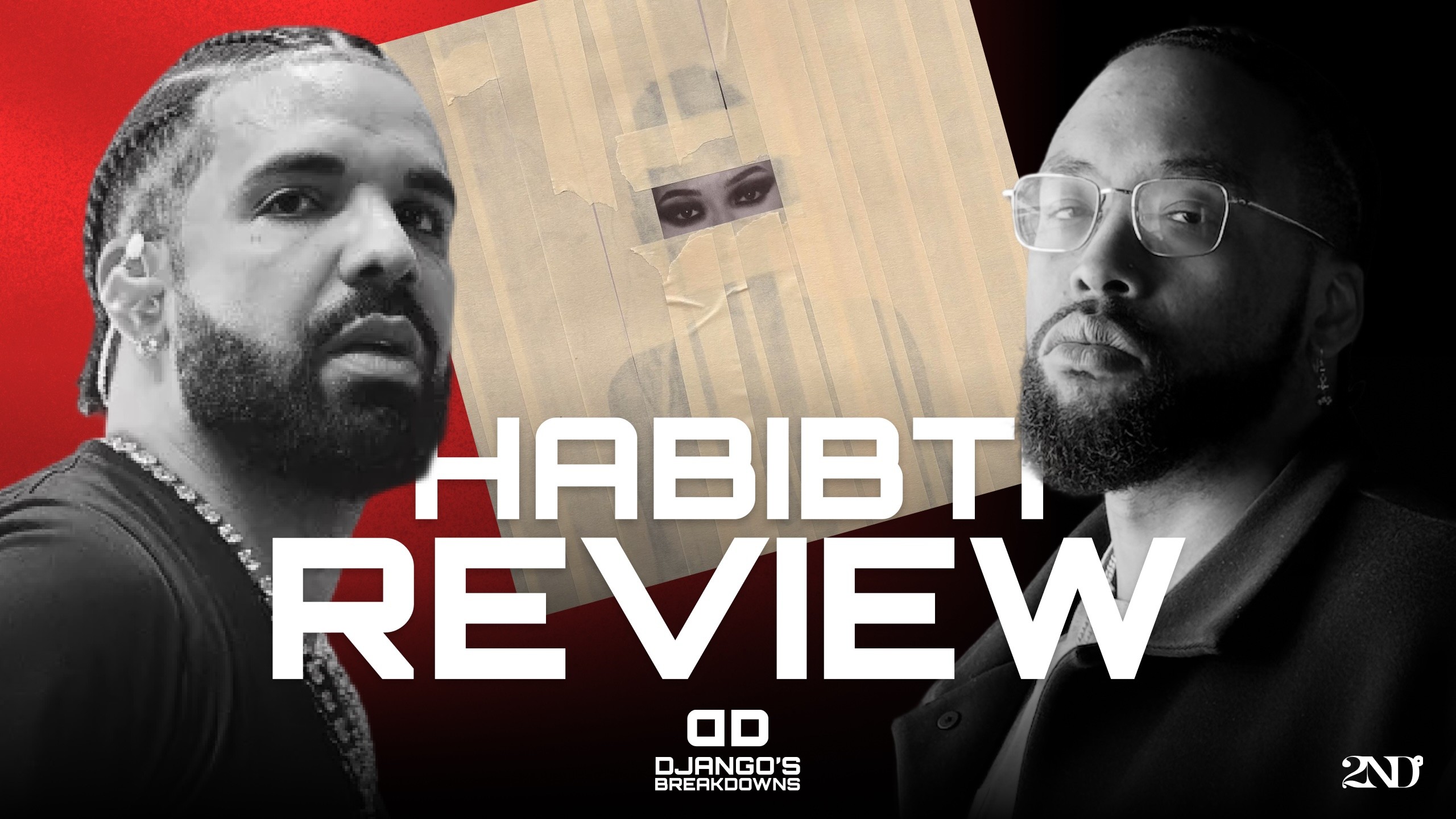
To truly comprehend Iceman, you have to understand where it sits in the grander tapestry. Drake didn't just drop an album; he delivered the central chapter of a meticulously crafted trilogy designed to be experienced in a exact sequence: Habibti, Iceman, and Maid of Honor (HIM).
Phase 1 (Habibti): This is the emotional foundational layer. It breaks down the exhausting cycle of a toxic relationship, mapping out the unsaid words, the vulnerability, and the emotional wreckage that Drake has touched in previous eras.
Phase 2 (Iceman): The backstory and the strategic chess board. This album functions like a flawless narrative structure consisting of an introduction, rising tension, conflict, climax, and resolution.
Phase 3 (Maid of Honor): The final aftermath and ultimate conclusion to the narrative arc.
The spine of Iceman rests on four conceptual pillars: "Make Them Cry," "Make Them Pay," "Make Them Remember," and "Make Them Know." Every block of tracks following these pillars provides the exact contextual body of work needed to push the narrative forward.
Let's pull back the curtain and dive into a track-by-track analysis of why the boy is playing 4D chess while the rest of the industry is playing checkers.
The Track-by-Track Breakdown
1. Make Them Cry
The first pillar and the thesis statement for the entire album. The through-line of this track is the agonizing psychological demand of digging deep. Drake maps this out in three distinct stages: first, admitting "I hate digging deep," then noting that when he does, they just tell him to "dig deeper," and finally concluding with "you ask me to dig deep."
We get a raw look at his circle when Noah "40" Shebib challenges him in private, telling him to prove his strength when it’s just the two of them, not when the cameras are rolling. Drake openly addresses the 2024 beef as a moment where a massive part of his ego died.
The Philosophical Pivot: When your ego falls apart, where do you look for security? Enter Jean Baudrillard’s theory of hyperrealism. Drake pivots to what he can control—wire transfers, Mercedes-Benzes, Van Cleef bracelets, and penthouses—substituting a fractured reality with hyper-material security. He’s not even battling rappers here; he's battling the corporate label, radio rotation, and his father’s cancer battle.
2. Dust
The transition from crying to dusting the opposition. Drake effortlessly glides into a R&B bag to sing to the ladies first, proving tracks like Triple S weren't throwaways, but deliberate moves to ensure the women felt loved before he handed out ruthless business. On Dust, he completely bypasses the traditional industry matrix: no vinyl, no t-shirts, pure digital domination ("All the numbers are vinyl... y'all about to make me Richie like Lino" ). He reminds the world that he hasn’t just earned number ones; he has gifted classic number ones to the very people turning on him (evoking the ghosts of Aston Martin Music or as we know it, Paris Morton Music). The track culminates in a redefinition of supremacy: "The big three is now Mike, Taylor, and me."
3. Whisper My Name
A masterclass in psychological warfare that takes direct, devastating shots at Kendrick Lamar and Jay-Z. Drake reflects on the hypocrisy of the rap game, recalling a moment after Kendrick's infamous Control verse where Kendrick acted completely respectful in person at the VMAs, claiming it was all love. Drake uses this context to expose the underlying malice: if you're going to call someone out, say it with your chest—otherwise, keep whispering. He handles Jay-Z with a slick bar dismantling the viral internet debate: "I take 500K, not the dinner. I never could learn that from none of y'all." He wraps it up by defending his Toronto "Crodies," reminding outsiders that what they label as cringe is unbreakable brotherhood.
4. Janice STFU
This is a deep architectural dig into Kendrick’s history, specifically referencing the Take Care track Buried Alive Interlude. Drake exposes the root of Kendrick's deep-seated animosity, an early envy of Drake's vanity and fame that dates back over a decade. He subtly highlights a truth the industry loves to erase: Kendrick’s massive breakout single Swimming Pools and follow-up Poetic Justice relied heavily on the Toronto Sound curated by producer T-Minus and a handpicked tour invitation from Drake himself. The ultimate flex? "You boys got big off my name. That's big enough."
5. Ran To Atlanta (feat. Future & Molly Santana)
For two years, the internet claimed Drake was an outsider who had to run to Atlanta to secure his hits. Drake flips the narrative entirely on this massive link-up. Significantly, he reunites with Future, proving an analytical truth most missed: Future never actually dissed Drake explicitly on either of his 2024 albums. By introducing rising powerhouse Molly Santana, Drake reinforces his position as the ultimate kingmaker. The track features a hauntingly cold bar: "I seek forgiveness from Allah because I'm back with Taliban."
6. Shabang
The bridge that beautifully closes out the Make Them Cry saga and violently thrusts us into Make Them Pay. Complete with infectious Migos-style ad-libs, this track dropped precisely a year after hip-hop had completely lost its grip on the top of the charts. Drake lets the industry know he is back to reclaim the throne while leaving his rivals paranoid over the secrets he holds: "Secrets I know got you stressed. Will I take those to my death?"
7. Make Them Pay
The second major pillar where Drake officially goes completely scorched earth. He unloads a rapid-fire, surgical strike on multiple targets within seconds:
DJ Khaled: A Palestinian immigrant with a calculated rollout who suddenly transitioned into a random Jamaican persona.
The Stream Magicians: Corporate entities treating music streams the way the government treats manipulated jobs reports.
Rick Ross: Drake completely strips away Ross's drug-lord persona, reminding the world that Ross is a former corrections officer whose biggest career records came from Drake features. Drake drops the ultimate economic flex: "Dog, I was Aiden Ross with streams before Aiden Ross had ever streamed."
8. Burning Bridges
The "Make Them Pay" era intensifies as Drake turns his rivals into absolute memes. He watches comfortably from above as DJ Khaled, Rick Ross, and ASAP Rocky fumble through desperate album rollouts. Drake addresses the massive corporate interference happening behind the scenes, highlighting how entire accounts and platforms have faced copyright strikes just for sharing clips of his music videos. This isn't a rapper beef anymore; Drake is actively fighting the machine.
9. National Treasures
A devastatingly personal takedown of NBA star DeMar DeRozan's betrayal. DeRozan famously cameoed in the Not Like Us music video, completely forgetting that when he was abruptly traded away from Toronto, Drake spent hours sitting with him late at night, offering genuine comfort as a real friend. Drake doesn't care about basketball optics: "If you ever put up a DeRozan banner up, I'll go up there and pull it down myself." He credits the real architect of Toronto's championship—Gregg Popovich ("G Pop") trading Kawhi Leonard—and flips the famous idiom on its head: the blood of the covenant is infinitely thicker than the water of the womb.
10. B’s On The Table (feat. 21 Savage)
Drake completely removes himself from the standard rap playing field on this track, demanding the industry treat him like Shane Coplan, the brilliant billionaire CEO of Polymarket. He explicitly states that he is no longer engaging with the lyrical pawns sent to distract him; he is taking on the institutional puppet masters. It’s an economic shift: "I'm fighting a man, I sue in a rapper, you wasn't listening."
11. What Did I Miss?
A brilliant, sarcastic intermission targeting the critics. Drake treats his musical vaults like a frozen fortress, using the ultimate Game of Thrones metaphor—the ice in the far North never melts, and his receipts are permanently frozen on ice, waiting for his enemies to step out of line. He mocks the casual fans jumping in his comments as having "Helga Pataki energy"—secretly obsessed with creating shrines out of his old discarded chewing gum.
12. Plot Twist
Drake completely shatters the internet narrative that he is unwelcome or unsafe in his own city. He reminds everyone of the cinematic reality: pulling up completely solo to Yonge-Dundas Square without a single security guard in sight, untouched. The track weaves through slick, rapid-fire bars about waterproof iPhone cases, popping cash on camera, and dodging biased legal systems: "The judge tryna move so racist. We gotta go beat some cases before we show faces."
13. 2 Hard 4 The Radio
The internet threw a collective fit claiming Drake was copying Kendrick's West Coast bounce on Squabble Up. Drake exposes their complete lack of musical literacy. 2 Hard 4 The Radio was produced by P. Love and Kari—two authentic Bay Area legends. This isn't a bite; it’s a direct, deeply rooted homage to Mac Dre and Mac Wanda. Drake proves that his critics' feelings cloud historical facts, making his classic line age like fine wine: "How can they tell the truth when they're misinformed?"
14. Make Them Remember
The third structural pillar tackles the psychological warfare of the summer beef. Drake breaks down how Kendrick relied on the ad hominem fallacy—ignoring actual counter-arguments to launch wild, unverified personal attacks, claiming a false victory, and executing a celebratory dance.
Drake details how his enemies used a Kafka trap: a rhetorical device where denying a claim of privilege is twisted into a confirmation of that exact privilege. He unpacks the deep racial gatekeeping used to back him into a corner regarding his Black identity, drawing a profound parallel to the classic film Imitation of Life. He doesn't spare old allies like LeBron James, who eagerly danced to accusations at the "Pop-Out" show despite Drake’s long-standing loyalty.
15. Little Birdie
This track uncovers the devastating emotional betrayal that bridges Iceman back to Habibti. Drake reveals a staggering reality: the woman he completely taken care of, the one he set up in a luxury penthouse, turned around and gaslit him. She deliberately fished for classified, sensitive information, only to turn around, bring another man into the very penthouse Drake was paying for, and pillow-talk that classified intelligence to his enemies so they could get leverage over him. Drake's response? He's putting legal and artistic cases on ice.
16. Don't Worry
A stunning sonic pivot. After uncovering unparalleled disloyalty, Drake doesn't wallow in misery; he throws a celebratory, joyful party. He and the OVO crew are completely outside living the dream while he watches the people who bit the hand that fed them crumble. He delivers a cold, remorseless desire to see his backstabbers begging on the pavement, struggling to pay their basic phone and light bills.
17. Firm Friends
Drake draws an uncrossable line in the sand against the silent onlookers who stood by and laughed during the media storm—calling out LeBron, DeMar, Rocky, Ross, Ebro, and Charlamagne.
"Strong opinions from the week for four hundred something weeks. They deep seated resentment is what's filling their seats."
Drake channels Machiavelli’s The Prince, noting that a ruler's intelligence is measured by the men he keeps around him. He praises the ironclad loyalty of his inner circle: 40, Oliver, Nico, Noel, Boi-1da, Baka, and Chubbs. The emotional core of the song features a heartbreaking, real-world memory of finding 40 collapsed on the floor due to his health struggles, showcasing a deep, unbreakable bond built on true brotherhood, not Billboard numbers.
18. Make Them Know
The final, chilling pillar of the album. Unlike the previous chapters, there are no subsequent tracks providing context—it ends in definitive, heavy silence. Drake is deeply reflective, noting the emotional toll of the industry: "I tried and tried and tried to the R switch places with the I. Bro tie."
He addresses the corporate lawsuits, calling them completely fried. He reveals that when the corporate powers finally switch the "R" (Rappers) with the "I" (Industry), they will try to publicly frame it as a standard retirement—but it's actually an astronomical payout for wasting his valuable time. Drake leaves his enemies with a cold warning: he is perfectly happy letting the world think he is down, because the trap is set, the North permanently remembers, and the boy always has the last laugh.
Featured Posts