>
>
Is She Singing About Me? An Autopsy of Love, Imago Therapy, and Jhené Aiko’s Westside Whimsy
Is She Singing About Me? An Autopsy of Love, Imago Therapy, and Jhené Aiko’s Westside Whimsy
Equal parts chakra-aligning warmth and sharp emotional truth, Jhené Aiko’s Westside Whimsy holds up a startling mirror to every man who ever ran from love instead of healing from it.

Django Degree

The Mirror of Perpetual Motion
Sitting in the dark with headphones on, listening to Jhené Aiko’s Westside Whimsy, hits with a very specific, quiet gravity. As a man who has lived a life of infinite perpetual motion, always moving, always running toward the next horizon or fleeing the last fire, I know without a shadow of a doubt that to someone out there, I am the person she is singing about. Most music critics love to play detective, picking through personal lives on social media to guess which high-profile relationship broke down and who did what to whom. But real art criticism looks directly at the writing itself and asks what it reveals about the human condition. Art imitates life. Two people fall in love, build a world together, and when it falls apart, it is rarely a simple black-and-white story of a villain and a victim. It is a complex, painful collision of two human beings trying to figure out how to exist together.
Westside Whimsy feels like a quiet, deeply intentional return to the roots of a woman who may have strayed too far from home. At one point, maybe she was genuinely happy with the choices she made, hoping that love and patience would transform things over time, but as the years rolled on, they simply did not. The title of the album and her decision to curate features exclusively from West Coast artists feels deliberate. Jhené has always possessed that rare ability to make chakra-aligning music. Whether it is her crystal-clear vocal tones, the soothing ambient production, or the spiritual frequencies woven into her melodies, her sound lulls you into a state of peace. Yet simultaneously, her lyrics hit like a sudden, unexpected bee sting. You find yourself admiring this beautiful creature that gifts life and warmth to the world, only to freeze mid-breath and think: Damn... is she talking about me?
The Imago Lens: Unpacking Why Relationships Are So Difficult
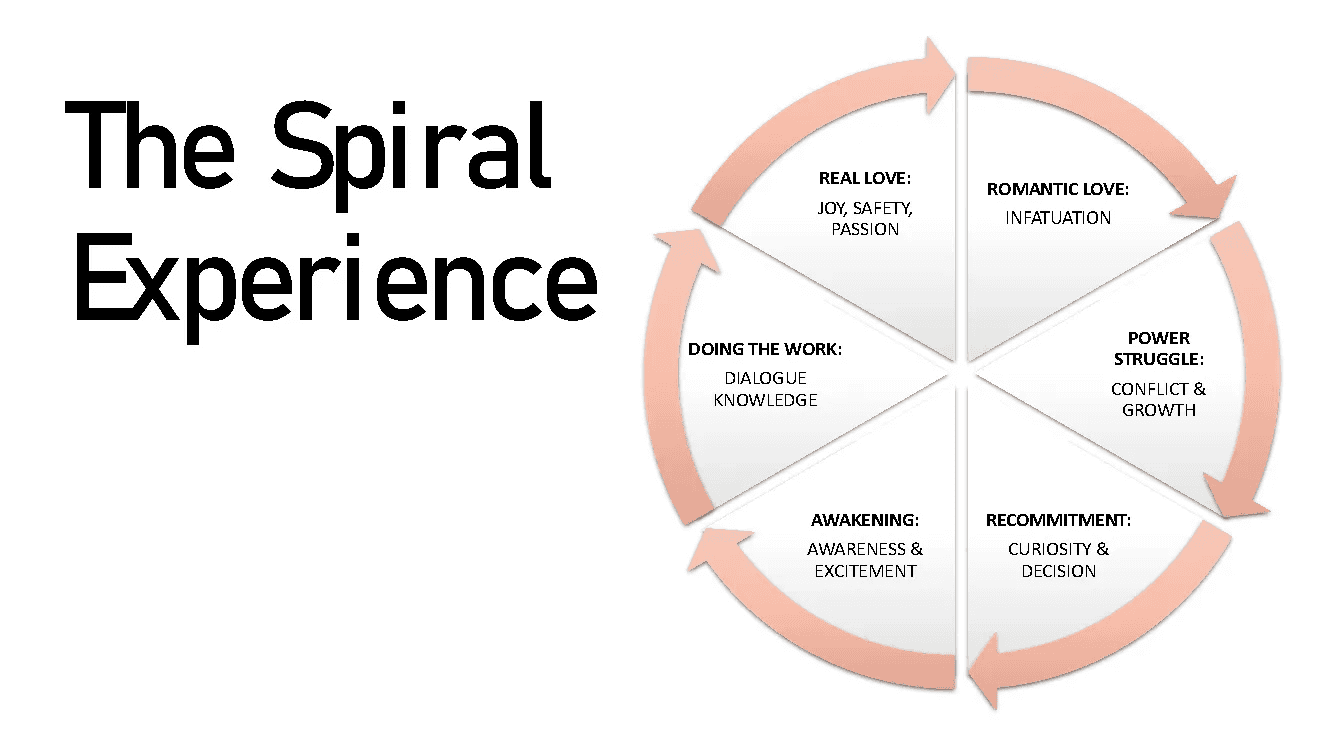
To truly uncover the storyline of Westside Whimsy, we have to look at these songs through the lens of Imago relationship therapy. Harville Hendrix introduced the concept of the Imago, which suggests that we carry an unconscious image of love built during childhood based on the positive and negative traits of our primary caregivers. We do not fall in love at random. We are magnetically drawn to partners who possess the exact traits necessary to trigger our oldest, unhealed childhood wounds, because our subconscious mind is trying to rewrite history and finally win the healing it missed out on as a child.
This is precisely why romantic relationships are so terrifyingly difficult. When two people come together, they are not just trading affection; they are trading unhealed trauma and emotional blueprints. An infinite perpetual motion man often develops a movement-based defense mechanism early in life. When things get uncomfortable, emotionally demanding, or overwhelming, his instinct is to run, to stay in motion, to keep one foot outside the door. Conversely, a partner raised in volatility may crave deep security or lash out when she senses a shift in energy. When these two blueprints collide, a toxic dance begins. One partner dims her light to keep the peace, while the other retreats into freedom, work, or outside distractions. Neither person is inherently evil, but both are trapped in a loop of mutual re-wounding. Jhené understands this dynamic deeply, and Westside Whimsy plays out like a full psychological autopsy of this exact cycle.
Act I: The Mask Falls and the Armor Cracks
The album opens by laying down its psychological foundation in "Wildcat." Right out of the gate, Jhené traces her emotional detachment directly back to her family origin, describing what happens when you are raised by an Aquarian woman married to an unhinged Sagittarius father. In Imago terms, this is the original blueprint. When you grow up in a pack of wildcats that could not be tamed, your default defense mechanism becomes fierce self-reliance and emotional distance.
From there, "Ghost" plunges us directly into the infinite loop of perpetual motion. Riding ninety down the highway in a white Jeep in Hawaii, trying to outrun pain, she captures that haunting feeling of becoming a ghost in your own existence:
"It's all that I know, all that I know All that I know, now I am a ghost It's all that I knew, it's all that I knew It's all that I knew. I'm stuck in a loop"
As a man who has spent years on the move, those lines land with a sharp sting. You think speed and distance will save you from your past, but the pain always finds you. In "Break," the emotional haze deepens. Riding shotgun top-down on the Pacific Coast Highway feels like a memory that might have been a complete hallucination. Was the romance even real, or was it just two people projecting their deepest desires onto each other?
The illusion shatters completely on "Love Bomb," where she teams up with Ab-Soul. What started in the friendzone quickly escalated into an explosive romantic blitzkrieg. The term love bombing refers to an overwhelming display of affection early in a relationship that ultimately destabilizes the receiver. When the fireworks die down, resentment sets in, leaving her ready to set it all off.
Act II: The Emotional Autopsy and Hard Boundaries
Once the initial blast clears, the album transitions into a raw, unfiltered critique of partnership dynamics. On "Ceiling Freestyle," Jhené delivers some of the most devastating lines on the entire project, exposing the unhealthy compromises partners make to keep fragile egos intact:
"Despite it all, despite it all. I play it off. I play it small Just so you come off bigger than what you are That isn't right, I step aside, I let it slide I dim my light so that you can shine brighter"
Hearing her call out a partner as the kind of person only a mother could make when their father did not stay is a masterclass in psychological precision. In Imago therapy, a man who grew up without a grounded father figure often struggles to anchor himself, seeking constant external validation while taking his partner's devotion for granted. For any man listening who has fumbled a good woman because he was too busy fighting his own internal ghosts, this song forces a quiet seat in the corner.
The self-preservation continues through "Gotta Let It Fade Away," where silence becomes a boundary and red wine fuels notebook therapy. She realizes that human effort cannot force a pretender to change. This leads directly into "He Belongs," a track that acts as a direct mirror for every man of perpetual motion:
"He belongs to the streets, yeah He belongs to every woman he meets He belongs to the people But he don't belong to me"
She stops trying to turn a fling into a real thing or a liar into a husband. Instead of staying stuck in anger, she releases him back to the avenues and alleyways where he chooses to wander.
Even when she tries to numb the pain on "Like whatever" alongside Tyga, sipping sake and throwing parties in West L.A., the underlying truth remains clear. On "You" and "Don't Be That Guy," she cuts through the gaslighting. When an ex tries to linger in the shadows like falling leaves in October, she sets an unwavering boundary, refusing to accept leftover affection or play the role of an option.
Act III: The Intersection of Fate and Healing in 12 Neighbors
The emotional heart of Westside Whimsy shifts dramatically with track 12, "Neighbors," featuring Larry June. For anyone following the culture, the rumors surrounding Jhené and Larry June dating add a fascinating real-world context to this record. What makes their collaboration so compelling is the concept that they allegedly met through past relationship networks.
In life and art, this introduces a deep layer of human complexity. Often, when a long-standing relationship dissolves, we think the time spent in that circle was wasted. But human paths are intricately woven. Sometimes a past relationship exists to bring you to the very geographic or social space where your next, healthier connection resides. Larry June's laid-back, organic presence on "Neighbors" feels like fresh air after a long storm:
"I can't lie, though I try to fight I can't deny the butterflies, it's too late My mind's made up Time just moves way too fast When you arrive, wait up"
Instead of the chaotic volatility of past partners, Larry brings a grounded, respectful energy, offering to listen, walk her home, and meet her where she is. Through the Imago framework, this represents the transition from a reactive relationship to a conscious relationship. In a conscious relationship, two people do not demand that the other fix their past; instead, they provide a safe, calm space for each other to bloom. The fact that this track sits right in the middle of the album signals a pivot from lingering heartache to open-hearted vulnerability.
Act IV: Sanctuary, Whimsy, and Spiritual Alignment
Following "Neighbors," the album moves into a space of pure celebration and sanctuary. On "Mine," she speaks of soul ties and finding a stand-up partner who feels like an answer to lifelong waiting. "So Good," featuring Kendrick Lamar, renews one of the most potent creative partnerships in modern music. Kendrick trades his usual complex narrative structures for an infectious, romantic West Coast bounce:
"You look so good Sinful, but godly I got you, you got me I want you, uh"
The production across "Beach Boy," "Unicorn," and "I Don't Mind" captures that breezy, sun-drenched California atmosphere. The music bounces with a lighthearted whimsy that balances the heavy emotional truths of the earlier tracks. You can feel the West Coast in every bassline and synth glide, reminding us that coming back home to yourself is supposed to feel joyful.
As the project reaches its conclusion, Jhené turns her gaze toward generational healing and spiritual transcendence. On "Naimi's Haiku," she speaks directly to her daughter, acknowledging her own past mistakes and explicitly freeing her child from carrying that heavy emotional weight:
"The mistakes that I have made should not get in your way They're not your weight to carry And even when it's scary Know that I'll always be here flowing through your veins"
This is the ultimate goal of Imago work: breaking the cycle so that the next generation does not inherit our unhealed wounds. From there, "A Living Light" and "Golden Coast" bring the album to a transcendent close. She reminds us that despite the ashes, burnt bridges, and dark nights, the canyons run deep and the spirit remains intact.

Light the Candles and Lay in the Silk
Westside Whimsy is an immaculate body of work with absolutely zero skips. It is an album that demands your full presence, your time, and your intention. You cannot shuffle this project in the background while doing chores; it requires an environment built for feeling. Light the candles, lay down in silk sheets, and let the 20-track journey wash over you from start to finish.
What makes this album so special is its ability to hold heavy emotional accountability inside a soundscape that bounces with effortless West Coast whimsy. It forces us to look in the mirror, acknowledge where we have hurt others, and celebrate the courage it takes to return home to ourselves. If you love Jhené Aiko, this album will capture your heart, expand your mind, and make you pause to reflect on your own story.
This video highlights the centerpiece collaboration of the album's emotional pivot, showcasing the effortless chemistry between Jhené Aiko and Larry June as they navigate new beginnings.
Featured Posts