The Death of The Box: How BTS Blew Up the Myth of Musical Genre
By relying so explicitly on geography and ethnicity rather than sound to determine eligibility, the gatekeepers admitted that the entire concept of genre is broken.
Django Degree
Music has always been a mirror of migration, but the corporate music industry turned it into a filing cabinet. For decades, the gatekeepers of culture have relied on a rigid, classist system of architectural control known as the “genre.” We are told that these boundaries exist for our own good, to help us find what we like, to order the chaos of human expression, and to hand out shiny golden trophies at the end of the year.
But the truth is much colder. Genres were not created to protect art; they were created to police it. They are artificial fences built to commodify, clean up, and separate sounds based on the zip codes, classes, and colors of the people making them.
For a century, artists have been hitting these fences with hammers, leaving massive dents in the structure. But it wasn’t until a seven-member powerhouse from Seoul took over the global stage that the entire house was completely leveled. BTS didn’t just bend the rules of genre; they became the bomb that destroyed the concept entirely. To understand how we arrived at this structural collapse, we have to look back to the moment the industry first tried to separate a sound from its own soul.
The Genesis of the Divide: Splitting the Blues
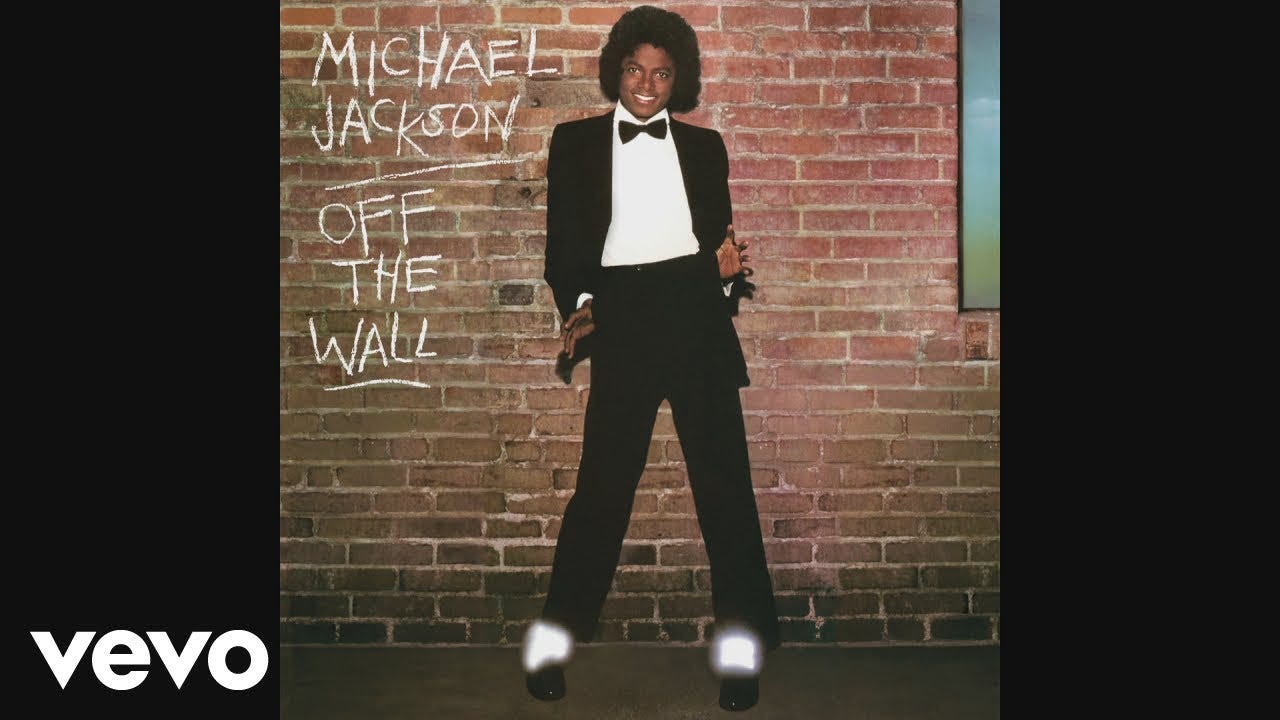
Before the music industry became a hyper-monetized machine, music belonged to geography and culture. If you traveled to a specific pocket of the world, you heard the instruments of that soil and the language of those people. It wasn’t “categorized” because it didn’t need to be sold to an outsider; it was simply the sonic landscape of a community. But expression has an innate refusal to stay separated. Throughout human history, whenever cultures intermingled through trade, migration, or forced displacement, those lines immediately blurred. The instruments of one world inevitably found the tuning systems of another.
The modern obsession with boxing music began in earnest with the separation of Rhythm and Blues from traditional Blues. Technically, the foundational DNA was identical. The chord progressions, the emotional weight, and the call-and-response structures were born from the exact same Black American experience. However, as Black Americans moved into urban centers and picked up electric instruments, the music looked and felt different. It was faster, louder, and suddenly highly marketable to a broader audience.
The industry panicked. It couldn’t just call it all “music,” because then how could they target specific demographics? How could they maintain the socio-economic hierarchies that kept certain artists in late-night joints and others on mainstream radio? By carving out “Rhythm and Blues” as a distinct entity, the gatekeepers realized they could create a specialized lane. It was a classist and racialized division disguised as administrative convenience.
Decades later, history repeated itself with Neo-Soul. When artists in the late ‘90s started blending classic soul aesthetics with contemporary hip-hop beats, the industry threw its hands up again. It looked like R&B, but it sounded like the past; it was live instrumentation, but it possessed a modern hip-hop bounce. Instead of acknowledging that Black music was simply evolving as a continuous, fluid spectrum, they built another box and labeled it “Neo-Soul” just to make sense of their own ledger books. They tried to categorize an aesthetic revolution because the alternative, admitting that music cannot be neatly partitioned, meant losing control over how it was sold.
The Algorithm Myth vs. How We Actually Hear
The industry clings to these labels because they feed the great corporate god of the 21st century: the algorithm. Streaming platforms are designed around the myth that human beings discover music by browsing sterile genre nodes or letting an artificial intelligence curate a playlist based on rigid sonic profiles. They want us to believe that we are passive consumers who need a digital taxonomy to navigate art.
But that is not how culture moves. We don’t fall in love with music because an algorithm told us a song perfectly matches the mathematical definition of “Alternative Indie.” We discover music through each other.
The Reality of Discovery: When you share a track with a friend, you rarely describe it by its technical genre. You say, “It’s got that dark, driving bassline like early Travis Scott, but the vocals feel like a late-night Frank Ocean record.”
We describe music through proximity, emotion, and shared reference points. We cross-reference voices, textures, and moods. Genre is a clumsy shorthand used by people who want to sell music, not by the people who actually live it. It is an industry mechanism useful for billing, radio programming, and handing out awards, but completely useless to the human ear.
The “Urban” Trap and the Grammys’ Hard Place
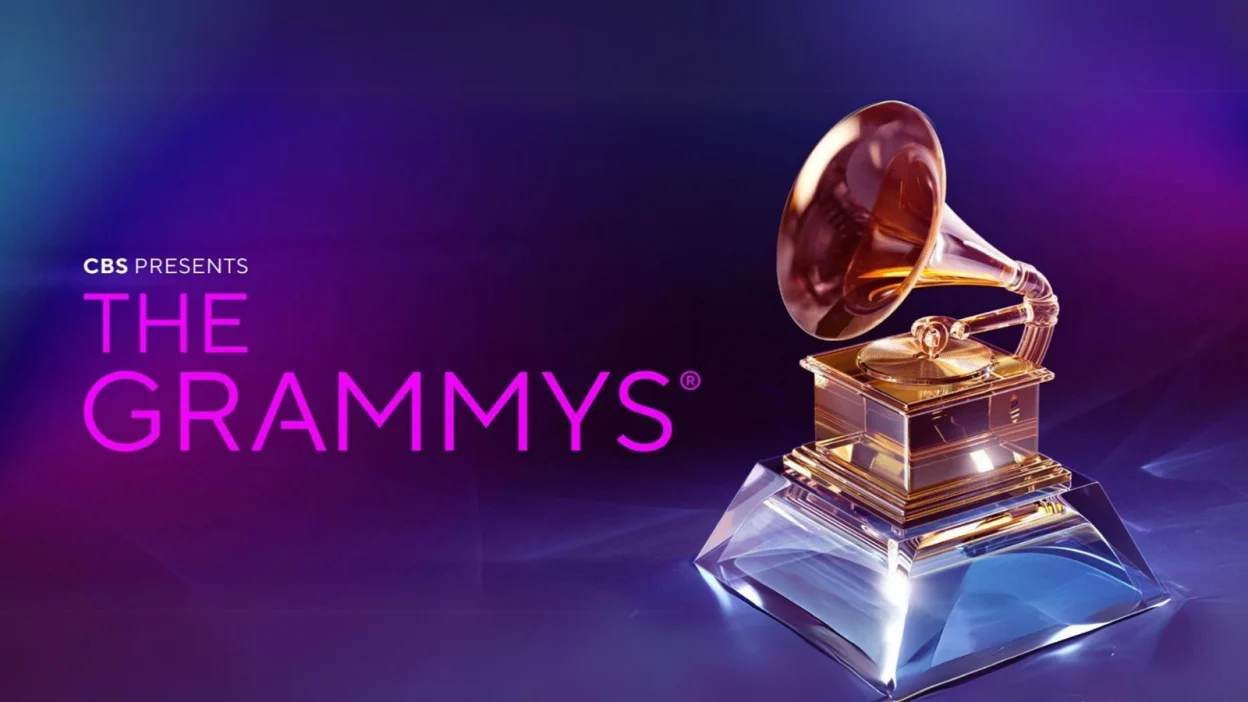
Nowhere is the classist and racialized nature of genre more obvious than in the inner sanctums of the Recording Academy. For a generation, institutions like the Grammys have used the word “Urban” as a polite, corporate euphemism for “Black.” It was an incredibly lazy, efficient way to box Black artists into a corner, ensuring they stayed out of the prestigious “General Field” categories like Album of the Year.
The problem is that hip-hop has completely globalized and blurred every boundary in its path. Black artists have spent the last two decades completely dismantling the rules of what hip-hop, R&B, and pop are even supposed to sound like. Look at the modern landscape:
Tyler, The Creator constructs intricate, jazz-fused, brilliant alternative orchestral movements.
Denzel Curry and Vince Staples pull from punk rock energy, industrial electronic textures, and avant-garde production.
Lil Yachty drops a full-blown psychedelic rock album that sounds closer to Pink Floyd than trap.
Drake floats effortlessly between dancehall, UK drill, house music, and straight-line pop.
Yet, no matter how vast their sonic palettes are, these artists continuously find themselves trapped in rap or urban categories. The system is designed to look at the creator rather than the creation.
When Beyoncé released Cowboy Carter and shattered records in the country music space, it forced a massive cultural category shift. It exposed the fact that the fences were entirely imaginary, built to protect a specific demographic’s ownership over an entire lifestyle.
On the flip side of that coin, you have UK artists like Sasha Keable, whose music carries the deep, rich sonic DNA of neo-soul, leaving audiences completely perplexed because the visual doesn’t match the historical demographic of the box. Can white artists be neo-soul? Can Black artists own country? The moment you have to ask these questions, the concept of genre has already fundamentally failed. It proves the system is between a rock and a hard place, trying to police boundaries that artists are actively jumping over.
BTS: The Bomb in the House of Genres
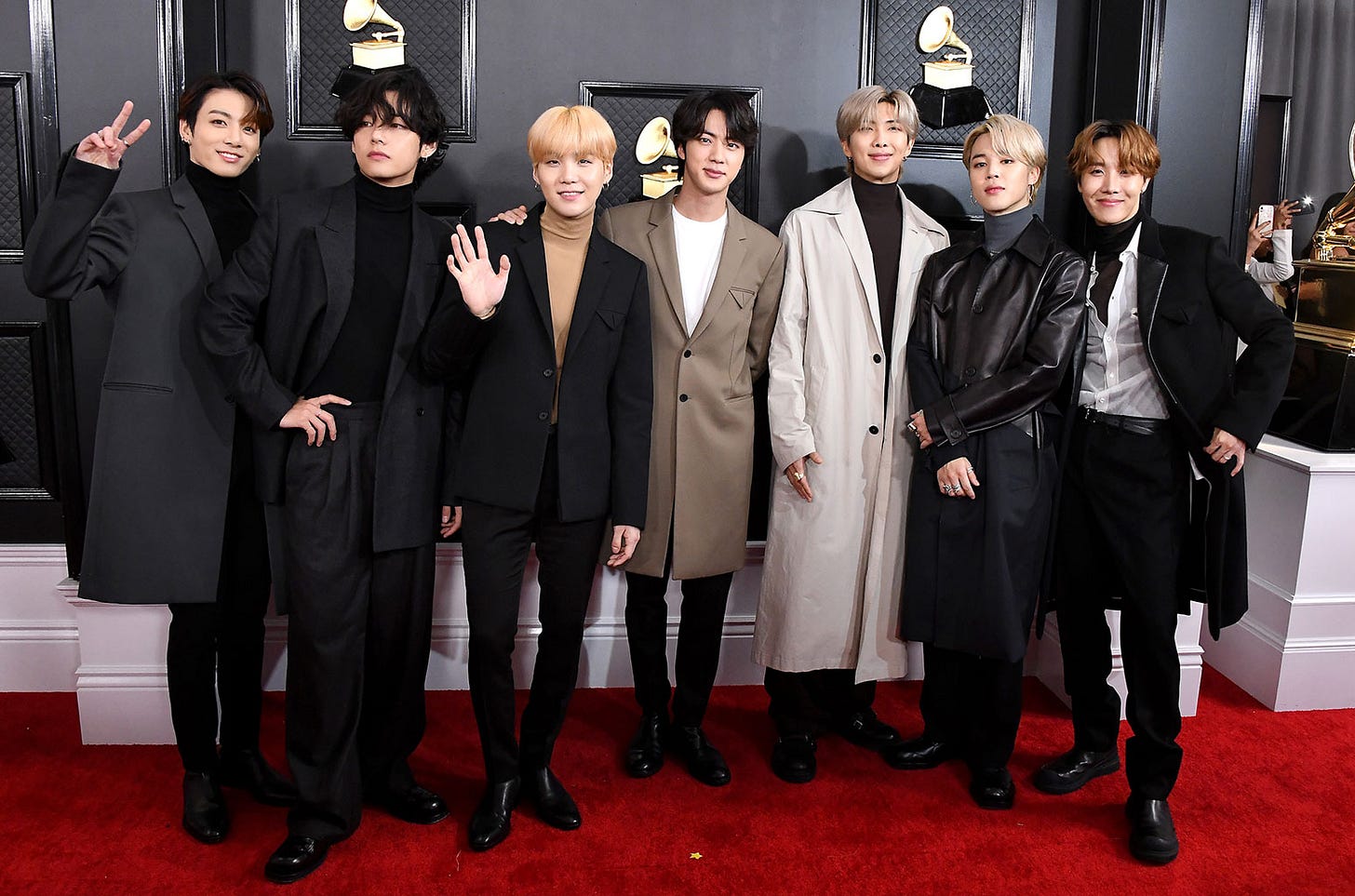
If the artists mentioned above were hammers hitting the drywall of the genre system, BTS is the atomic bomb that leveled the entire neighborhood. BTS does not make music that fits into a single category. Their discography is a masterclass in sonic borderlessness. It is a massive, kaleidoscopic output built on a foundational hip-hop base. It is a nod to their underground rap roots that effortlessly pulls in EDM, stadium rock, old-school R&B, UK garage, Latin pop, and traditional Korean instrumentation. They don’t just jump from genre to genre between tracks; they fuse them within the same three-minute song.
This complexity left Western gatekeepers completely paralyzed. The Grammys, unable to box the music based on traditional Western sonics, did exactly what they always do when the art outgrows the infrastructure: they stopped listening to the sound and started judging the look.
In the past, they could hide behind ambiguous words like “Urban” to mask their segregation. But with the rise of global acts like BTS, the institutional panic was so severe they skipped the subtext entirely. Instead of restructuring their system to accommodate a borderless musical landscape, the industry institutionalized the divide by creating explicit classifications like “Asian Pop.”
There is no hiding the ball anymore. By relying so explicitly on geography and ethnicity rather than sound to determine eligibility, the gatekeepers admitted that the entire concept of genre is broken. The only people who have the ability to win the awards they have created under these new terms are people who look like them, effectively admitting that the boxes were never about the music at all. Once you say the quiet part out loud, you have admitted that all is lost.
The Game is Jung Cooked
And that brings us to the final, unavoidable truth of the modern era. The entire apparatus is fundamentally, beautifully, completely Jung Cooked.
You let the cat out of the bag. The music industry built a century-long game based on the idea that they could forever control the flow of culture by keeping everyone in their designated rooms. They thought they could hand out tokens of validation while keeping the master keys to the house. But BTS walked through the front door, ignored the floor plan, and took the roof off.
There is no way left to score them by the old rulebook, and the institution knows it. No one actually knows how anyone wins these arbitrary awards anymore; if you dig deep enough, you realize that the ambiguity is the game. But you can’t play the game when the players have outgrown the stadium.
We are now exactly one generation away from a world where every kid with a laptop, regardless of their color, creed, or country, is making music with the same global, fluid mindset as BTS. The lines aren’t just blurred anymore; they have been completely erased.
So what is the establishment going to do next when the inevitable happens? What is the play when a group of Black kids from Atlanta drop a record that fuses K-pop arrangements, country storytelling, and drill beats? Are you going to put them in an “Urban Asian Country” category? The very idea is ridiculous. The ability to box people in is over. The Grammys have found themselves at the dead end of a road they spent a hundred years paving.
The New Guard Rules
What can be done when the system itself is obsolete?
Honestly, the establishment has two choices. They can keep building increasingly absurd, hyper-specific sub-categories until the awards look less like a celebration of music and more like a high school biology textbook classifying microscopic bacteria. They can continue to invent ridiculous titles to partition artists by their skin color and passport country, watching their cultural relevance evaporate in real-time.
Or, they can finally admit defeat, burn the boxes, and judge music by the only two metrics that have ever actually mattered: Does it move the culture, and does it make you feel alive?
The old guard is panicked because they’re realizing their keys don’t work on the new doors. For a generation, we watched superstars in the Americas build a blueprint that reached the entire world. But the world listened, learned, and subverted the script. The new guard isn’t asking for permission to fit into the old categories; they are ruling a borderless empire where the word “genre” sounds like an ancient, forgotten language. The fences are down, the house is gone, and honestly? The view has never looked better.
Featured Posts