The Ratio of the Ghost: Why the AI Music Panic Misses the Human Soul
People do not want AI music. They want the people they love, and they can be temporarily tricked when AI holds up a perfect mirror to those people.
Django Degree
There is a collective panic echoing through the hallways of the music industry right now, and it sounds like a glitching synthesizer. Every week, another tech executive stands on a stage and promises a world where you can type a text prompt into a box and output a multi-platinum pop song. Every week, another legacy artist signs an open letter begging for protection from the algorithmic tide.
The prevailing narrative is that artificial intelligence is coming to replace the musician. We are told that because a machine can now arrange frequencies into a mathematically perfect melody, the human artist is an endangered species.
But this entire anxiety is built on a fundamental misunderstanding of what music actually is.
The panic assumes that music is merely the sonic output. It beliieves the file format, the MP3, and the sound waves hitting your eardrums are the totality of what makes music great. It treats music as a commodity to be reverse-engineered. But the truth is far more interesting, and the solution to our current technological crisis is much simpler than the doomsayers want you to believe.
We aren't afraid of AI music because it’s bad. We’re afraid because we’ve forgotten how human communication actually works.
The Illusion of the Seamless Voice
Let’s start with a hard truth that the purists hate to admit. Humans already cannot tell the difference between AI-generated music and music made by real people.
This isn't a predictive guess about the future; it’s a verified reality of the present. And honestly? It shouldn’t surprise us. For the last twenty-five years, we have been living in an era of "AI Lite."
When tools like Autotune and Melodyne first entered the studio, we crossed an invisible rubicon. Suddenly, a pitch-perfect vocal line was no longer proof of a biologically gifted voice box. It was proof of good software. Melodyne didn’t just fix mistakes; it allowed producers to manually reshape the geometry of a human voice. People who couldn't sing a note to save their lives could suddenly transform their vocals into something pristine, otherworldly, and mathematically flawless. They could become something they could never be naturally.
[Raw Vocal Talent] + [Melodyne/Autotune] = The Modern Standard
[Zero Vocal Talent] + [Generative AI] = The New Playing Field
AI is simply the next iteration of this trajectory. It levels the playing field completely. Today, a kid with zero traditional musical training but a profound understanding of how to prompt an AI model stands on the exact same creative baseline as a classically trained virtuoso. The barrier to entry has evaporated.
If music were just a matter of pleasant arrangements and clean vocals, the human musician would indeed be obsolete. If the song itself was the final destination, the algorithms would have already won.
But a song is never just a song. It is a vessel.
How Real Is Real?
In his groundbreaking 1976 book How Real Is Real?, the psychologist and communication theorist Paul Watzlawick explored how human beings construct what we call "reality." One of his core insights is that our perception of truth is entirely dependent on communication, and more importantly, how we decode that communication.
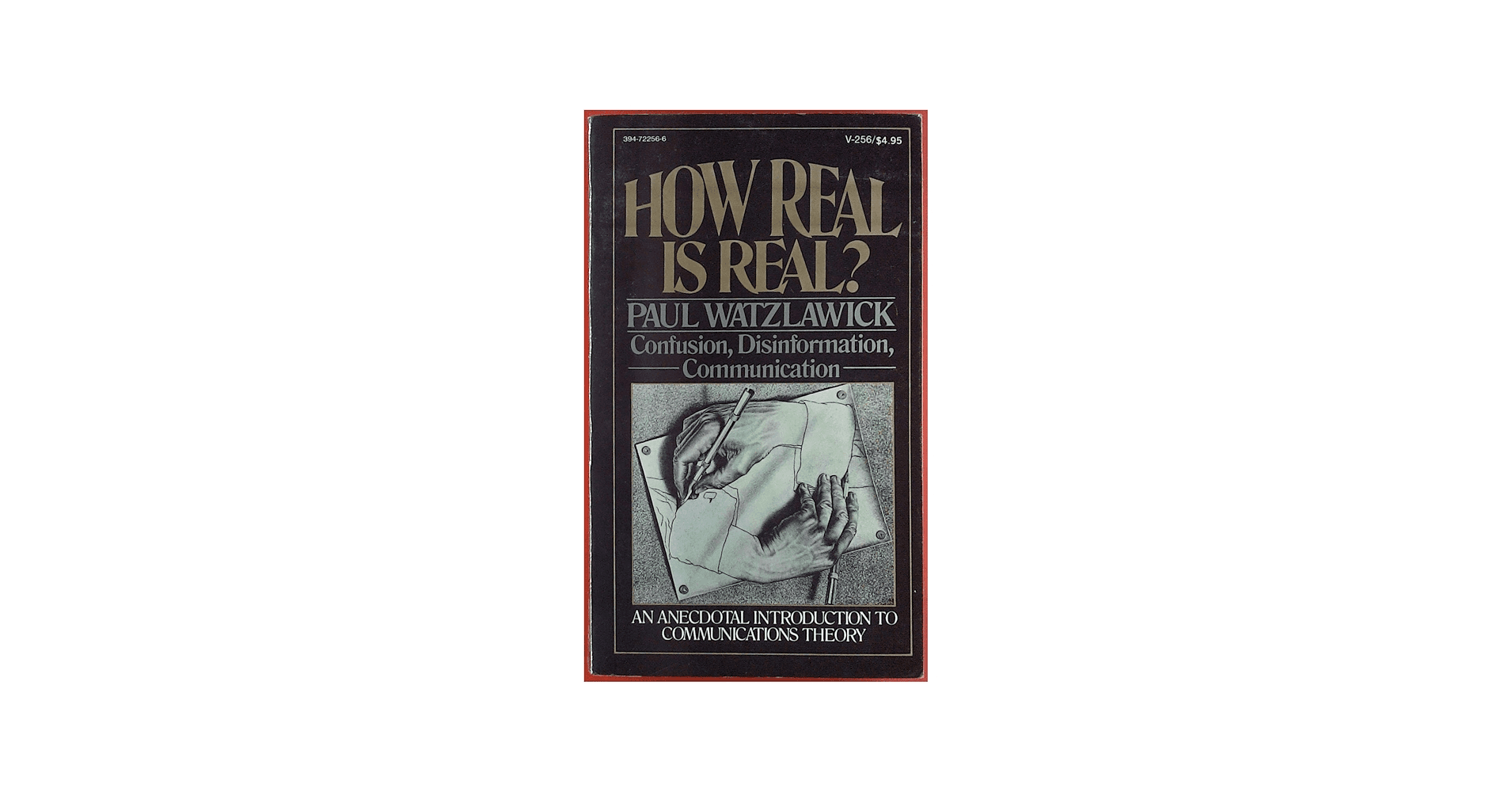
Watzlawick famously wrote:
"The belief that one's own view of reality is the only reality is the most dangerous of all delusions."
In the context of human interaction, Watzlawick demonstrated that we do not infer meaning from people based solely on the literal words they speak. Instead, we decode meaning based on who we believe they are.
Meaning does not exist in a vacuum; it is inferred based on history, context, and what you believe is possible in the person you are judging. This is why concepts like "appreciation" and "appropriation" are entirely in the eyes of the beholder. If a friend tells you a harsh truth, you hear it as love. If an enemy says the exact same words, you hear it as an attack. The data points are identical, but the perceived reality is entirely different because of the context of the source.
This is the psychological wall that AI music can never truly scale.
When we listen to a piece of music, our brains aren't just processing audio data. We are running an invisible, subconscious diagnostic on the creator. We are looking for a reflection.
Artists act as a muse for us. We look at their lives, their struggles, their triumphs, and their flaws, and we see reflections of our own lived experiences within them. The fan experience isn’t an administrative byproduct of the music business; it isthe music business.
[The Sonic Output] + [The Human Context/History] = Deep Emotional Meaning
We have already started to see what happens when you divorce the artist from the music. Look at the modern ecosystem of TikTok and Instagram Reels. Every day, a completely unknown artist has a song that vaults to the top of the Billboard charts because a 15-second soundbite went viral behind a dance trend. The audio is famous. The track is everywhere.
But what happens when that artist tries to book a venue? What happens when they announce a tour?
Often, nothing. They look at an empty room. Why? Because at that point, they don't have fans; they have numbers. They have an optimization metric. The audience fell in love with a soundbite, but they never formed an alliance with a human being. Without that alliance, you cannot sustain a career, you cannot build a community, and you cannot tour.
The 36-Shirt Paradox: When Numbers Aren't Fans
To understand exactly how this phenomenon plays out when content is completely divorced from an authentic relationship, we only have to look outside of music to the cautionary tale of the lifestyle influencer Arii.
Back in 2019, Arii was an 18-year-old Instagram star with a staggering 2.6 million followers. Her feed was an aesthetic dreamscape of bikinis, tight-fitting fashion, and luxury travel. On paper, her engagement metrics were highly competitive, hovering around 1.59%. She was the definition of an online success story.
Capitalizing on her massive audience, she decided to launch her own independent clothing line called ERA. Because of her massive following, the manufacturing company set a baseline requirement: she had to sell a minimum of just 36 pieces of seven different items—a grand total of 252 t-shirts—to get the brand off the ground.
She couldn't do it. The launch was an epic failure, and she had to pull the line completely.
[2,600,000 Followers] ──> [Cannot Sell 36 Shirts] ──> The Engagement Illusion
How does someone with millions of eyes on them fail to convert a mere three dozen sales? When data scientists pulled back the curtain using advanced analytics tools, the reality of her "influence" became starkly clear:
The Authenticity Gap: Nearly 50.9% of her audience was flagged as inauthentic. Her true, human followership was closer to 1.3 million—still a massive number, but flooded with the background noise of bots.
Demographic Mismatch: Her core demographic was youth aged 18–24. They were scrolling for entertainment, lacking the disposable income to invest in a premium clothing line.
Aesthetic Disconnect: Her fans followed her to look at her, to consume her specific, passive Instagram aesthetic. The moment she stepped outside her usual online "self" and asked them to execute a commercial transaction with short, unengaging captions that lacked a real call-to-action, the illusion shattered. Her audience felt the move was unauthentic to who they believed she was.
Arii had metrics, but she didn’t have a community. Her followers were consuming an optimized aesthetic, completely detached from a real human alliance.
This is the exact same trap awaiting the future of AI music. A tech company can generate an AI artist with millions of passive streams, algorithmic playlist placements, and optimized visual aesthetics. But when that artificial entity asks the audience to cross the line from passive consumption to active investment, to buy a ticket, to care about an album drop, to show up in a physical room, the conversion will fail.
You cannot sell a t-shirt, and you cannot sell a concert ticket, if the audience is only interacting with a ghost.
The Trick of the Mirror
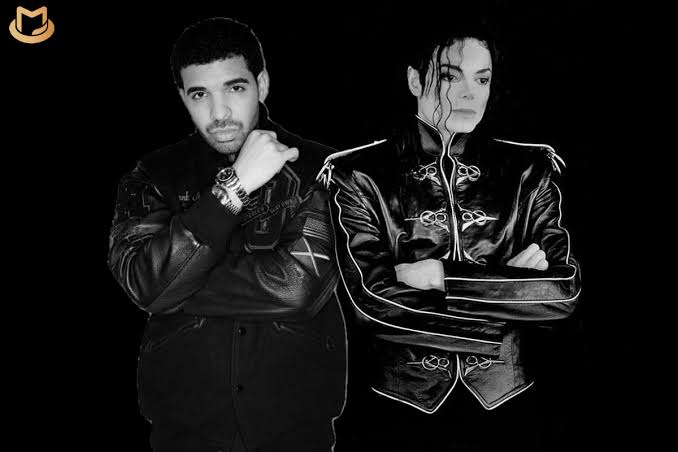
This brings us to the famous "Heart on My Sleeve" incident. The AI-generated track featuring the cloned voices of Drake and The Weeknd that swept across streaming platforms a while back. For a few days, everyone was playing it. It felt like a cultural moment.
The tech-optimists pointed to this as proof that AI music was ready to take over the world. "Look!" they shouted, "People love it!" But they misread the data entirely. What people loved wasn't the brilliance of the code. They loved it because they believed it was Drake and The Weeknd.
[AI Output] ──> [Tricks User into Believing Source is Human] ──> [Emotional Response]
The listener brought their entire history with those artists to the table before they even pressed play. They brought the memories of late-night drives listening to Take Care, the cultural weight of Drake’s celebrity, and the stylistic shorthand of The Weeknd’s dark pop aesthetic. The AI didn't create a new reality; it hijacked an existing one. It mirrored an entity that people already knew, trusted, and loved.
People do not want AI music. They want the people they love, and they can be temporarily tricked when AI holds up a perfect mirror to those people.
Once the illusion is shattered, once you realize there is no beating heart, no real heartbreak, and no actual human stakes behind the vocal track, the relationship changes. It mutates from art into a parlor trick. It becomes a novelty act.
The Django Ratio: Beyond the Demographics
The reason I see this so clearly comes from my own life. Growing up, I was someone who never fit neatly into any predefined box. I existed in the spaces between the lines.
When I hung out with one group, I was told I was "too Black." When I was with another, I was "too white." When I visited my cousins in Washington, D.C., they laughed and told me I was "too country." But when I went out into the actual country, my family there told me I was "too city."
For a long time, that isolated me. It felt like a flaw. But eventually, I realized the truth: I was none of the things they were describing. I wasn't a collection of demographic labels that could be ticked off on a census form.
I was just a ratio different from their baseline.
I was uniquely Django. My identity wasn't a fixed point; it was a specific, unrepeatable mixture of influences, environments, habits, and perspectives. And that is exactly what we are losing in the current cultural conversation. We have gotten so caught up in what people are as a demographic concept, or in music, what genre a song belongs to, that we have completely lost the magic of what makes people, people.
An algorithm can analyze my voice, my writing style, and my cadence. It can calculate the mathematical average of everything I’ve ever done and output a passable imitation. But it can never replicate the shifting, living ratio of my humanity because it hasn’t lived my life. It hasn't stood in the awkward margins of those family reunions.
AI can be an incredible tool that empowers an artist to become even better. It can help your favorite creator streamline their workflow, engineer complex soundscapes, or write more music in less time. But when people try to treat it like a shortcut, when they use it to steal an artist's likeness, or bypass the agonizing, beautiful process of human creation, they are trying to pass off a demographic average as a human soul.
The Cobra Effect in the Modern Industry
Right now, the music industry is experiencing a textbook example of the Cobra Effect.
The Cobra Effect: A perverse incentive that occurs when an attempted solution or reward creates an unintended consequence that actually makes the original problem significantly worse.
The term comes from a story about colonial India. The government, concerned about the number of venomous cobras in Delhi, offered a bounty for every dead snake brought to them. It seemed like a simple, market-driven solution. But instead of wiping out the snakes, entrepreneurial citizens realized they could make a steady income by breeding cobras in their homes specifically to kill them and collect the bounty. When the government realized what was happening and canceled the reward, the breeders realized their snakes were now worthless—so they set them free. The snake population actually multiplied.
In the music business, the "cobra" is financial risk, and the "bounty" is the pursuit of maximum programmatic efficiency.
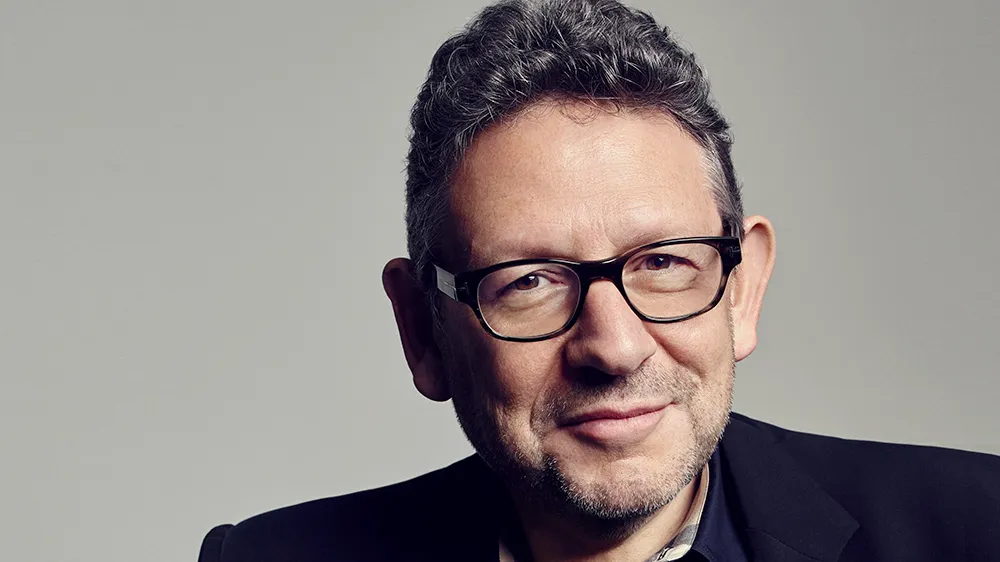
Major executives look at music completely divorced from the art itself. There is no love of creation in their calculations; there is only a desire to reverse-engineer an audio asset that can maximize profit. Just listen to the way people like Bill Ackman or major label heads like Lucian Grainge talk about the industry. They don't talk about artists as cultural pillars; they talk about them like Pokémon cards.
To them, a catalog is a financial instrument to be bought, held, shorted, and traded. They see AI as the ultimate cost-cutting measure. If you can use AI to extract maximum value from an artist's likeness without having to deal with the messy reality of human emotions, royalties, mental health crises, or creative control, then from a corporate balance sheet perspective, you have won the game.
But by incentivizing the mass production of algorithmic noise to save money and corner the market, they are breeding more snakes. They are flooding streaming platforms with billions of contextless, soul-free soundbites that alienate the consumer and destroy the very thing that gave music value in the first place: human loyalty.
The Easiest Solution in the World
The tech industry wants you to think that regulating AI music is a complex, philosophical labyrinth that will require years of international policy debates. It isn't. The solution is actually incredibly simple, and it comes down to basic economic accountability.
We don't need to ban the technology. We just need to change the financial math for the people trying to use it as a shortcut to steal from others.
Here is the policy blueprint:
Mandatory Labeling: Every single piece of music that utilizes generative AI to mimic or create vocal performances, lyrics, or core melodies must be explicitly labeled as AI-generated in the metadata across all platforms. No exceptions.
The Double-Damage Penalty: If an individual or an entity is caught using an artist's likeness, voice, or proprietary style via AI without explicit legal authorization, they are fined double the total amount of revenue the track generated.
The Creative Renaissance Fund: 100% of the money collected from those fines does not go back into the pockets of the record labels or tech platforms. Instead, it is funneled directly into a public fund designed to give underprivileged kids access to musical instruments, recording equipment, and production tools they otherwise could never afford.
If you make it fiscally irresponsible to steal, the parasites will leave the ecosystem overnight. The people who are only in it to make a quick buck by exploiting someone else's brand will suddenly find the risk far outweighs the reward. And in their place, we will fund the next generation of human talent.
The Path to the Renaissance
Once something is created in the digital age, it can and will be copied. With AI, that reality is truer than it has ever been. But we don't have to fear that capability; we just have to look at it from a different perspective. If we protect the legal rights of creators and punish the thieves, AI stops being a threat and becomes an engine for a new creative renaissance. It can empower independent artists to produce symphonic-level arrangements from their bedrooms. It can allow a singer with a brilliant mind but limited engineering skills to mix a record perfectly. It can give creators the leverage to remain independent.
Look at the artists who command the highest levels of cultural authority today, like Russ, BTS, Drake, Justin Bieber, and Taylor Swift. What do they all have in common? They don't rely on fleeting viral soundbites to survive. They built an unbreakable, direct relationship with an audience that knows exactly who they are. Their fans don't just stream their songs; they show up in stadium seats, buy their merchandise, and defend their legacies because they are invested in the human being behind the mic. They love the specific ratio of their idols.
Do you want a fleeting TikTok number one that disappears from public consciousness the moment the next trend hits the algorithm? Or do you want a community that will stand by you for twenty years?
The future of music isn't a battle between human meatware and silicon chips. It is a choice between the financial extraction of art and the reclamation of human connection.
If you love music, if you are a creator, do not run away from the future. Stay as independent as possible. Tell your truth. Embrace your unique ratio. The part of you that doesn't fit into their demographic boxes. Build a real, human community that knows your name and your story.
Let the corporations trade their digital Pokémon cards. The rest of us will be busy building the renaissance!
Featured Posts