>
>
Mapping the Spaceship: How BTS, OutKast, and Hip-Hop's "Aliens" Conquered the Global Monoculture
Mapping the Spaceship: How BTS, OutKast, and Hip-Hop's "Aliens" Conquered the Global Monoculture
The lesson of this cultural autopsy is clear: the aliens always win. The industry will continue to run its classic playbook, attempting to push the next radical vanguard to the margins, to dismiss their accents, or to segregate their triumphs into specialized sub-categories.
Django Degree

The Geography of Exclusion: How Regional Cartels Control Cultural Capital
The history of modern music is dictated by regional cartels that consistently confuse their own borders with the absolute limits of artistic validity. In 1995, the American hip-hop landscape was locked in a brutal, bi-coastal duopoly. The entire infrastructure of cultural capital - the magazines, the radio programmers, the executive suites, and the awards shows - was split cleanly between New York and Los Angeles. When a young duo from Atlanta named OutKast walked onto the stage at the Source Awards in New York to accept the award for Best New Rap Group, they were met with an immediate, suffocating wall of boos from the audience. The coastal establishment viewed the American South as a musical wasteland populated by uncultured, slow-talking caricatures who lacked the technical precision of Eastern lyricism or the cinematic grit of Western g-funk.
When André 3000 took the microphone amidst that sea of hostility, his declaration was not an apology; it was a geopolitical threat. By stating that the South had something to say, André was diagnosing a systemic illness in the music industry: the tendency of established gatekeepers to treat any art originating outside their preferred zip codes as an invasive species. The coastal elite wanted hip-hop to remain local to their block, unable to comprehend that the structural poverty, systemic racism, and unique rhythmic heritage of the American South were breeding a completely different, highly sophisticated subgenre of Black expression. The corporate and media gatekeepers held a total monopoly on taste, meaning that if you did not fit the sonic profile of the dominant coastal cities, you were actively wiped from the cultural ledger.
Fast forward to 2013, and the exact same corporate and cultural script was deployed on a global scale against seven young men in Seoul, South Korea. When BTS debuted under a small, nearly bankrupt independent agency called Big Hit Entertainment, they were targeted by a dual layer of severe gatekeeping. Domestically, the South Korean music industry was controlled by a cartel of massive corporate agencies that monopolized broadcast television, chart positioning, and media narratives. Internationally, and specifically within the Western musical hegemony, the idea of a Korean group executing authentic hip-hop and R&B was treated as an absolute joke.
The Western music press and industry executives immediately categorized BTS through a lens of cultural condescension. They were dismissed as a manufactured, highly packaged corporate product devoid of genuine artistic agency. Just as New York purists looked at the South and saw simple-minded party music, the global West looked at South Korea and saw an assembly-line imitation of Western urban music. Both OutKast and BTS were born into systems that explicitly told them they did not belong, that their accents were incorrect, and that their cultural context made them fundamentally illegitimate. The global music industry operates as an empire, and anyone trying to enter from the outside is treated as a barbarian at the gate.
Turning the Slur into a Spaceship: The Alienation Blueprint
When you are systematically denied citizenship in the dominant culture, the only logical survival mechanism is to build your own planet. André 3000 and Big Boi understood this deeply after the hostility of 1995. Instead of altering their style to fit the sonic aesthetics of New York or Los Angeles, they leaned directly into their isolation. They released their sophomore masterpiece, ATLiens, explicitly adopting the persona of extraterrestrials who had dropped down into Georgia. If the hip-hop establishment was going to treat them like aliens from another world, they would build a spaceship out of southern funk, space-age synthesizers, and hyper-dense, eccentric rhyme schemes.
The ATLien identity was a brilliant piece of artistic jujitsu. By embracing the slur of being an outsider, André 3000 liberated himself from the rigid stylistic restrictions of mid-90s hip-hop. He traded the standard oversized street clothes for turbans, fur tails, and high-fashion eccentricity that baffled the street purists. Sonically, OutKast stopped relying on standard jazz loops and instead began creating original, synth-heavy, live-instrumentation backtracks that felt completely detached from Earth. They forced the listener to come to them, redefining the entire geography of hip-hop by making their alien world the most compelling destination in the culture. They made the local global by refusing to dilute their southern vocabulary.
The parallel to BTS's structural trajectory is striking. From their earliest eras, BTS faced intense ridicule from both traditional pop fans, who found their aggressive hip-hop imagery too abrasive, and the underground Korean hip-hop scene, which viewed them as sellout idols wearing hip-hop as a costume. Trapped in a cultural no-man's-land, BTS turned their outsider status into their primary narrative engine. They leaned heavily into the concept of the Whalien 52, a track dedicated to the real-life fifty-two-hertz whale, an animal that sings at a frequency no other whale can hear, doomed to swim the ocean in total isolation.
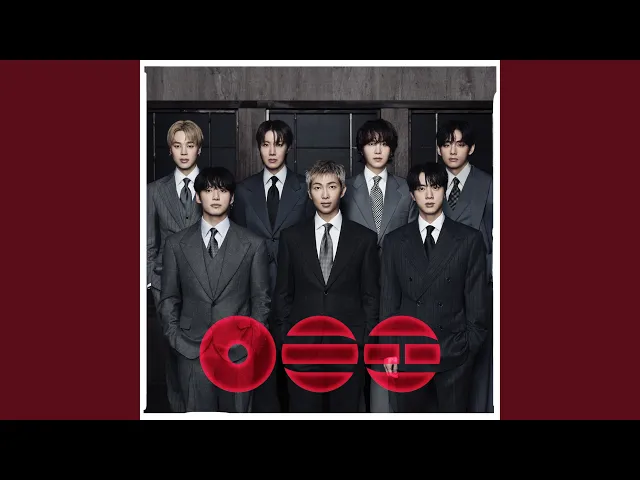
BTS did not find a seat at the table; they built an entirely separate international infrastructure. Denied traditional radio airplay in America and locked out of major television promotions in their early years, they bypassed the gatekeepers entirely by using early social media platforms to speak directly to a global audience. Their fan movement acted as a decentralized distribution network that forced Western media to acknowledge their existence through raw, undeniable data. By the time the Western industry realized what was happening, BTS had achieved stadium-level global dominance without ever receiving permission from a single American radio programmer or label executive. They forced their way into the global monoculture by making their alien perspective a universal language.
The Architecture of Creative Depth: Formulating the Avant-Garde Vanguard
The industry-led narrative surrounding global pop acts is that their popularity is a triumph of marketing over substance. However, an investigative look into the discographies of both André 3000 and BTS reveals a level of conceptual depth and structural control that directly mirrors each other. André 3000’s genius lay in his refusal to treat hip-hop as a static genre. By the time OutKast released Aquemini and Stankonia, André was operating as a multi-instrumentalist, arranger, and philosopher. He was blending psychedelic rock, acoustic folk, gospel, and techno into a cohesive southern narrative that dealt with systemic poverty, mortality, and the existential dread of the approaching millennium.
André’s writing didn't just chase trends; it established an entirely new sonic vocabulary that made unconventional arrangements ultra-popular. Tracks like B.O.B. combined a one-hundred-and-thirty-five-beat-per-minute techno tempo with a gospel choir and a scorching electric guitar solo, a mixture that should have been a commercial disaster but instead became one of the defining tracks of the era. He proved that the masses did not need simplified hooks; they were starving for complex, avant-garde art disguised as popular music. He dismantled the radio format by forcing the industry to adapt to his chaotic, brilliant sonic depth.
BTS established their global empire using the exact same creative philosophy. From their inception, the group’s core rap line, RM, Suga, and J-Hope, operated as primary songwriters and producers, maintaining a level of creative control that is historically rare in global pop spaces. Instead of relying on shallow pop tropes, BTS constructed massive, multi-album conceptual universes. Their Most Beautiful Moment in Life series served as a cinematic, tragic exploration of youth alienation, mental health, and social stagnation among the working-class youth of South Korea.
The depth of their creation reached its peak when they anchored their multi-year Map of the Soul era directly in Jungian psychology. They structured their tracklists around Carl Jung’s theories of the Persona, the Shadow, and the Ego, translating dense psychoanalytic concepts into stadium-level hip-hop and pop anthems. Tracks like Black Swan explicitly dealt with the existential terror of an artist losing their passion for their craft, utilizing traditional Korean instrumentation blended with modern trap drums. This new, highly distinct Korean sound, characterized by rapid genre-switching, intricate lyrical metaphors, and deeply vulnerable thematic concepts, became ultra-popular worldwide. It proved that audiences were entirely willing to look past language barriers if the underlying creative depth was undeniable. Both André 3000 and BTS took highly specific, localized anxieties and wrapped them in such innovative sonic production that they transformed their regional outsider music into the dominant global sound.
The Box of Sub-Categorization: Neo-Soul, D'Angelo, and the Grammy Containment Strategy
When the music industry can no longer ignore an innovative artist of color, its secondary defense mechanism is containment. This strategy was perfected in the late 1990s by music executive Kedar Massenburg when dealing with the rise of D’Angelo. When D’Angelo dropped Brown Sugar in 1995, followed later by the masterpiece Voodoo, he was presenting a radical, raw, and deeply spiritual evolution of Black music that seamlessly integrated Jimi Hendrix guitars, J Dilla-inspired off-beat drumming, and classic Marvin Gaye soul. It was a sound that threatened the highly sanitized, mechanical R&B dominant on commercial radio at the time.
To make sense of the authentic artistic wave, Massenburg coined and the term Neo-Soul. While it worked as a brilliant marketing tool, it ended up serving a more insidious structural purpose: it in many ways, placed a glass ceiling over D’Angelo and his peers like Erykah Badu and Maxwell. D’Angelo himself vehemently resisted the label, stating in interviews that he did not do Neo-Soul, he simply made Black music. The industry used the subgenre label to ensure that D’Angelo’s revolutionary work would be safely tucked away in specialized urban radio formats and specific Grammy categories, preventing him from competing directly with white rock and pop artists in the major general fields like Album of the Year.
This exact historical playbook is currently being run by the Recording Academy against BTS and the wider wave of Korean musicians. For years, the Grammys have used the Best Pop Duo/Group Performance category as a holding pen for BTS. They would gladly invite the group to perform on their broadcast to harvest the massive television ratings and social media engagement that the Korean act uniquely commands, but when it came to the actual awards, the group was consistently snubbed in favor of safe, Western legacy acts.
The systemic containment strategy became completely transparent when the Recording Academy announced the creation of a brand-new category: Best Asian Pop Music Performance. This is the modern iteration of the Neo-Soul box. Rather than allowing highly sophisticated, globally dominant Korean-language albums to compete in General Field categories like Album of the Year or Record of the Year, the industry is building a separate digital ghetto.
By creating a hyper-specific category that segregates artists based on geography and language, the Western music establishment attempts to protect its historic hegemony. It allows them to hand out a secondary, off-camera trophy to Asian acts while keeping the main stage reserved for Anglo-American pop stars. It is the exact same method used against D'Angelo: if you cannot defeat the new sound commercially, you create a new, lower-tier category to ensure it never officially outranks the establishment. It is segregation disguised as inclusivity.
The Cyclic History of Gatekeeping: Broader Parallels Across Hip-Hop and R&B
The marginalization of the American South and the ongoing exclusion of Korean music are part of a continuous, historical cycle within global music structures. The industry always rejects the vanguard before capitalizing on it, and several other major movements in hip-hop and R&B highlight this identical phenomenon.
The early West Coast hip-hop movement faced a nearly identical wall of coastal gatekeeping from the New York establishment. When groups like N.W.A and Ice-T first emerged, New York radio and media dismissed them as talentless, overly violent shock-rappers who didn't understand the true poetic roots of the culture. The East Coast elite attempted to lock them out of the canon, forcing West Coast hip-hop to build its own independent economy, street distribution lines, and independent labels. It was only after the West Coast completely dominated the billboard charts and vinyl sales that the establishment was forced to retroactively recognize their artistic brilliance and absorb their sonic aesthetics into the mainstream template.
The rise of the Toronto sound, spearheaded by Drake and his primary producer Noah 40 Shebib, encountered intense resistance from the American hip-hop core. In the late 2000s, the idea of a Canadian artist making legitimate, melancholic hip-hop and ambient R&B was rejected as soft and inherently inauthentic to the genre. The American gatekeepers asserted that true hip-hop required a specific American urban lineage. Drake was forced to bypass traditional gatekeepers by dropping free mixtapes online, creating an internet-driven demand that eventually completely inverted the industry. Today, the ambient, melodic trap sound pioneered in Toronto is the standard template for American commercial radio, proving that the outsider eventually becomes the blueprint.
Across the Atlantic, the UK Grime and Drill scenes experienced the exact same colonial gatekeeping from the American hip-hop monoculture. For over two decades, pioneering British artists like Wiley, Skepta, and later Stormzy were treated by American media as novelties with strange accents who were merely imitating an American art form. The global industry refused to fund or distribute their music in the West, treating the UK urban scene as an alien entity that could not translate to global success. The UK scene responded by building its own self-sustaining ecosystem through pirate radio, localized YouTube channels, and direct European touring circuits. Today, UK Drill dictates the sonic texture of New York hip-hop itself, forcing the American birthplace of rap to import its cadences and drum patterns from the very outsiders it originally dismissed.
The Inversion of the Center: The Periphery Dictates the Future
The historical cycle proves that the music industry's gatekeepers do not actually possess the power to create culture; they merely possess the power to tax it. Whether it is the coastal hip-hop elite of 1995 or the Recording Academy today, the establishment remains fundamentally reactive. They treat genuine innovation as a threat until that threat becomes too profitable to ignore, at which point their containment strategies, be it the Neo-Soul box of the nineties or the Asian Pop category of the modern era, are deployed to preserve a fading hierarchy. But these boxes are always temporary holding cells. You cannot permanently quarantine a sound that has already captured the collective consciousness of the global public.
What André 3000 and BTS ultimately proved is that true artistic depth creates its own gravity. When OutKast proclaimed that the South had something to say, they weren't begging for validation from the coastal elite; they were announcing that the center of the musical universe had shifted. Decades later, when BTS transformed the alienation of the isolated whale into a global stadium movement, they didn't just break through the Western gatekeeping apparatus; they rendered it obsolete. They showed that the language of structural displacement and existential depth is universal, capable of collapsing geographical, linguistic, and institutional barriers from the outside in.
The lesson of this cultural autopsy is clear: the aliens always win. The industry will continue to run its classic playbook, attempting to push the next radical vanguard to the margins, to dismiss their accents, or to segregate their triumphs into specialized sub-categories. But the margins are precisely where the art stays dangerous, and the center becomes entirely hollow without them. By the time the establishment realizes that the outsiders have built a completely separate world, the spaceship has already launched. The gatekeepers are left guarding an empty house, while the aliens dictate the frequency of the future.
Featured Posts