Think about the structure of modern creative industries. We are taught that genres are built by pioneers, but they are policed by monarchs. Every musical ecosystem eventually reaches a critical crossroad where its elder statesmen must make a definitive psychological choice: are they protectors of the art form, or are they simply protectors of their own real estate?
Imagine a version of hip-hop where the highest seats of institutional power were occupied not by gatekeepers operating on an exhausting model of absolute scarcity, but by bridge-builders. Imagine a landscape where the arrival of a disruptive, genre-shifting force was met not with corporate coldness, executive shelving, or subliminal hazing, but with an immediate, radical embrace. What could hip-hop look like today if its foundational titans behaved like Billy Ray Cyrus?
To understand the gravity of that alternative timeline, we have to look across the cultural aisle to Nashville. In 2019, an internet-native kid named Lil Nas X uploaded a strange, hypnotic track called "Old Town Road" to the web. It was a brilliant, surrealist blend of trap drums and country imagery, a piece of digital folklore that defied traditional categorization. As the song caught fire on social media, it began rapidly climbing the Billboard Hot Country Songs chart.
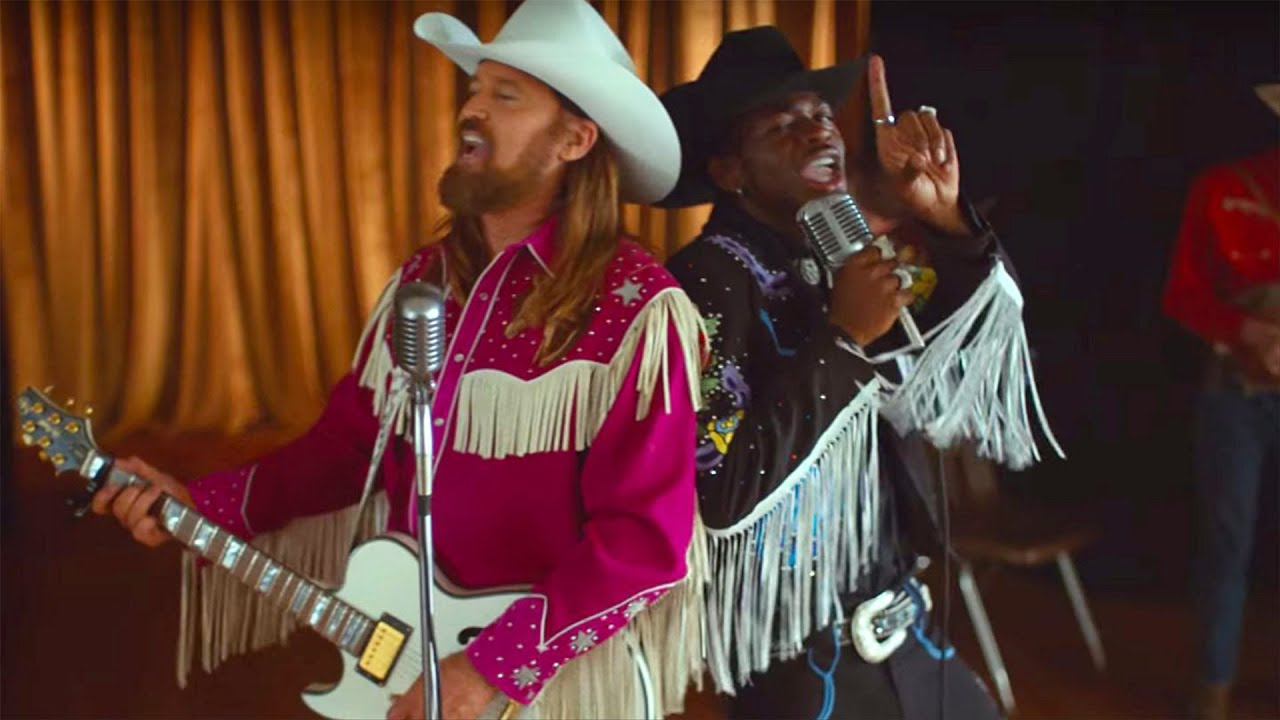
What followed was a masterclass in institutional gatekeeping. Billboard quietly removed the track from the country charts, issuing a sterile corporate statement claiming the song did not embrace enough elements of today's country music to merit inclusion. It was a polite, bureaucratic policing of borders. The traditional power structures of Nashville recognized an outsider who did not fit their demographic or cultural template, and they actively used their systemic leverage to block his growth. They wanted to ensure that the valuable real estate of country music remained insulated from the hyperreal, chaotic evolution of the internet era.
The industry fully expected the story to end there, leaving Lil Nas X as a brief viral anomaly crushed by the weight of traditionalism. But then Billy Ray Cyrus entered the arena. As a definitive titan of country music history, Cyrus possessed all the institutional privilege the gatekeepers were using as a shield. Yet, instead of viewing this teenage disruptor as a threat to his legacy or a dilution of his genre's purity, Cyrus recognized the soul of evolution.
He did not just offer a polite quote of encouragement in a passing interview. He stepped directly into the fire, recorded an authentic, stadium-ready verse for the official remix, and gave the track an undeniable country co-sign. By lending his prestige, Cyrus completely dismantled the blockade. The song bypassed the gatekeepers entirely, went on to achieve diamond status, shattered records for the longest-running number-one song in Billboard Hot 100 history, and ultimately empowered Lil Nas X to win multiple Grammy Awards. Cyrus understood a fundamental truth that escapes most monarchs. True leadership is not about guarding a finite pie, it is about expanding the table so the next generation can fly into spaces you could never reach alone.
The Monarch of Scarcity
Now, turn your eyes back to hip-hop, a culture that constantly brands itself as the vanguard of youth expression, and look at the exhausting cycle we have been trapped in for over two decades. The turning point arrives around 2005, the year Jay-Z assumed the presidency of Def Jam Recordings. This was the moment the ultimate competitor transitioned into the ultimate corporate gatekeeper.
There is no denying that hip-hop has achieved historic, unprecedented milestones under his curation. He provided a brilliant blueprint for corporate mobility, proving that a rapper could navigate the highest boardrooms of global capitalism. Yet, that institutional ascent solidified a psychological model of absolute scarcity within the culture. The underlying ethos of the throne became clear; for the king to maintain absolute dominance, the momentum of every rising peer must be carefully managed, neutralized, or contained.
Consider the historical wreckage left in the wake of this legacy-preservation strategy. When Cam'ron and the Dipset movement were capturing the raw, neon energy of the New York streets, generating an organic fervor that threatened to shift the cultural epicenter away from the corporate center, they ran directly into the executive wall of Jay-Z's Def Jam presidency. Projects were delayed, distribution channels were restricted, and a movement that should have evolved into an enduring institutional empire was systematically fragmented from the top down.
This was not an isolated incident; it was a repeatable playbook. The public fallout with Dame Dash was not just a business divorce; it was the methodical, corporate dismantling of a co-founder's legacy to ensure that the narrative of Roc-A-Fella's genius had only one protagonist. Even the historic, celebrated feud with Nas, while romanticized as a battle for the crown of New York, set a dark precedent. It established the paradigm that an elder's primary role when challenged is the total executive and cultural elimination of their peer.
When Lil Wayne began his historic, mid-2000s run, explicitly declaring himself the best rapper alive around the release of The Carter II, the response from the throne was not a celebratory passing of the torch. It was a decade of defensive, cold, sub-textual warfare. It was a sequence of passive-aggressive bars and calculated executive posturing designed to remind the young genius from New Orleans that his impact was still subject to the evaluation of the king.
The defensive perimeter extended to every sonic shift in the culture. When Soulja Boy revolutionized the entire industry by proving that an independent teenager could bypass the major label system through digital self-distribution, the response from the upper echelons was a condescending critique of the new generation's depth, rather than an embrace of their systemic breakthrough.
When T-Pain introduced a melodic, auto-tuned revolution that would eventually provide the structural DNA for the entire modern era of global music, Jay-Z dropped "Death of Auto-Tune" (D.O.A.). It was a heavy-handed, corporate decree that actively froze the sonic landscape. It pushed a brilliant, sensitive innovator into a period of deep professional depression and forced an entire generation of melodic artists to justify their creative tools to a traditionalist king who refused to adapt.
From the public humiliation of Mobb Deep's Prodigy on the Summer Jam screen to the prolonged, competitive proxy wars with 50 Cent, the strategy never shifted: isolate the threat, diminish the peer, and outlast the generation.
The Drake Paradigm and the GQ Paradox
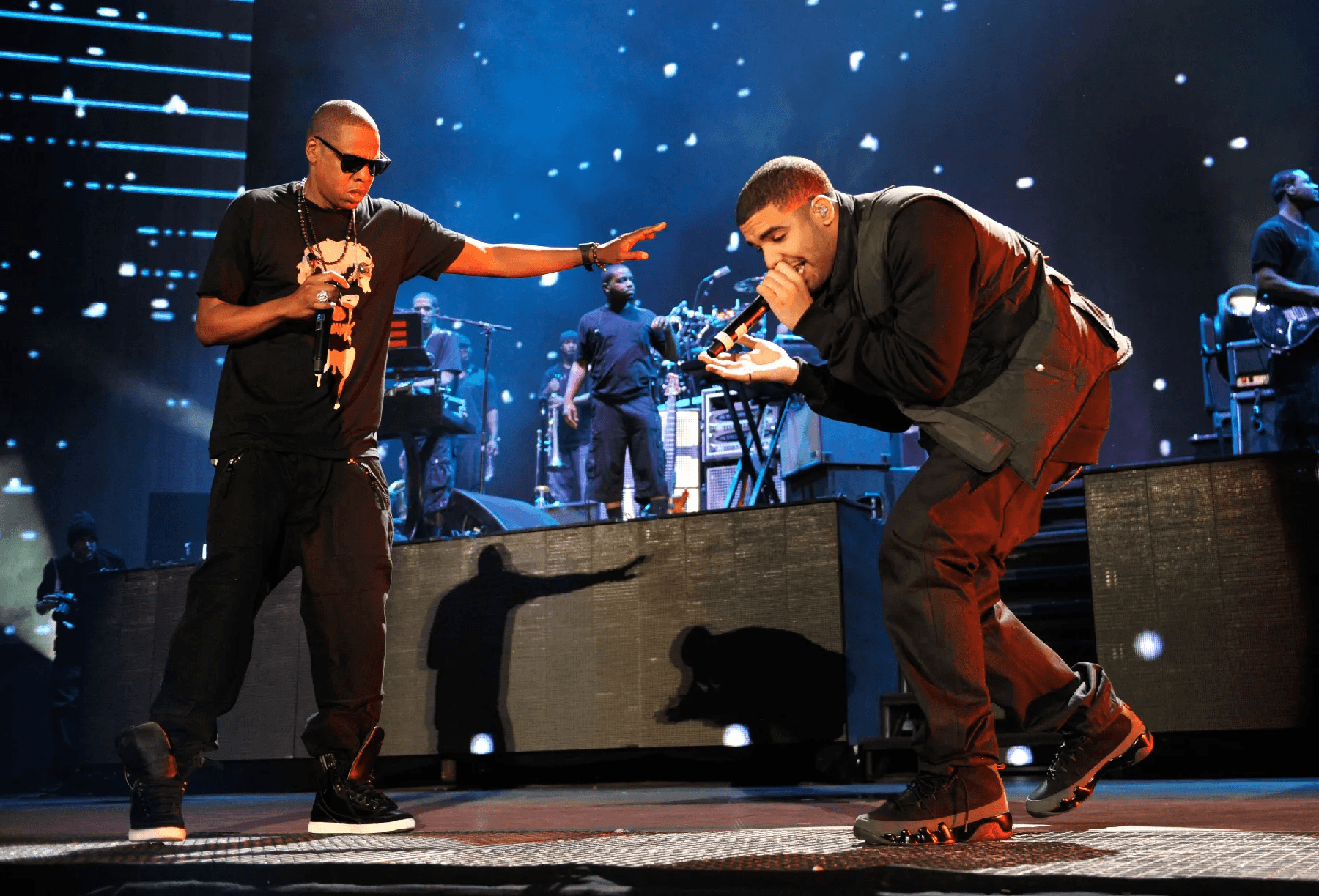
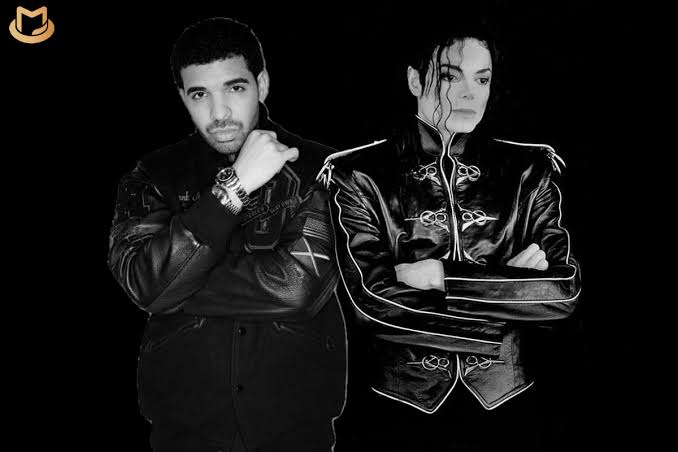
We are currently watching the final, most desperate iteration of this cycle play out in real-time with Drake. For well over a decade, Drake has not just challenged the traditional throne; he has completely rewritten the mathematical, commercial, and cultural scale of what a hip-hop superstar can achieve in a globalized era. As Drake continues to surpass the benchmarks of historical longevity, the defensive maneuvers from the elder statesman have grown increasingly transparent. The corporate chess pieces are moved subtly in the shadows, alliances are forged behind closed doors, and institutional platforms are leveraged to contain a force that cannot be defeated through raw artistic output alone.
The tragic hypocrisy of this structural defensiveness was laid bare in Jay-Z's recent candid interview with GQ.Sitting down with Frazier Tharpe, the billionaire mogul looked at the current, fractured landscape of rap and explicitly stated that he was not sure if beef and hyper-competitive battling are helpful to our growth anymore.He noted that social media turns these conflicts into scorched-earth campaigns that tear down people's lives. It was an uncharacteristically vulnerable observation, a moment of elder wisdom that seemed to advocate for a culture built on cooperation and mutual elevation rather than destruction.
Yet, almost instantly, the actions deviated from the philosophy. The machinery of self-preservation kicked right back into gear, materializing completely when he used the massive platform of the Roots Picnic to drop a calculated diss track targeting Drake. Standing on that stage, the elder statesman completely abandoned the high-minded rhetoric of his print interviews to engage in the exact brand of warfare he had just deemed destructive to the culture. The deep-seated desire to maintain the illusion of absolute, unchallenged dominance overrode the very wisdom he had just articulated to the world. The king spoke of peace on the page while actively executing an ambush on the festival stage.
The Myth of Samurai Jack: Dismantling the Katana of Ego
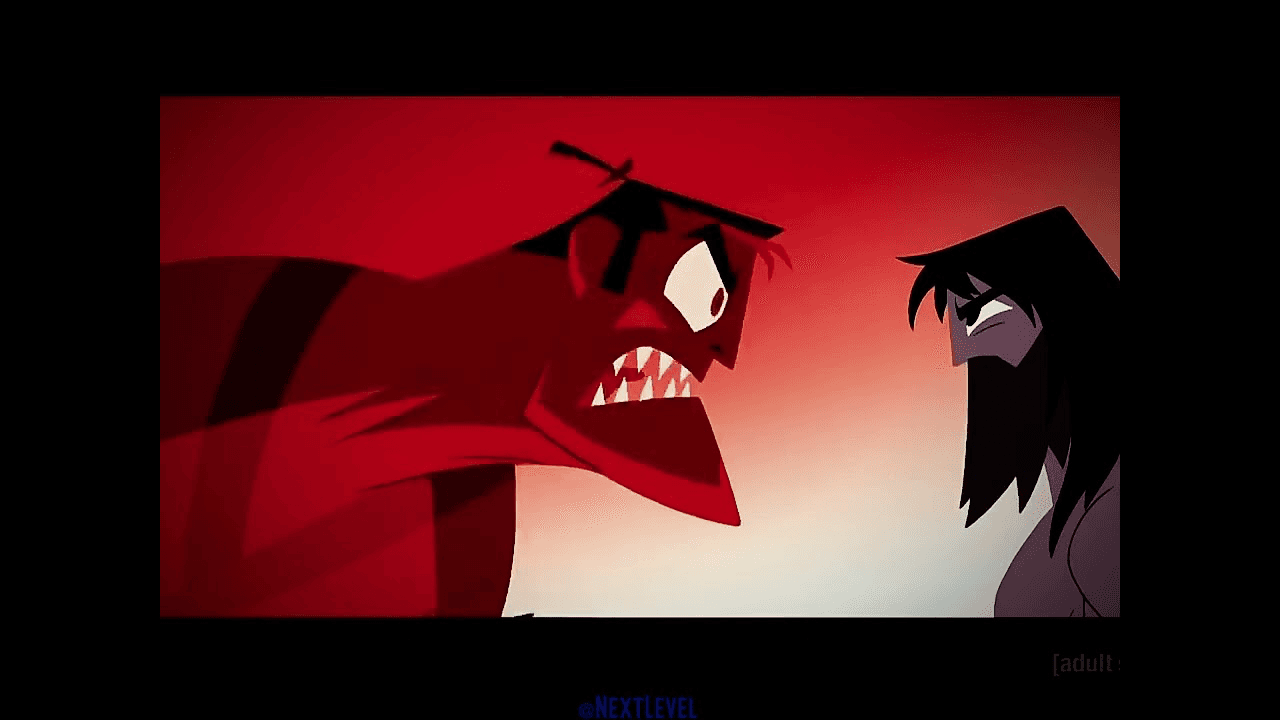
This specific psychological trap brings to mind the profound, redemptive narrative arc of Samurai Jack. In the final season of the iconic series, we find Jack trapped in a dystopian future, wandering a bleak, war-torn landscape for fifty long years without aging. To survive the brutal, daily onslaught of this dark world, Jack relies entirely on his survival instinct, his hardened exterior, and his deeply entrenched ego. He tells himself that his rage, his isolation, and his bitterness are the very things keeping him alive.
Yet, the story reveals a devastating, foundational truth: it was that exact internal rage and defensive ego that caused him to lose his sacred, mystical katana in the first place. Years prior, when provoked by the shape-shifting demon Aku, Jack lost his inner peace. He lashed out in a blind, vengeful fury, accidentally slaughtering innocent creatures that had been mutated into monsters. Because his hands were stained with innocent blood spilled in a moment of pure ego-driven anger, the mystical sword, an instrument of absolute righteousness, abandoned him. It slipped from his grasp and plummeted into an unreachable, bottomless abyss.
For five decades, Jack fights a futile, exhausting war using ordinary, fragile weapons, running on the toxic fumes of an ego that tells him he must endure the weight of the world entirely alone. He reaches a point of absolute, crushing despair, haunted by the demonic hallucinations of his own angry past self, nearly succumbing to the urge to end it all because the struggle feels completely futile.
It is not until Jack strips away his battle-worn armor, sits in absolute stillness, and engages in profound spiritual meditation that the path back to power opens. In the spiritual realm, he is directly confronted by Mad Jack, the personification of his survivalist rage and defensive ego. Jack finally sees the truth. He looks at his dark counterpart and realizes that his own anger, his own desperation, and his own need for control have been the exact forces keeping him from his true weapon.
Instead of fighting the demon with more violence, Jack chooses to entirely destroy the ego. He breathes, lets go of the rage, and dispels the dark manifestation once and for all. Only when the ego is completely dissolved do the gods deem him worthy again, returning the mystical sword to his hands. It was never about fighting harder with the tools of scarcity; it was about abandoning the ego to reclaim the only tool capable of defeating the darkness and restoring balance to the world.
The Next Evolution
Hip-hop is currently standing in its own absolute abyss, operating on a broken, twentieth-century model of hyper-masculine scarcity. In a globalized, borderless streaming world, the music industry is no longer a localized street corner where only one soundsystem can control the block. It is not a zero-sum, winner-takes-all game. The culture does not expand when its most brilliant minds are forced into isolation, or when its brightest stars are pushed into career-ending conflicts designed solely to protect an aging monarch's legacy. We are infinitely better, more sustainable, and more culturally potent when our superstars work together, building interlocking ecosystems rather than digging deeper trenches.
Ego was undeniably the fuel that got hip-hop out of the parks of the Bronx and into the luxury suites of global commerce. It was the necessary, defensive armor required to survive a hostile music industry that wanted to exploit the art form and discard its creators. But the tools required to survive the past are rarely the tools required to build the future. We have reached the absolute limits of what a culture driven by defensive, insecure monarchs can achieve.
To enter the next evolution of this art form, we desperately need a new archetype of leadership. We need leaders who possess the deep internal security to step into the room with the next generation and actively empower them. We need a leadership class that leaves the ego behind, realizing that true power lies in amplification, collaboration, and the creation of safe sanctuaries where language, thought, and artistry can flourish without the constant threat of executive sabotage.
That is the exact architecture I am creating with my platform. We are tearing down the old, defensive blockades and designing a sanctuary where authenticity isn't treated as a threat, where collaboration completely replaces elimination, and where the word is finally given the space to breathe, evolve, and lead the culture forward. The era of the insecure king is drawing to a close; the era of the collective empire has officially begun.
Featured Posts