>
>
An Open Letter on FOMO’s Eve: Why the Gatekeepers Tried to Rule Hip-Hop And Why We Kept Watching Anyway
An Open Letter on FOMO’s Eve: Why the Gatekeepers Tried to Rule Hip-Hop And Why We Kept Watching Anyway
The genre isn't dying; the assembly line is.
Django Degree

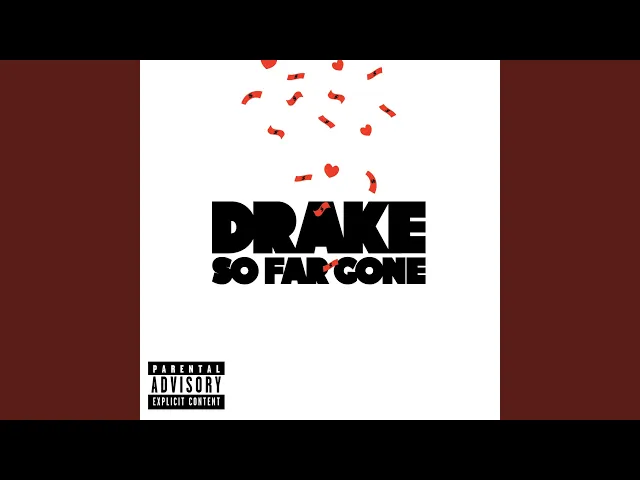
They keep saying our genre is dying. Videos don't matter. Nobody is watching, nobody is listening." When Drake posted those words alongside the announcement for FOMO, a self-funded short film presented as an exercise in unchecked surrealism, it felt less like an ordinary project rollout and more like a quiet declaration of war against cultural cynicism. In a single caption, he captured the core friction that has defined his entire career and, by extension, the experience of everyone who has followed him over the last sixteen years. The irreconcilable gap between those who observe culture and those who actually build it.
The modern narrative machine is obsessed with decay. Critics, commentators, and self-appointed guardians of hip-hop regularly declare the genre dead or dying, mourning a golden era that exists mostly in their own nostalgia. But what Drake’s post lays bare is that the genre itself isn't dying at all. What is dying is the manufactured formula. The corporate, predictable machinery that the gatekeepers relied on to maintain their authority. In its place sits a truth that hip-hop was built on but frequently forgets: true creation does not ask for permission, nor does it wait for an institution to save it.
To understand what it has meant to be a Drake fan across generations is to study the fundamental tension between the observer and the creator. The observer operates in a space of complete safety. They do not risk public failure, emotional vulnerability, or artistic rejection; instead, they stake their identity on categorization. They construct rigid taxonomies around what hip-hop is supposed to sound like, who is allowed to hold authority within it, and what emotional boundaries an artist must respect. For years, these observers have tried to stand in front of the tide, asserting that they are the culture, using their platforms to dictate who belongs and who is an intruder.
Yet the creator exists in a completely different reality. The creator is defined not by the rules they enforce, but by the risks they take. When Drake emerged in the late 2000s, he fundamentally shattered the observer’s taxonomy. He sang seamlessly where he was expected to rap; he spoke openly about insecurity, heartbreak, and pettiness where he was expected to project untouchable dominance; he blurred the lines between regional sounds, global pop, and insular street rap. The observers spent years attempting to halt this progression, calling it soft, calling it commercial, calling it an aberration. But in doing so, they exposed their own fragility. They proved that their devotion was not to the spirit of the art form, but to the control they wielded over it.
The profound irony of this gatekeeping lies in the history of hip-hop itself. Hip-hop was born out of pure, unadulterated rule-breaking. It was created by kids in the Bronx who took discarded turntables, sampled broken fragments of soul records, and disrupted the entire global music industry without asking a single executive for approval. It became the most powerful cultural movement on the planet precisely because it refused to be what authority figures told it to be. It thrived on its status as an outlaw art form.
How surreal it is, then, to watch within a single generation as the very people who fought to break hip-hop free became the ones trying to chain it down. The former rebels grew up, sat in editorial chairs, took over podcast mics, and transformed into the exact moral police they once defied. They created a new canon of orthodoxy, establishing arbitrary rules for what constitutes "real hip-hop." They forgot that the moment an art form stops evolving to protect its rules, it ceases to be a living movement and becomes a museum exhibit.
For those of us who spent our youth feeling like perpetual outsiders, this dynamic resonated on a level that went far deeper than music. Childhood has a way of teaching you early on that society is organized around arbitrary perimeters. In almost every room, schoolyard, or social circle, someone is designated as the person who does not belong. You quickly learn the aching feeling of having no ability to fit in anywhere, simply because the structure of the group demands that someone occupy the margin. You learn what it feels like to be watched, judged, and categorized by people who have decided, before you even speak, that you do not meet their criteria.
When Drake came along, he did something unprecedented for the modern outsider: he made it cool to be the outsider. He did not try to contort himself into the pre-approved archetypes of 1990s bravado or street orthodoxy. Instead, he embraced the uncomfortable space of being too rap for the pop world and too pop for the rap purists, too emotional for the tough guys and too calculating for the traditionalists. He took the very qualities that gatekeepers used to exclude him and turned them into a global blueprint. For every fan who grew up feeling like they were constantly on the outside looking in, watching Drake conquer the world without conforming to the old guard's rules was a cathartic validation. It proved that you didn't need to change who you were to force the world to pay attention; you just had to make your output impossible to ignore.
This brings us back to the present moment and the pervasive belief that hip-hop is dying. The genre isn't dying; the assembly line is. The era where a label or a circle of tastemakers could manufacture an artist, run them through a standardized PR playbook, and force-feed them to the masses is over. Today's audience demands raw, self-determined authenticity. They want art that feels unmediated, personal, and uncompromising.
When Drake writes, "This is self funded surrealism... Credit to nobody but the members... Nobody is coming to save you," he is offering a masterclass in modern creative independence. He is explicitly rejecting the idea that artists need the approval of traditional institutions to create meaningful work. When he declares, "I still care. As much as I did on the set of Best I Ever Had," he strikes at the very heart of why his movement has endured. In a culture driven by detached irony, performative apathy, and endless critical commentary, caring deeply about your work is the ultimate act of rebellion.
The observers will continue to write eulogies for a genre they no longer control. They will continue to complain that videos don't matter, that nobody is listening, and that the golden era is behind us. But while they talk, the creators will continue to build. They will continue to drop the songs, fund the visual surrealism, take the risks, and march forward with the people they trust.
At the end of the day, the debate over Drake’s place in the culture misses the point entirely. You don't have to like him. You don't have to agree with his artistic pivots. You don't even have to believe his narrative. But as he continues to redefine what longevity looks like in a genre that eats its young, one truth remains absolute: all of you watched. You watched an outsider refuse to ask for permission, break every rule the gatekeepers tried to enforce, and push the culture forward anyway. And in doing so, he reminded us all that art belongs to the people who dare to create it, not the observers who stand on the sidelines trying to tell them how it's done.
Thank you to the day-one fans who held the line and never switched the code.
We stood unbroken through the years as Drake carved out his own relentless road.
Back when he bled through The Fear and questioned what the future would hold, he gave a timeless anthem to every outsider waiting to be bold.
You proved that raw authenticity is worth far more than gold, so thank you from the depths of my soul for a story that will never grow old.
More Life.
Featured Posts