>
>
The Boundaries Of Belonging: Fat Joe, Drake, And The Unanswered Question of Blackness
The Boundaries Of Belonging: Fat Joe, Drake, And The Unanswered Question of Blackness
When identity becomes an "if you know, you know" secret, who actually holds the keys? A deep dive into cultural mobility, ancestral trauma, and the limits of how we define ourselves.
Django Degree

Fat Joe recently sat in front of a camera and declared, without a stutter: “I’m the Blackest n***a you’ve ever seen in your life.”
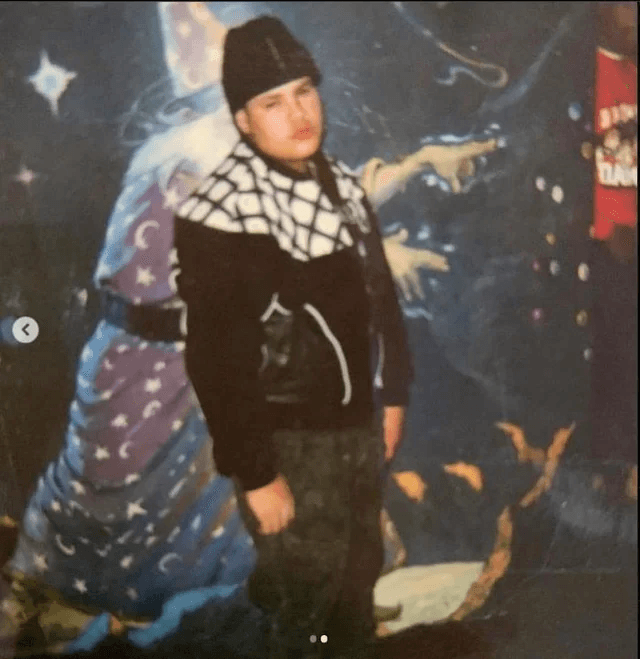
On its face, the statement sounds like hyperbole, or outright delusion. Fat Joe, born Joseph Antonio Cartagena, is a Puerto Rican and Cuban man from the South Bronx. He is not ethnically African American, nor does he claim to be genetically Black. Yet, his declaration wasn't met merely with laughter; it sparked an uncomfortable, burning question that Hip-Hop and Black America have been quietly wrestling with for decades: What does it actually mean to be Black in America?
Is Blackness defined by genetics? Epigenetics? Lived suffering? Proximity to the culture? Spatial geography? Or is it an unwritten code, an aesthetic, an inherited trauma?
Earlier this year, I wrote an article titled THE ROOMS WE WEREN’T ALLOWED IN: CULTURAL MOBILITY, BLACK IDENTITY, AND WHY DRAKE TRIGGERS AMERICA’S OLD WOUNDS. In it, I explored how cultural mobility in America has been weaponized, and how our history has devolved into a classist structure that makes authentic belonging almost impossible to navigate. Kendrick Lamar’s anthem "Not Like Us" didn't just win a rap feud; it cracked open a reservoir of unspoken anxieties. It created a public dialogue about lineage, legitimacy, and authenticity that many of us have wanted to hold for years.
Because as a Black man who was raised outside of Hip-Hop culture, I have had my own Blackness questioned. I know what it feels like to be measured against a cultural checklist you never signed up for, administered by gatekeepers who can never quite articulate the criteria.
The "If You Know, You Know" Tautology
Whenever this conversation reaches a critical boiling point, the defense almost always devolves into the same intellectual cop-out: "If you know, you know."
It’s a phrase wrapped in smug certainty, designed to end debate before it begins. But who really knows? And more importantly, if you can’t explain it, do you actually understand it? A wise man once reminded me that if you cannot explain an idea to a third-grader, you don't truly understand the concept yourself.
When you press people to define Blackness, an unsettling pattern emerges. We are masters at describing what Blackness is not. But the moment you attempt to elevate any single attribute into the definitive boundary line, you trigger a philosophical auto-immune reaction.
Every single line drawn to define Blackness instantly turns on itself, disqualifying millions of undeniably black people in the process. It is an inescapable Catch-22: the moment you declare what Blackness is, the logic breaks, and the identity collapses.
Consider what happens when you pick any single concept as the line:
If you draw the line at Genetics & Lineage: You argue that Blackness is strictly a matter of blood quantum and African ancestry. Under this rule, Drake and J. Cole qualify, while Fat Joe is immediately disqualified. But follow that line to its logical conclusion: where does that leave African Americans whose ancestry was violently disrupted, erased, and forcibly mixed over centuries of chattel slavery? If a strict percentage of African DNA is required, we unintentionally resurrect the eugenicist formulas of white supremacy. In demanding pure lineage, you end up stripping Blackness away from millions of descendant people whose family trees were severed by history.
If you draw the line at Historical American Trauma: You argue that Blackness is defined by the specific, inherited legacy of the transatlantic slave trade and Jim Crow in the United States. Under this rule, you instantly eject 21 Savage (born in the UK), Bob Marley, Marcus Garvey, and every first- or second-generation Nigerian, Ghanaian, or Haitian American living in Harlem, Atlanta, or Houston. These individuals walk down an American street and are perceived, profiled, and policed as Black. Yet, this definition claims their lived reality doesn't count because their grandparents suffered under different coordinates. If Blackness requires an American birth certificate, then Blackness isn't a global diaspora, it's just a geopolitical zip code.
If you draw the line at Environment & Cultural Struggle: You argue that Blackness is an environment. It reduces Blackness to life in the trenches or immersion in Hip-Hop culture, binding Black identity to permanent marginalization. This is Fat Joe’s defense. But if environment and struggle are the ultimate criteria, an absurd paradox occurs: Fat Joe becomes "Blacker" than a Black child raised by two Black parents in a suburban cul-de-sac. Think about the toxicity hidden inside that logic. It makes Blackness dependent on permanent disenfranchisement. It turns middle-class stability, educational access, or suburban safety into a loss of identity. If escaping poverty makes a person "less Black," then Blackness is transformed into a prison where economic mobility is framed as cultural treason.
If you draw the line at External Perception (Phenomenology): You argue that Blackness is defined simply by how the world treats you. If police profile you as Black, you are Black. But if Blackness is reduced entirely to how white supremacy perceives and punishes you, we surrender the authority to define ourselves. We turn Blackness into a passive state of external oppression rather than an active creation of culture, joy, art, and agency. It implies that without a dominant gaze to inflict trauma, Blackness would cease to exist.
This is the fatal trap of the gatekeeper.
Drake isn't Black enough because he grew up in Forest Hill, Toronto. 21 Savage is an outsider because of a UK birth certificate. Fat Joe isn't Black because of his genome, despite his cultural immersion. Barack Obama, Kamala Harris, and Mariah Carey sit on shifting sands, perpetually evaluated by fluctuating litmus tests depending on who holds the measuring tape.
Every single criterion, whether based on genetics, geography, struggle, culture, or perception, fails the moment it is forced to stand as the primary pillar. Pick one, and you cut off a vital limb of the diaspora. Combine them strictly, and they contradict one another.
The metaphorical lines that define the perimeter are drawn with surgical precision when excluding people. But the moment you ask what sits at the center, the definition vanishes into thin air. It devolves into a vibe, a secret handshake, an elusive "if you know, you know." When an entire identity can only be defined by negation, the boundary line stops being a shield to protect the culture. It becomes a cage that ensures no one can ever truly be free inside it.
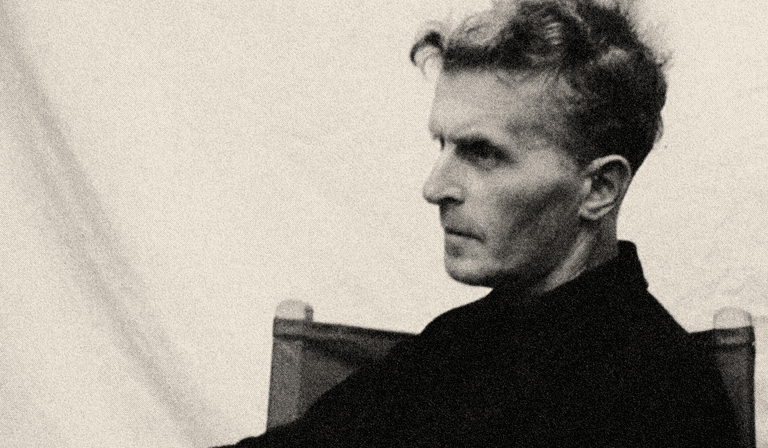
Ludwig Wittgenstein and the Trap of "Family Resemblances"
To understand why this happens, we can look through the lens of philosopher Ludwig Wittgenstein. In his Philosophical Investigations, Wittgenstein tackled the problem of concepts that seem impossible to pin down with a single, universal definition. He introduced the idea of "family resemblances."
Think of games: chess, football, solitaire, card games. What single feature do they all share? Some are competitive; some aren't. Some use balls; some use cards. Some require skill; others require luck. There is no single "essence" that makes a game a game. Instead, there is a complicated network of overlapping similarities and relationships. It's a family resemblance.
Wittgenstein argued that when we try to force a complex social concept into a single essential box, language breaks down. We get trapped in "language-games."
For centuries, Black identity in America has operated like an impossible language-game. Is Blackness an essence, or is it a set of family resemblances? By relying on "if you know, you know," we admit that we are playing a game whose rules we refuse to write down, because writing them down would expose how arbitrary, fragile, and exclusionary they really are.
Frantz Fanon and the Architecture of Negation
If Wittgenstein exposes the linguistic failure of our gatekeeping, the Martinican philosopher and psychiatrist Frantz Fanon uncovers the psychological trauma underneath it.
In his seminal 1952 work, Black Skin, White Masks, Fanon wrote about the concept of "epidermalization", the process by which an identity is imposed onto the body from the outside. Fanon famously recounted walking down a street in France and hearing a white child cry out: "Look, a Negro!"

In that singular moment, Fanon realized that his Blackness was not something he had authored for himself. It was a construction forced upon him by the white gaze. He was not allowed to simply be a man, an intellectual, or a human being; he was fixed, pinned to a board like a butterfly, defined entirely by what the dominant culture needed him to represent. Blackness was defined in opposition to whiteness. It was a void of what they believbed mattered.
This is the ancestral blueprint of America's racial project. America created legal constructs to define Blackness purely for the purpose of restriction and control.
The "One-Drop Rule": The idea that if a single drop of chocolate falls into the milk, the entire glass is contaminated, was not created by Black people to foster solidarity. It was created by white supremacists to preserve purity and property rights.
Terms like mulatto, quadroon, and octoroon were pseudo-scientific classifications designed to measure proximity to white power and decide who could be owned, who could vote, and who had to sit at the back of the bus.
For centuries, Blackness in America was an identity of imposed containment. You were Black because the state said you were Black, and the state said you were Black so that you could be denied access to the room.
And here is the painful truth we rarely want to face: We have inherited the machinery of our oppressor's definitions, and we are now using it to police one another.
The Wound of Passing: From "Imitation of Life" to "Sinners"
Because Blackness was historically defined as a container of suffering, leaving that container, or moving fluidly in and out of it, was viewed with intense suspicion.
In classic American cinema, we see this trauma played out repeatedly. Look at Imitation of Life. The heartbreak of that story isn't just about a light-skinned daughter, Peola, rejecting her dark-skinned mother. It is about a girl so terrified of the cruelty of the world that she chooses spatial invisibility over living authentically. Passing as white wasn't just about ambition; it was an escape plan. The mother’s heartbreak was a cultural mourning, a realization that society had taught her child that Blackness was something to flee, not something to cherish.
We see a modern echo of this same wound in Ryan Coogler's film Sinners, where Stack, a Black man, watches Mary, a white-passing Black woman he loves, marry a white man with the silent endorsement of himself and the entire community. The community doesn't help Mary pass because they lack pride; they do it because they love her enough to want her to survive. In a hostile world, a white future was safer than a Black present.
In America, mobility was never seen as a neutral choice. It was an emergency exit.
And for those who couldn't pass, a brutal psychological rule was internalized: If you leave, you are abandoning us. To succeed out there, you must be leaving something Black behind.
That rule didn't die with Jim Crow. It stayed in our bones. It lives in our cultural subconscious. It is why, when a Black person changes their cadence, moves into new rooms, or code-switches to navigate power, the community doesn't just ask "What are you doing?" They ask "Who do you think you are?"

The Modern Mirror: Drake, 21 Savage, and the Fear of the Unboxed Black Man
This brings us back to the present, and to why cultural figures like Drake trigger such explosive visceral reactions.
When Drake effortlessly glides across distinct cultural territories, adopting London drill cadences one year, slipping into Toronto’s Afro-Caribbean patois the next, sampling Memphis bounce, and openly navigating his Jewish lineage, he causes a collective allergic reaction. He does not stay in a single room, nor does he ask for permission before entering the next. In a society that conditions us to treat Black identity as a rigid fortress, his fluid mobility feels like a direct provocation.
This constant movement activates two deeply rooted cultural anxieties that appear different on the surface, but actually spring from the exact same historical trauma. On one side lies the accusation of modern passing. Critics look at his light skin, his suburban Canadian upbringing, and his ability to retreat into pop prestige, asking a painful question: Are you simply putting on our lived struggle when it is commercially lucrative, only to slip back into safety when the fire gets too hot?
On the other side lies the accusation of cultural extraction. The critique morphs into a charge of tourist exploitation: Are you mining the genuine rhythms, slang, and labor of localized Black communities without paying the emotional or historical dues that forged them?
Neither reaction is really about Drake the individual. Both are ancestral projections. We are responding to modern movement with the unhealed wounds of Peola in Imitation of Life and Mary in Sinners. For centuries in America, crossing a cultural or racial boundary was never viewed as an act of genuine freedom. It was viewed as a trade. To gain safety, you had to abandon your family. To gain access, you had to leave your identity at the door. We inherited a bone-deep suspicion that any movement across borders is inherently an act of desertion. We learned to believe that if you move, you are fleeing, and if you flee, you are leaving the rest of us behind to suffer alone.
We often summarize this instinct with the tired idiom "crabs in a barrel," using it to shame our community for pulling down those who achieve mobility. But that metaphor conveniently ignores the primary truth of the arrangement: crabs were never born in a barrel. The barrel is an artificial structure. The scarcity of resources, the hyper-vigilant policing of identity, and the rigid borders around who belongs were all engineered by a system designed to contain us. The territorial defensiveness we exhibit toward one another is not an inherent trait of Blackness; it is the psychological byproduct of living inside a prison built by someone else.
This brings the fundamental contradiction of our current debate into sharp relief. When Fat Joe sits in an interview and proclaims himself "the Blackest," he relies on a definition of Blackness built entirely on environmental immersion, urban marginalization, and Hip-Hop struggle. He argues that proximity to the barrel’s floor is what grants authenticity. Conversely, when critics reject Drake by declaring "he is not us," they rely on a definition rooted strictly in localized ancestral lineage and Jim Crow survival.
Notice the tragedy of this impasse. Neither side offers an expansive, liberating definition of Blackness. Instead, both camps are merely erecting armed guards around their own preferred corner of the barrel. One side demands bloodline while rejecting environment; the other demands environment while discarding bloodline. Both remain trapped in the same historical cell, mistaking the walls of their confinement for the boundaries of their identity.
What Does It Mean to Be Black? A Challenge to You
So we arrive back at the core question that launched this essay: What does it mean to be Black in America?
If it is not merely genetics (which excludes cultural nuance), and if it is not merely suffering (which turns Blackness into a tragedy fetish), and if it is not merely "if you know, you know" (which is no definition at all)... then what is it?
Perhaps the answer lies in rejecting the premise that Blackness must be a monolith to be valid.
Cultural theorist Stuart Hall suggested that identity is not a fixed origin, but an ongoing process of becoming. It is a vast, expansive diaspora. Maybe a global mosaic of shared history, resistance, joy, adaptation, and cultural creation that cannot be reduced to a single neighborhood, accent, or DNA strand.
If we continue to define Blackness only by what it excludes, we allow the historical architects of our oppression to keep writing the rules of our existence. We keep telling our children that to be authentically Black, they must fit into a narrow, prescribed box of struggle, style, or speech.
When Jay-Z sits in rooms with tech titans, he does not erase Marcy Projects. When LeBron builds institutions, he does not erase Akron. When Beyoncé brings Black Southern Creole culture to international stadiums, she expands the room rather than shrinking herself to fit it.
Mobility does not have to mean abandonment. Multiplicity does not have to mean betrayal.
It is time to ask yourself: What is your belief?
When you decide who is "in" and who is "out," what are you actually protecting? Are you preserving culture, or are you policing a trauma you haven't fully processed?
If your definition of Blackness requires someone else to shrink, to suffer, or to stay in their place so that you can feel authentic... then who built the barrel you are standing in?
The rooms we were once excluded from are now rooms we have the power to redefine. But we will never truly occupy them until we stop locking each other out of our own home.
Featured Posts