>
>
Everything and Nothing: How Drake, Donald Glover, and the Art of the Pivot Taught Me to Find My Soul in the In-Between
Everything and Nothing: How Drake, Donald Glover, and the Art of the Pivot Taught Me to Find My Soul in the In-Between
Seventy percent of my life was spent as the only Black kid in the room, huddled over chessboards or lost in the medieval animal epics of Brian Jacques’ Redwall. I was a child of the hearth, baking bread and learning the patience of the harvest. But when we traveled, the world expanded and split. In Shelby, I was the "city kid" who didn't quite sound right. In D.C., I was the "country cousin" who didn't quite move right.
Django Degree
The Geography of a Fractured Soul
Growing up, my world was a series of hard borders and soft bread. While most kids were navigating the social hierarchies of middle school cafeterias, I was in Northern Virginia, tucked away in the quiet, methodical world of homeschooling. My father brought with him the red-clay dust and stubborn grit of Shelby, North Carolina; my mother brought the sharp, urban pulse of Washington D.C.
I lived in the "in-between."
Seventy percent of my life was spent as the only Black kid in the room, huddled over chessboards or lost in the medieval animal epics of Brian Jacques’ Redwall. I was a child of the hearth, baking bread and learning the patience of the harvest. But when we traveled, the world expanded and split. In Shelby, I was the "city kid" who didn't quite sound right. In D.C., I was the "country cousin" who didn't quite move right.
Very early on, I realized that survival—or at least, comfort—depended on my ability to mirror. I began to pick up mannerisms like loose change, stuffing them into my pockets for later. I integrated the drawl of the South and the rhythm of the District. I wasn't just observing culture; I was absorbing it to remain "available" for any space I might inhabit. I was terrified that if I didn't wear the right mask, someone would "figure me out."
My father used to ask me, "Why do you act like your cousins? Why don't you act like yourself?" I never had the heart to tell him the truth: I had no idea who that person was.
The Delayed Drop: Discovering the Script
In the world of sociology and psychology, there is a concept known as Script Theory, popularized by Silvan Tomkins. The premise is simple: our personalities are not monolithic. Instead, we are a collection of "scripts"—learned sequences of behavior that we trigger based on the scene we are in. We have a "Son Script," a "Professional Script," a "Brother Script."
For most, these scripts are built slowly over a lifetime. But for me, the library was closed. Because of my sheltered upbringing, I didn't get to hear The College Dropout when it changed the world in 2004. I didn't have DMX to teach me about raw aggression or Jay-Z to teach me about the cool exterior of capitalism. My first real taste of the culture didn't come until 2009, when a friend handed me an iPod loaded with Lil Wayne’s Tha Carter II.
I was catching up on a decade of Black identity in a matter of months. When you listen to hip-hop that way—divorced from its chronological era—it doesn't feel like history. It feels like a menu. I was looking for a script that matched the fractured, multi-hyphenate life I was living.
The Dramaturgy of the Homeschooled
For years, I felt like a fraud. I felt like a ghost haunting my own life, drifting between D.C. slang and the quiet, structured vocabulary of a rural homeschooler. It wasn’t until I stumbled upon the work of sociologist Erving Goffman that the lights finally came on.
Goffman’s core idea is Dramaturgy: the theory that life is a never-ending theatrical performance. He argues that we don’t have a single "fixed" identity. Instead, we have a "Front Stage" and a "Backstage."
• The Front Stage: This is where we perform for an audience. We use "props" (like the way I dressed), "settings" (like the chess club or my cousins’ living room), and "scripts" (the specific mannerisms and tones I absorbed) to manage the impression people have of us.
• The Backstage: This is where we retreat to drop the act. It’s the kitchen where I baked bread, the quiet of my bedroom where I read Redwall. It’s where the performer goes to relax.
For most people, the Front Stage and Backstage are clearly defined. But for me, growing up as the "only Black kid" in white spaces, the Front Stage was everywhere. Every time I stepped out of my house, I was "on." I was performing a version of Blackness that made white people comfortable, or a version of "cool" that made my cousins accept me.
Goffman calls this Impression Management. I wasn’t being fake; I was being a master of the stage. I was learning the scripts of two different worlds and realized that if I flubbed my lines in either place, I would "lose face."
The Architects of the Hybrid: Drake and Gambino
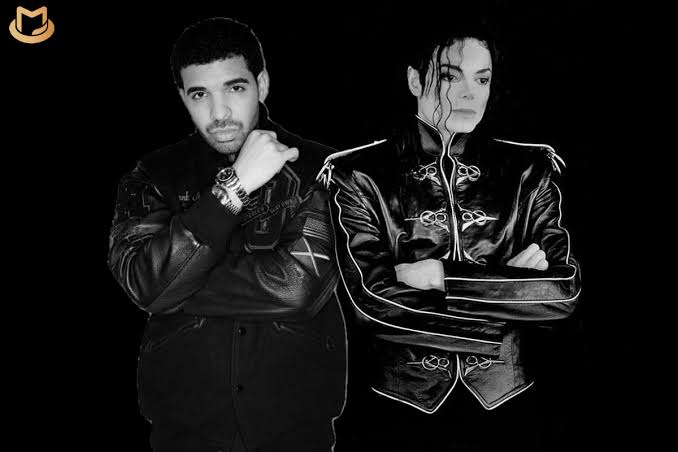
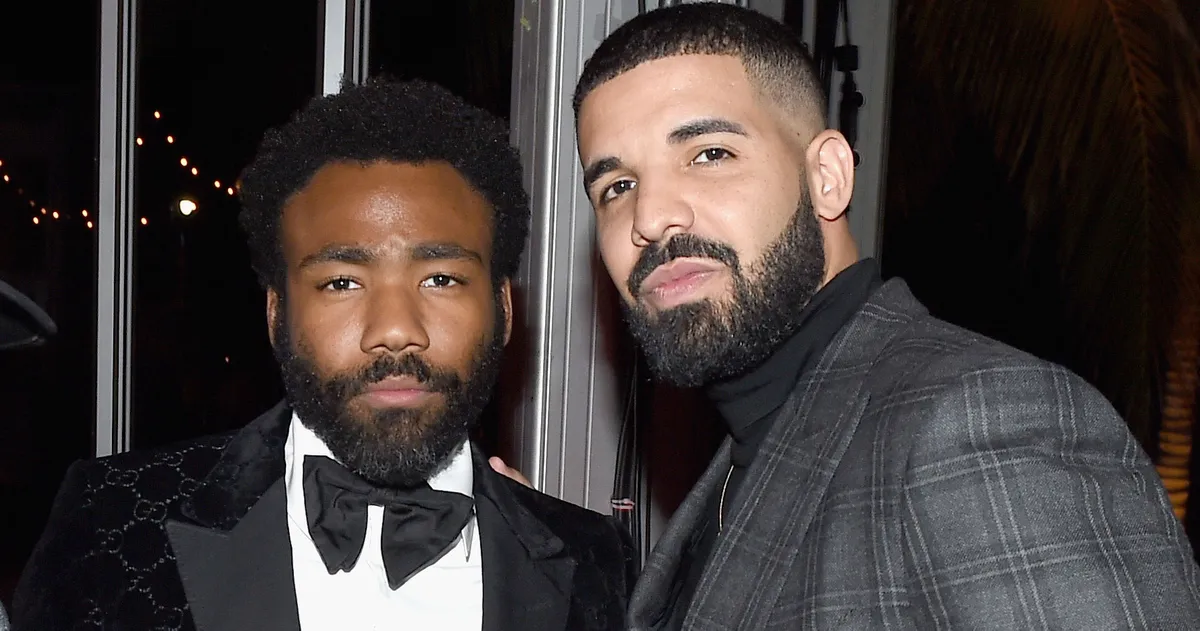
Then came Drake.M & Donald Glover (Childish Gambino).
While the rest of the world was arguing about whether Drake was "street" enough or whether Gambino was "Black" enough, I felt a profound sense of relief. For the first time, I saw men who were being criticized for the very thing I was doing: being everything and nothing at once.
During the recent Kendrick Lamar and Drake beef, the discourse felt eerily familiar. It was the same energy I felt watching Charlemagne the God interview Donald Glover on The Breakfast Club years ago—that interrogation of "authenticity." The world looks at a person who can move between worlds and calls them a "tourist" or a "culture vulture." They see the fluidity as a lack of soul.
But Drake and Gambino spoke to my spirit because they reflected the Internet age. They were the first superstars who understood that in the modern world, we are all a bit "homeschooled." We are all picking and choosing our influences from a global stream. They validated the fact that I could be a chess-playing, bread-baking kid from NoVa and still find my reflection in a 16-bar verse. They weren't just rappers; they were curators of a new, fragmented identity.
The Jealousy of the Monolith
I spent years being jealous of artists like Meek Mill or the late Nipsey Hussle. I admired the "monolith." When you looked at Nipsey, you knew exactly who he was, where he was from, and what he stood for. His identity was a fortress. No matter where he went in the world, he was the same man. There is a deep, envious beauty in that kind of groundedness.
I felt like a ghost by comparison. I was a shapeshifter. I could walk into a boardroom, a back porch in North Carolina, or a tech hub in D.C., and within ten minutes, I would be speaking the language, nodding at the right cues, and wearing the energy of the room.
I used to think this meant I was fake. I used to think it meant I was hollow. I lived in fear of the "identity police" who would eventually realize I didn't have a "home" culture to return to.
The Superpower of the Black Sheep
It has taken me years to realize that being "everything and nothing" is not a deficit—it is a superpower.
The Western world is becoming increasingly fractured. We are no longer defined solely by the neighborhood we grew up in; we are defined by the subreddits we follow, the music we stream, and the digital tribes we join. My upbringing—the strange mix of Southern roots, D.C. energy, and isolated homeschooling—was actually a pilot program for the future.
I am the first generation of a new kind of human: the Universal Local. I realized that because I didn't have a rigid identity forced upon me, I had the freedom to choose who I wanted to be in every space I entered. I wasn't limited by the "script" of my zip code. I could ask myself: What do I need to be right now to get what I need? What version of me would have the most fun in this moment?
Changing the World Tomorrow: The Community of the Belonging
The world of tomorrow is not going to look like a collection of isolated tribes. It is going to look like me. It’s going to be a world of people who are "from" everywhere and nowhere, navigating a global culture through a screen while trying to remember the smell of baking bread.
I want to build a community that provides the grace I wasn't given as a kid. I want to create a space where the "Black Sheep" feels like the guest of honor. It doesn't matter if we have nothing in common, if you speak a different language, or if you’ve spent your life feeling like an outsider in your own family.
In my world, "authenticity" isn't about staying in one lane; it's about having the courage to drive in all of them.
We are moving toward a future where "identity" is a creative act, not a prison sentence. I spent my youth trying to hide the fact that I was a shapeshifter. Today, I realize that being a bridge between worlds is the only way we’re going to bring those worlds together. It is fair, it is fun, and it is finally okay to be whatever you want to be.
Because you finished the article I have a secret that was hidden just for you… Just press play on the link below…
Featured Posts