The cultural fixation on the feud between Drake and Kendrick Lamar was never merely about who deserved the title of the "Greatest of All Time." That framing was simply a surface-level distraction, a convenient spectacle designed for easy headlines and endless social media engagement. Beneath the sonic warfare and the clever punchlines, a far more profound clash was occurring. Audiences were not merely debating bars, flows, or who possessed the superior diss track; they were actively weaponizing their deepest convictions about the human experience.
In this arena, Drake and Kendrick ceased to be just two elite artists engaged in a hip-hop rivalry. Instead, they transformed into living archetypes. They became modern deities playing out an ancient, unresolved argument regarding the fundamental meaning of existence.
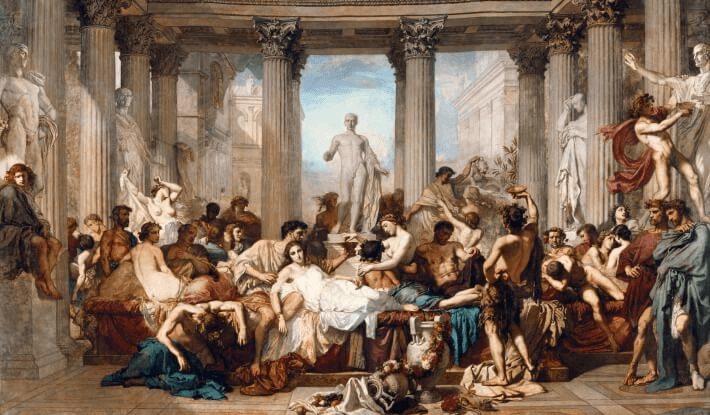
Drake emerged as the Dionysus of Western culture: the ancient god of wine, pleasure, sensuality, and chaotic abundance. He operates as a charismatic, hedonistic force, representing the contemporary belief that indulgence can serve as an identity.
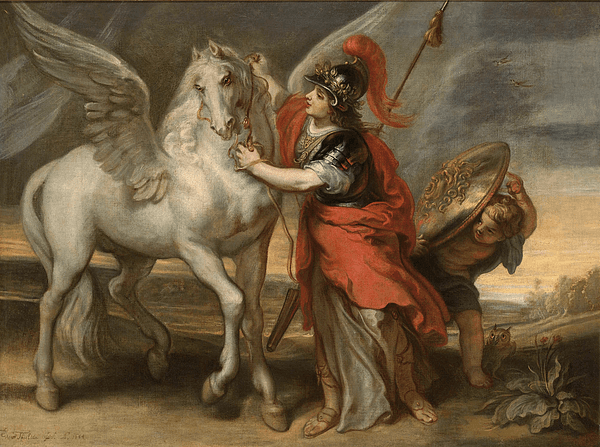
Conversely, Kendrick stepped forward as a modern manifestation of Athena, the deity of wisdom, strategy, and righteous warfare. He commands moral clarity, strategic intellect, and disciplined spiritual insight, walking into the conflict with introspection worn like armor.
When these two artists collided, two distinct worldviews smashed into each other. They offered two conflicting definitions of what it means to live correctly, serving as two opposing answers to the same existential question: How do you build a meaningful life? The intensity of the public reaction revealed a truth that Western society frequently tries to ignore: there is no single, objective way to exist. Ultimately, the battle was never really about the two men onstage. It was a mirror reflecting our own collective existential panic.
Divine Archetypes in a Secular World
There is a profound irony in how this conflict captured the global imagination. We currently live in what is ostensibly the most secular era in human history, yet the moment we lack clear answers to our existential anxieties, we immediately default to ancient mythology. Drake did not ask to become Dionysus, yet he perfectly came to symbolize the modern pursuit of ultimate freedom, infinite options, and the relentless accumulation of good feelings. Similarly, Kendrick did not consciously audition to be Athena, but he naturally became the avatar for truth, structural discipline, and the necessity of righteous battle.
When these two ideological titans were thrown into the cultural colosseum, the public responded with a fervor that can only be described as religious. There was worship, devotion, sacred ritual, and a massive wave of digital violence.
This transcended the traditional boundaries of a rap beef to become a genuine proxy war for faith. Fans behaved like digital crusaders, entirely willing to sacrifice nuance, logic, and self-awareness to defend their chosen deity. When a society loses its shared institutional foundations for meaning, it inevitably manufactures new gods out of the figures who best embody the lifestyles they secretly crave or overtly revere.
The War Over Happiness and the Price of Success
At the absolute center of this cultural debate was a single, weaponized question: Is Drake actually happy?
Observers analyzed his life like prosecutors presenting evidence in a high-stakes trial. Critics confidently asserted that no one could find genuine fulfillment living a life defined by transient relationships and infinite consumer options. They claimed his immense wealth and endless playground of luxury must mask a profound inner emptiness.
This insistence, however, says far less about Drake’s internal emotional state than it does about the lingering code of Western morality. Much of the world still clings to the ancient conviction that a genuinely virtuous life must be paid for in the currency of sacrifice.
"For what shall it profit a man to gain the whole world and lose his soul?"
For millennia, major spiritual and philosophical traditions have prescribed a remarkably consistent formula for a good life: deny yourself, reject excess, practice rigorous restraint, and accept suffering as a refining fire. Virtue is tightly tethered to restriction. Therefore, when Drake flaunts a reality of total abundance, unlimited wealth, constant travel, and a revolving door of influence, the collective cultural instinct is to assume that a hidden tax must be paid.
We assume he must be miserable because our narratives tell us he has to be. It is the law of equivalent exchange, a concept popularized in modern mythology like Fullmetal Alchemist: to obtain something of value, something of equal value must be lost. The cultural calculus dictates that if you are unimaginably rich, you must be morally bankrupt; if you are universally famous, you must be deeply lonely. We project unhappiness onto the hedonist not because we know his heart, but because his unpunished abundance terrifies our sense of cosmic justice.

Kendrick: The Sanctified Struggle
On the other side of the divide stands Kendrick Lamar, the champion of the sanctified struggle. He represents the culturally approved path to greatness: one deeply rooted in sobriety, generational trauma, discipline, and agonizing introspection. He is the specific brand of hero that institutional gatekeepers feel entirely comfortable celebrating. With a Pulitzer Prize, a mountain of Grammys, and widespread critical acclaim, he has been validated by the very systems that govern cultural legitimacy.
To his audience, Kendrick represents the version of success that feels properly earned. His narrative requires that he suffer first, engage in spiritual warfare second, and only then inherit his crown.
People do not merely appreciate Kendrick’s music; they use his art to validate their own struggles, viewing his discipline as a shield against the perceived vacuity of modern consumerism. Yet, the fanatical devotion to both figures stems from the exact same flawed assumption: the belief that there is only one correct blueprint for a meaningful life.
The Collapse of Absolute Truth
The reason this rivalry transformed into an all-out cultural war is that it was never a simple talent competition. It was a battle over the nature of truth and identity. It forced onlookers to choose between pleasure and purpose, total freedom and moral restraint, infinite options and rigid clarity. People were not merely defending their favorite artist; they were desperately defending the specific worldview that made their own personal life choices feel valid.
This confrontation triggered an ancient defense mechanism within the human psyche: the desperate need for absolute certainty. Real truth is inherently unstable, evolving, and highly dependent on context. Because true freedom is terrifying, we routinely run to idols and archetypes to protect us from it. We demand a definitive winner because certainty feels infinitely safer than ambiguity.
However, our current cultural landscape has permanently disrupted this desire for a singular narrative. We have reached a point of such total information saturation that the illusion of an absolute, objective human path has shattered. We are forced to confront the reality of perspectivism.
"Existence precedes essence." - Jean-Paul Sartre
As Sartre famously noted, we are born without an inherent blueprint. Meaning is not something we inherit from an institution; it is something we are forced to actively construct. In previous generations, external structures, organized religion, national identity, local communities, and rigid traditions provided a ready-made framework for a "correct" life.
Today, trust in those centralized institutions has thoroughly eroded. We occupy a world where meaning is no longer assigned by a higher authority; it must be individually chosen.
The New Paradigm of Meaning
What we experienced throughout this discourse was not the resolution of a musical feud, but a chaotic cultural awakening. It marked the public collapse of a one-size-fits-all morality. We are transitioning into a new cultural paradigm characterized by distinct shifts in how we evaluate existence:
Truth is recognized as contextual and bound to perspective.
Fulfillment is understood as an intensely personal project.
Success is actively self-defined rather than institutionally granted.
Archetypes are utilized as temporary tools for expression rather than permanent psychological prisons.
In this landscape, it is entirely possible for Drake to find genuine fulfillment within his Dionysian path of pleasure, creation, and excess. Simultaneously, it is possible for Kendrick to find absolute meaning within his Athenian path of discipline, wisdom, and spiritual warfare. Neither reality invalidates the other.
The true evolution of this moment is not about deciding which artist won or which god is the "correct" one to worship. The real shift lies in recognizing that someone can live a life that completely contradicts your deepest values without being your enemy. They are simply operating under their own architecture of freedom. We are stepping into an era where meaning is authored one individual life at a time, and perhaps realizing that coexisting within that tension was the real triumph all along.
Featured Posts