>
>
March 14: What Drake’s Most Overlooked Song Teaches Us About Fatherhood, Inheritance, and the Pain We Repeat Without Knowing
March 14: What Drake’s Most Overlooked Song Teaches Us About Fatherhood, Inheritance, and the Pain We Repeat Without Knowing
Django Degree
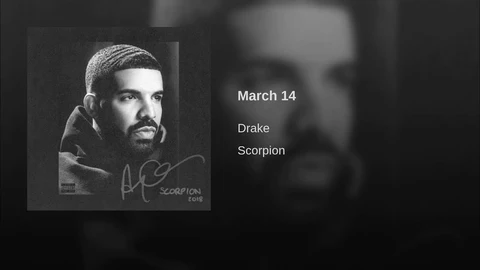

When people talk about Drake, they usually talk about the hits, the charts, the memes, the swagger, or the perception of who they think he is on the surface. But behind your belief about him, he gives us something different—something raw, something unpolished, something that sounds almost like we weren’t supposed to hear it. March 14 is exactly that kind of moment. A confession disguised as an outro. A therapy session for a man who grew up without a father in the home, only to realize he is repeating the very pattern he promised he’d never repeat.
In hip-hop, we often assume we know the full story of a character because we know the brand. We see the artist as a collage of headlines, aesthetics, and the public narrative. But in March 14, Drake isn’t an archetype or a superstar—he’s just a Black man who suddenly realizes he has become part of a story he once resented.
“Yesterday morning was crazy / I had to come to terms with the fact that it’s not a maybe.”
It’s the first line. And it is a gut punch—because it doesn’t sound like a rap line. It sounds like a diary entry. It sounds like the moment every man raised without a father fears. The moment he realizes he has to become what he never saw.
And the tragedy is not that Drake failed to form the perfect family unit—it's that he didn’t know any other blueprint. He thought he did. He swore he did. But pain is a quiet architect, and it builds structures inside you long before you realize you’re living in a house you never planned.
Part I: The Promise, the Pain, and the Pattern We Swear We Won’t Repeat
Drake is painfully honest on this record:
“I used to challenge my parents on every album
Now I'm embarrassed to tell 'em I ended up as a co-parent.”
If you grew up in a fractured home, you understand that embarrassment. You understand the weight of telling the family you once criticized that you’ve fallen into the very pattern you condemned.
In previous songs—Look What You’ve Done, From Time, 0 to 100, You & The 6—Drake talks about the instability he grew up in. The tension, the love, the absence, the presence in fragments. He promised himself he would build something different.
“Always promised the family unit / I wanted it to be different because I’ve been through it.”
That one line summarizes the dream of every child raised in a home where love lived, but structure didn’t.
You say:
When it’s my turn, I'm doing it right.
When it’s my turn, I’ll be present.
When it's my turn, I won’t leave someone with the wounds I carry.
But a promise is not a model.
A vow is not a blueprint.
And willpower is not a father figure.
Part II: Drake Didn’t Just Repeat the Pattern—He Became His Father Without Realizing It
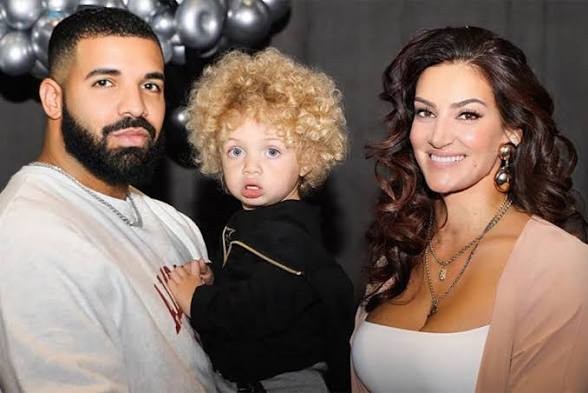
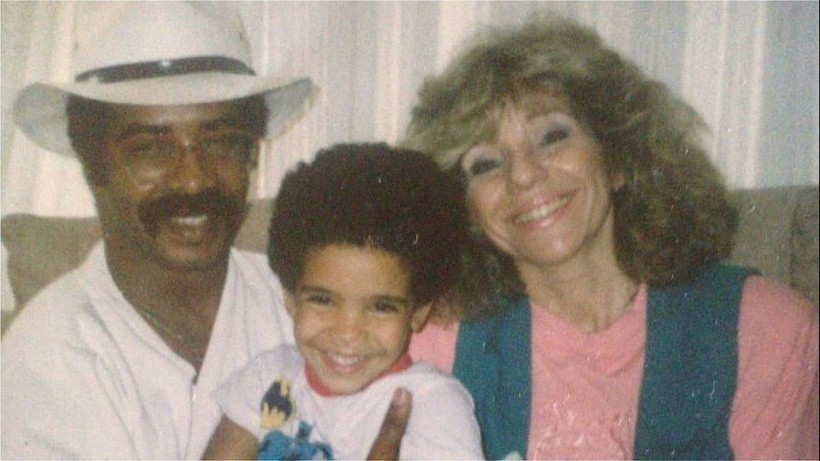
People love to critique Drake, but they forget his lineage. His father, Dennis Graham, was a Memphis musician—a Rolling Stone in the truest sense. A man of rhythm and charisma, a man chasing a dream across borders, countries, bars, clubs, studios, and cities. A man who lived a life bigger than the responsibilities he held.
Drake inherited that dream before he inherited any definition of fatherhood.
He sings:
“You haven’t met your grandfather yet, that — a trip
He probably could’a did stand-up
Yeah, but at the same time, he’s a stand-up.”
There is love in that description, but also distance. There is admiration, but also ache. Drake talks about his father with humor, with reverence, with confusion, and with honesty—exactly the way many children talk about a father who was present in stories, present in spirit, present in occasional moments, but absent in the form needed most.
This is the pain of many children.
A father who was “there,” but not there.
A father with good intentions but worn-down execution.
A father whose presence came in patches, not patterns.
And Drake, without realizing it, lived his father’s dream so intensely that he repeated his father’s life. Touring. Traveling. Making music. Living everywhere and nowhere at the same time. Chasing something vague and powerful because it was the only thing he ever saw.
It’s not that he didn’t want to be a different man.
It’s that he never saw what “different” looked like.
III: The Son, the Revelation, and the Line That Cuts the Deepest
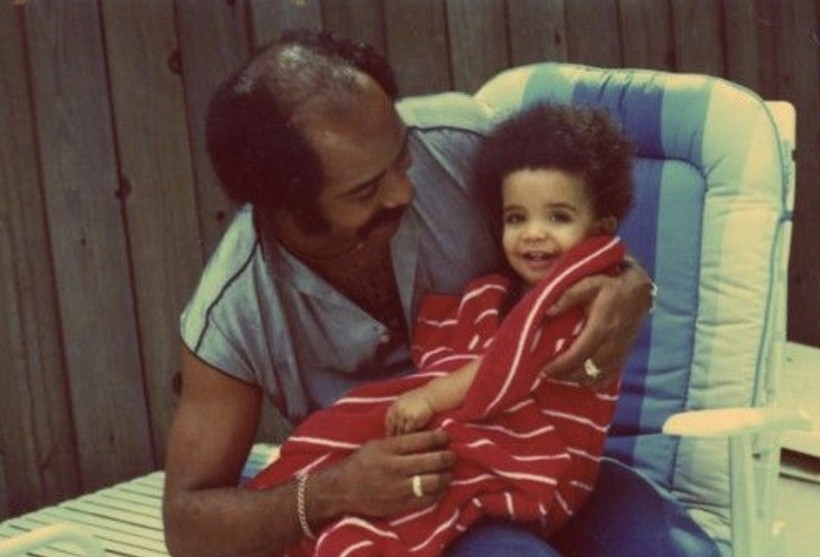
At the very end of the song, the hook arrives—these haunting words:
“No one to guide me, I'm all alone
No one to cry on
I need shelter from the rain, to ease the pain
Of changing from boy to a man.”
This is where most people misunderstand the song.
Most hear it as Drake singing to his son.
But listen carefully.
The voice is not the voice of a father speaking to a child.
It’s the voice of a child speaking from inside the man.
That refrain is Drake talking about himself.
He is the one with no guide.
He is the one who had no father to cry on.
He is the one who is still seeking shelter from pain he doesn’t fully understand.
He is the one still trying to make the transition from boy to man without the blueprint that most men are handed.
And that is the part that most listeners overlook when they think of Drake.
Fatherhood is not just about showing up.
It’s about excavating wounds you didn’t know were still bleeding.
It’s about healing trauma you inherited but didn’t choose.
It’s about fathering someone without ever having been fathered in the ways you needed.
IV. Drake’s Identity Crisis: Black, But Canadian. Rooted, But Distant. Present, But Displaced.
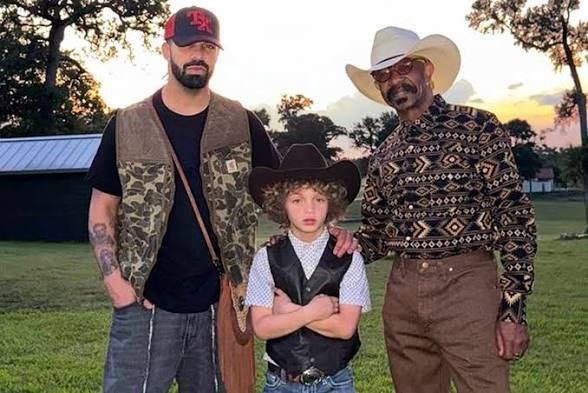
There is another layer we rarely acknowledge: Drake’s racial duality.
He is the Black son of an American Black man with deep Memphis roots.
He is also the son of a white Jewish Canadian mother from Toronto.
That mixture created a complicated identity—one that both connected him to Black American culture and set him apart from it.
People love to joke that he’s “Canadian,” like that somehow disqualifies his Black identity.
People treat him like he’s “less authentic.”
People act like he didn’t inherit the same generational wounds.
But identity isn’t something you perform—it’s something you feel in your bones.
And imagine the confusion of being.
Black enough to be racialized everywhere you go, but not Black enough to be fully accepted in the culture you come from, rooted enough to know where you come from, but disconnected enough to never fully feel at home in it.
Imagine going to Memphis and being embraced as kin, only to return to Toronto and be viewed as something else entirely. Imagine carrying a cultural inheritance without ever being given the full instruction manual.
This identity displacement is a pain many biracial or diaspora Black kids understand deeply. And so yes—part of what Drake chases in his music, in his career, in his presence, is acceptance.
Acceptance from Black America.
Acceptance from the culture his father gave him in fragments.
Acceptance from a group he knows he belongs to, but has never fully been welcomed into.
V. Why March 14 Matters for Those Who Grew Up Without Fathers
This is a song about a man realizing, I never learned how to be the father I always wanted. And that realization hurts. But there’s something else underneath.
Something hopeful.
Something powerful.
Drake is trying.
Trying with all the tools he has.
Trying with all the pain he’s still unpacking.
Trying with all the gaps he’s still filling.
“I gotta make it, I better make it. I promise if I’m not dead, then I’m dedicated.”
Fatherhood is not measured in perfection.
It is measured in effort.
In presence.
In trying to break cycles you didn’t start.
In wanting something better for your children than what you had.
And that is exactly what Drake is doing.
He is naming his brand after his son.
He is showing his child to the world without exploiting him.
He is present.
He is involved.
He is learning.
And most importantly—he is not running.
VI. The Lesson for Us: If You Didn’t Get the Words, You Must Create New Ones
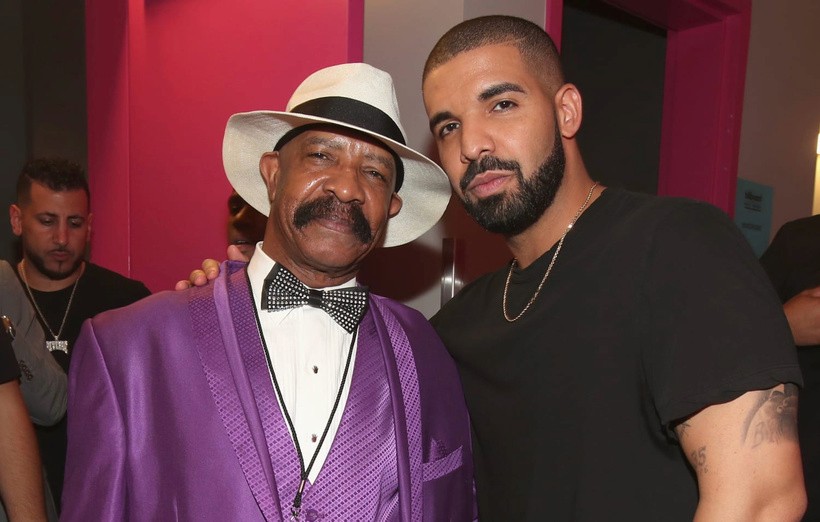
For everyone who grew up without a father in the home, March 14 is not just a confession—it’s a mirror.
It says.
You might not have been taught the right way.
You might not have seen a healthy father in action.
You might not have received the blueprint. But you can still build something new.
You can still break the chain.
You can still rewrite the story.
You can still become the father you needed.
What Drake is doing in this song is giving language to a pain most men never articulate. And that’s the true gift of March 14. It tells us that if you didn’t inherit the right words, you can create new ones for the generation after you. That’s what growth looks like. That’s what healing sounds like. And that’s what fatherhood becomes when you let yourself be honest, vulnerable, and accountable.
On the surface, Drake looks like he has it all. But beneath the shine is a man trying—honestly, earnestly—to do what he never saw done right.
A man who knows the legacy of pain he inherited.
A man who is terrified of passing that pain to his child.
A man who is learning how to father by fathering.
A man who is healing by trying.
A man who is choosing presence even when it scares him.
And for men everywhere who grew up without a father—this is the message:
You don’t have to be perfect.
You just have to be present.
You don’t have to repeat the past.
You just have to be willing to write a new one.
Drake didn’t get the blueprint, but he’s building something anyway.
And so can you.
About

Featured Posts