
I. The Surprise That Wasn’t About the Music
Justin Bieber’s album SWAG arrived without warning. No long rollout. No defensive press cycle. No carefully managed redemption arc. Just a surprise release, dropped after months of speculation in which the music itself was almost irrelevant. Long before the album existed in public, a narrative had already been written for him: that he was unraveling, that he was back on drugs, that he resented his wife, that he was avoiding home, that we were watching the quiet beginning of the end.
The album interrupted that story, but it did not stop it.
Justin Bieber has spent most of his life being watched by people who do not know him and never will. That alone is not unique. Celebrity culture has always relied on projection. What is unique is how long we have refused to let him become anything other than an object. Not an artist. Not a husband. Not a man. An object—flattened, surveilled, endlessly interpreted.
When SWAG appeared, the immediate response was not curiosity about what he had made. It wasn’t skepticism. It was disorientation. The anticipated implosion had failed to arrive. The music was coherent. The themes were grounded. The work was received well—praised, replayed, and taken seriously. It's Grammy-nominated.
And still, the speculation will not stop.
Because SWAG was never really what we were watching for.
For months before its release, the cultural machinery had already been in motion. TMZ tracked his movements. Commentators dissected his marriage. Clips were slowed down, frozen, zoomed in. Did he look tired? Was he distant? Did he love his wife? Why wasn’t he home more? Every gesture was treated as evidence in a case that had already reached its verdict.
This wasn’t accidental.
It was ritual.
Justin Bieber’s adult life has unfolded inside a system that demands not just visibility, but eventual collapse. The rise is tolerated only because the fall is expected. And even after he told us—explicitly—how damaging that life had been, even after he named the trauma, the isolation, the loss of agency, even after he stepped back, sought faith, sought privacy, sought something resembling peace—
We did not listen.
We watched.
And SWAG understands that. Completely.
II. Boorstin and the Celebrity as a Hollow Image

Daniel J. Boorstin, writing in The Image, argued that modern culture no longer elevates people for what they do, but for how visible they are. His now-famous line still cuts cleanly: the celebrity is someone known for their well-knownness.
This distinction matters because it explains why substance no longer saves anyone.
In Boorstin’s framework, celebrities are not admired so much as emptied. They become containers—vessels into which the public pours fantasy, resentment, longing, and moral expectation. Their interior lives are irrelevant. Their humanity is inconvenient. What matters is the image and its circulation.
Justin Bieber has been a Boorstin celebrity since adolescence. His talent was never in question, but it was quickly overshadowed by the image that formed around him—first as prodigy, then as cautionary tale, then as comeback story, then as suspected fraud. Each phase was less about who he was than what the image needed next.
This is why SWAG could be well-received, critically respected, and still fail to recalibrate how he is treated. Because the problem is not the work. It is the function he serves.
Boorstin understood that when admiration is detached from clear achievement, it curdles into resentment. The attention begins to feel unearned. The image feels hollow. And hollow images invite destruction.
Watching a celebrity fall restores emotional proportionality. It reassures the public that fame is not a form of moral exemption. That attention has consequences. That the image can still crack.
This is why so many people were disappointed when SWAG did not come with collapse. The music contradicted the story we had already decided to tell. And contradiction is intolerable in an image-driven culture.
III. The Spectacle Needs a Body: From Britney Spears to Justin Bieber
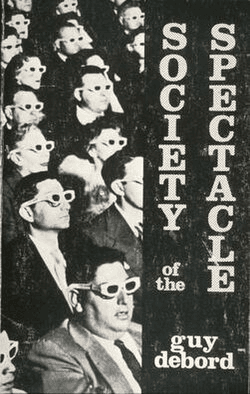
Guy Debord argued that modern life is no longer organized around lived experience, but around representations of experience. The spectacle does not merely entertain; it structures reality itself. What matters is not what happens, but what can be seen, circulated, and reacted to. Meaning is replaced by visibility. Truth is replaced by repetition.
Within this system, celebrities function as symbolic stand-ins. They absorb attention that might otherwise turn toward institutions, systems, or power itself. They live loudly so the rest of society can remain passive. They become the surface onto which fear, desire, resentment, and moral judgment are projected.
But the spectacle has a hunger. It cannot sustain attention without escalation. And escalation requires destruction. Debord understood this clearly: idols are not elevated despite their eventual fall — they are elevated because of it. Collapse is not a failure of the spectacle. It is its fulfillment. Rise without ruin is unfinished business.
Few cultural artifacts illustrate this more honestly than South Park’s episode “Britney’s New Look.”

In the episode, a live political debate between Barack Obama and Hillary Clinton is interrupted by breaking news. Britney Spears has been photographed urinating on a ladybug. The triviality is the point. Serious civic discourse is immediately displaced by celebrity spectacle. The image matters more than governance. Visibility trumps consequence.
As the episode unfolds, Britney is relentlessly stalked by paparazzi, commodified by managers, consumed by audiences, and pushed—explicitly—toward death. When she attempts suicide and survives with most of her head missing, she is still forced to perform. Still photographed. Still demanded to function. Her visible suffering does not slow the machine; it accelerates it.
Eventually, the truth is revealed: this is not cruelty gone too far. It is ritual.
The townspeople explain that in earlier times, societies performed human sacrifice to ensure a good harvest. In modern civilization, they have simply refined the process. Instead of stoning victims to death, they drive celebrities to suicide through relentless attention. The crowd photographs Britney until she dies. The harvest succeeds. The ritual is complete.
And immediately, the cycle resets.
A news report announces that Miley Cyrus is rising in popularity. The crowd turns. A new idol is chosen.
This is Debord without abstraction. The spectacle requires a body. It requires escalation. And it requires eventual annihilation to feel complete.
The months leading up to SWAG followed this script with unnerving precision.
Justin Bieber did not need to do anything wrong. Absence became content. Distance became suspicion. Privacy became evidence. Paparazzi followed him city to city not because there was wrongdoing to uncover, but because wrongdoing was required to sustain attention.
Every clip was slowed down. Every gesture dissected. Every moment conscripted into a narrative of impending collapse. The spectacle was preparing the sacrifice.
When SWAG arrived quietly — without implosion, without scandal, without spectacle — the system did not recalibrate. It simply adjusted. The album was acknowledged, even praised, then immediately sidelined. Surveillance resumed. Speculation continued.
Because the spectacle is not interested in resolution.
It is interested in continuation.
And a celebrity who refuses to fall does not break the system, he exposes how badly the system needs him to.
In that sense, SWAG is dangerous not because of what it says, but because of what it denies us. The completion of the ritual. The satisfaction of collapse. The illusion that watching long enough entitles us to destruction.
Debord warned that the spectacle would eventually consume everything it touched. South Park showed us what that consumption looks like. Justin Bieber is living inside its long shadow — praised, nominated, successful, and still treated as sacrificial.
Because once someone has been chosen as an idol, they are never allowed to simply remain human.
IV. Chris Hedges and the Illusion of Consequence
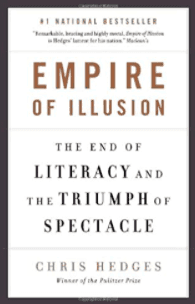
Chris Hedges pushes the argument further. In Empire of Illusion, he argues that spectacle culture exists to anesthetize a population that has lost real agency over its own life. When political, economic, and social power feel unreachable, spectacle steps in to simulate consequence.
Celebrity culture becomes a moral substitute.
Celebrities are punished for us. They fall so the world appears to correct itself. Their scandals create the illusion of accountability in a system where actual power remains untouched.
This explains why Justin Bieber’s stability provokes discomfort. If he is doing well—if the marriage is intact, if the work is thoughtful, if the narrative of collapse fails—then the illusion breaks. The public is left without a proxy for justice.
Hedges would argue that Bieber’s life has been rendered pornographic in the deepest sense. Stripped of privacy, intimacy, and dignity, reduced to performance and consumption. Even wellness becomes suspicious. Growth becomes evidence to be challenged.
And so we continue to dissect him. Every appearance becomes proof that he is either “better” or “backsliding.” Every moment is conscripted into a story that does not belong to him.
Substance does not free him because substance is not the point.
V. A New Idolatry: Raising Humans So We Can Break Them
Taken together, Boorstin, Debord, and Hedges reveal something darker than celebrity worship. This is not admiration. It is management. We raise celebrities to regulate our own sense of control. We inflate them beyond human scale so their collapse feels meaningful. Their fall becomes ritual release—proof that something still breaks in a world that feels otherwise unmovable.
This is a new kind of idolatry. Not worship followed by disappointment, but worship designed for disappointment. The idol is built with a trapdoor.
Justin Bieber understands this now. SWAG is not just an album; it is a quiet exposure of the lie. It says.

"Everything you believed about me was constructed without me. And more unsettlingly, it says: even when the work speaks, you will still look past it."
The album’s success—its reception, its Grammy nomination—did not restore his humanity. It did not interrupt the chase. Paparazzi still follow him when he enters a city. Online discourse still dissects his body language for signs of failure. His marriage remains a public referendum.
Because the system does not want him human. Humanity would interrupt the spectacle. Humanity would require restraint. Humanity would force us to look elsewhere for meaning.
And that is the one thing this culture cannot afford.
VI. What Happens When the Idol Refuses to Burn

There is no redemption arc here. That would be spectacle too.
What SWAG offers instead is refusal. A refusal to perform collapse on demand. A refusal to provide the spectacle its preferred ending. A refusal to be reduced to the story we need him to complete.
Justin Bieber did not implode. And that may be the most destabilizing outcome of all.
Because if the idol does not fall, the question turns back on us.
Why do we need them to?
Boorstin would say we chose images over reality because it was easier.
Debord would say the spectacle will defend itself relentlessly.
Hedges would warn that illusion does not fade, it shatters.
Until then, we will keep circling, mistaking surveillance for care, collapse for truth, and objecthood for intimacy. We will keep watching celebrities live lives they are not allowed to inhabit fully, because their fracture helps us avoid our own.
And maybe that is the real revelation of SWAG:
Not that Justin Bieber survived the gaze—but that we are still feeding it.
Featured Posts