J. Cole & The Courage To Be Disliked: The Architecture of Being Human
Western culture is obsessed with the "Monolith." We are indoctrinated from birth with the idea that to be "authentic" is to be one unified, consistent, and easily digestible concept. We are told that "identity" is a fortress we must defend at all costs. But this is a beautiful lie—a map designed by the "Architect" of our culture to keep us predictable, sellable, and easy to manage.
Django Degree

Western culture is obsessed with the "Monolith." We are indoctrinated from birth with the idea that to be "authentic" is to be one unified, consistent, and easily digestible concept. We are told that "identity" is a fortress we must defend at all costs. But this is a beautiful lie—a map designed by the "Architect" of our culture to keep us predictable, sellable, and easy to manage.
The Architect isn't a single person; it is the sum total of our collective fear of freedom. This system thrives on "Cultural Schizophrenia"—a violent split between the Public Self, which must remain performative and moral, and the Private Self, which remains lonely and fractured. We are taught to worship our emotions and make our minds our master, effectively locking ourselves inside a prison built of language and belief .
Nowhere is this collision more visible than in the journey of Jermaine Cole. To the public, he is "J. Cole," a rap titan. To himself, he is Jermaine. The tension between these two is not a bug in his career; it is the central feature of the human experience that Western culture tries to erase.
The Map vs. The Territory: The Birth of "J. Cole"
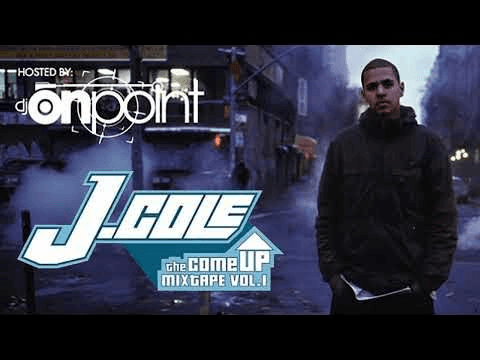
To understand J. Cole, you have to understand the inherent fear of Jermaine. When you listen to his early work—the era of The Come Up and The Warm Up—you see a young man who was fundamentally unsure if his voice would ever be heard. He was a "child of the hearth," a kid from Fayetteville trying to navigate a "gladiator" industry that rewards raw aggression and capitalistic cool.
In response, Jermaine did what the Architect trains us all to do: he created a "Map" to navigate the "Territory". He invented J. Cole—the brash, unafraid, confident, and incredible rapper. This wasn't "faking it"; it was a masterful exercise in Impression Management. J. Cole was the "Black Mamba" avatar—a "Rapper-Hooper" persona created to survive the social death of the hip-hop lobby.
The danger is when we mistake the representation for the thing itself. We begin to "larp" our own success, wearing the skin of a master while the novice inside is still shivering. For over a decade, the culture demanded that J. Cole stay in a Single Ego State, a permanent fusion of the impulsive "Child" (Intuition) and the executing "Adult" (Action) that bypasses social censorship.
The Early Fragments: "Let Nas Down"
We saw fragments of these two egos colliding early on. In "Let Nas Down," the friction was palpable. The professional avatar, J. Cole, had chased the "Menu"—the radio hit, the potential, the commercial success. He sought relevance over everything. But the human, Jermaine, was devastated by the disapproval of his idol. That was the Observer Self—the witness behind the eyes—noticing that the character he was playing was out of alignment. J. Cole was ready to do whatever it took to be the best, but Jermaine was not.
The Gladiator Pit and the Ritual of Blood
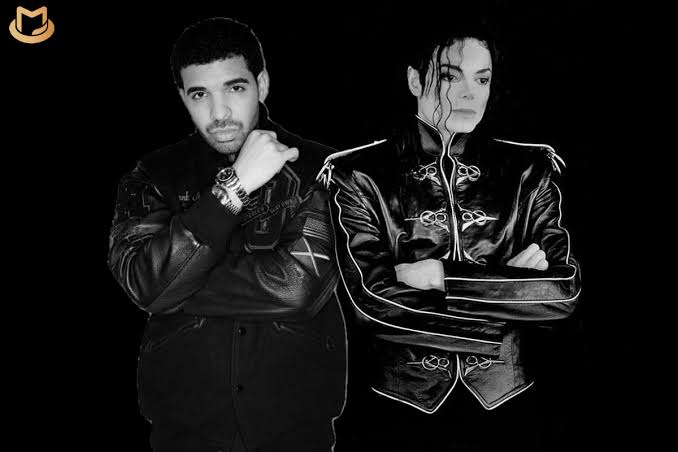
In hip-hop, we don't just want music; we want blood. We have turned the genre into a "Society of the Spectacle," where we elevate idols not to admire them, but to watch them fall. The 2024 conflict between Drake and Kendrick Lamar was marketed as a competition, but it was a "War of the Gods".
Drake represented Dionysus: the god of pleasure, sensuality, and infinite options.
Kendrick emerged as Athena: the god of strategy, wisdom, and righteous war.
While many celebrate that "no one died" in this modern beef, the structural parallels to the 1996 tragedy of 2Pac and Biggie are haunting. The same "Crusade Mentality" was present—the ritual destruction of a scapegoat to make the tribe feel clean. We saw the weaponization of family, the involvement of street politics, and the absolute dehumanization of the opponent. In the 90s, the "Lynchpin" was a bullet; in 2024, it was the digital assassination of character.
When we look at the "gangster" persona that drives these conflicts, we see what the culture calls a "weak ego." We have been conditioned to believe that the man willing to "blast" someone over a perceived disrespect is the height of strength. In reality, that "hard" exterior is a fragile shell. It is the result of losing internal control; when a man's sense of meaning erodes, he reaches outward to dictate and manage others.
The Weakness of the "Hard" Ego vs. Yeism
The Architect pushes us toward the "Single Ego State" because it is destructive and profitable. Look at Kanye West. We call him "crazy" because he refuses to code-switch. He operates without a "Parent" ego state—the voice of authority and judgment. This "Yeism" is a belief system forged in fire, but it generates constant friction because it exposes the lies that the rest of us are living.
However, there is a difference between Kanye’s unintegrated freedom and the "hard" ego of the streets. The gangster persona is often a child who was loved for their potential rather than their presence, hollowing them out until only destruction can fill the void. It is far easier to attack someone who makes you feel small than it is to engage in the "terrifying vulnerability of being known".
We saw this with the tragedy of Juice WRLD. The culture would rather see a young man self-destruct for our entertainment—consuming his pain vicariously through the Spectacle—than watch him live to create a healthy legacy. We raised him as a celebrity just to regulate our own sense of control. When the idol refuses to burn, the audience gets angry because we feel we are owed the finale.
Port Antonio: A Forensic Investigation of the Self
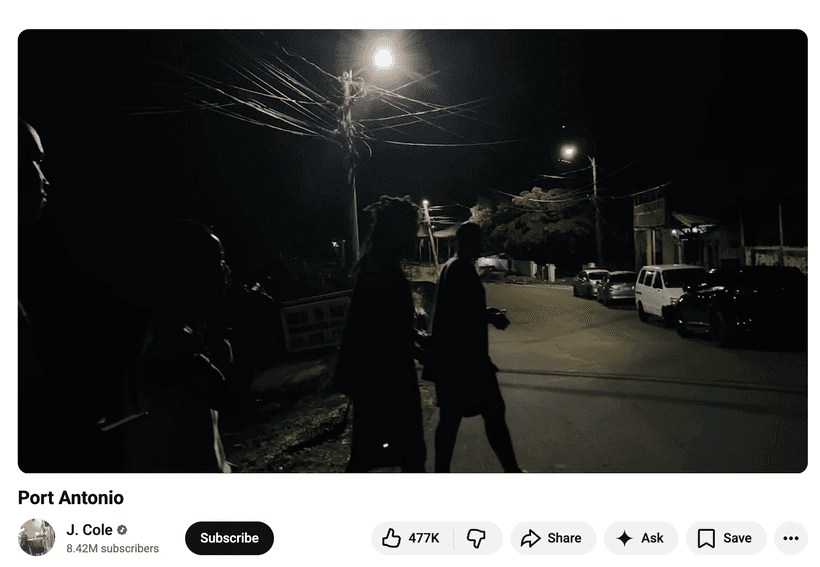
youtube.com
Listen to the song!
In his song "Port Antonio," J. Cole performs a literal juxtaposition of his two identities. He is no longer just playing the role; he is pointing at the "Emperor" and admitting he has no clothes.
Verse 1: The Territory of Jermaine
The first verse is a deep dive into the "Backstage"—the reality Jermaine retreats to when the performance ends.
Young Jermaine walked the straight and narrow...
So that when you back in the hood, you feel awkward about it now (damn)
And your confidence start to drown
He describes his mother marrying and moving them out of poverty, creating a "fragmented" identity. He highlights his Identity Displacement: moving to a "soft little part of town" made him feel "awkward" back in Fayetteville. This version of Jermaine is the Child ego state: the seat of vulnerability and emotion.
Verse 2: The Map of J. Cole
The second verse shifts to the "Front Stage".
Benjamin Button, Cole flows reverse time...
I understand the thirst of being first that made 'em both swing
Here, he uses "Cole" in the third person. This is the master, the "Black Mamba," scaling heights higher than birds. He acknowledges the "Gladiator" script: "They wanted blood, they wanted clicks to make they pockets grow." This is the Spectacle at work. The pivot comes when he addresses the metaphor of the gun:
"If you refuse to shoot the gun, don't mean the gun ain't deadly," uh
I text him back like, "Guess a gun ain't what I'm tryna be, my nigga"
J. Cole, the persona, is the deadly gun. But Jermaine, the man, chooses to be "finally free" by refusing to participate in the "war".
The Choice: 7-Minute Drill vs. The Apology
This is the exact moment the "Map" and the "Territory" split for the world to see.
J. Cole performed the "7-Minute Drill": He followed the "Conflict Script," performing the version of Blackness and "cool" that the audience demanded. He provided "Proof of Work" for the fans.
Jermaine delivered the Apology: He chose the "Courage to Be Disliked". He realized that to continue the battle would be to "lose a bro" just to attain "props from strangers."
By apologizing, Jermaine engaged in Self-Retrieval. He chose the "Nothing"—the internal worth—over the "Scroll" of being the Dragon Warrior. He realized that the hip-hop "Gladiator Pit" was just a "Boutique of the Void": a place to purchase the appearance of status without the substance of achievement.
The Spectacle of Destruction: Why They Want You to Bleed
Why does the culture hate the apology? Because it disrupts the "Ritual of the Fall". We elevate people like Drake or Justin Bieber not because we admire them, but because we are waiting for the "trapdoor" to open. The Spectacle requires escalation; rise without ruin is unfinished business.
When J. Cole "pulled the plug" on the beef, he denied the crowd their dopamine spike. We value the spectacle of destruction more than the preservation of legacy. We would rather see an artist end up like Juice WRLD—a sacrifice to ensure a "good harvest" of clicks and content—than see a man unify his egos and find peace .
If you sit on the throne alone, like the King of Curses, Sukuna, you are powerful but miserable. You become a slave to your own boredom, needing to destroy others just to feel alive. J. Cole saw the empty throne and decided to walk away.
Featured Posts