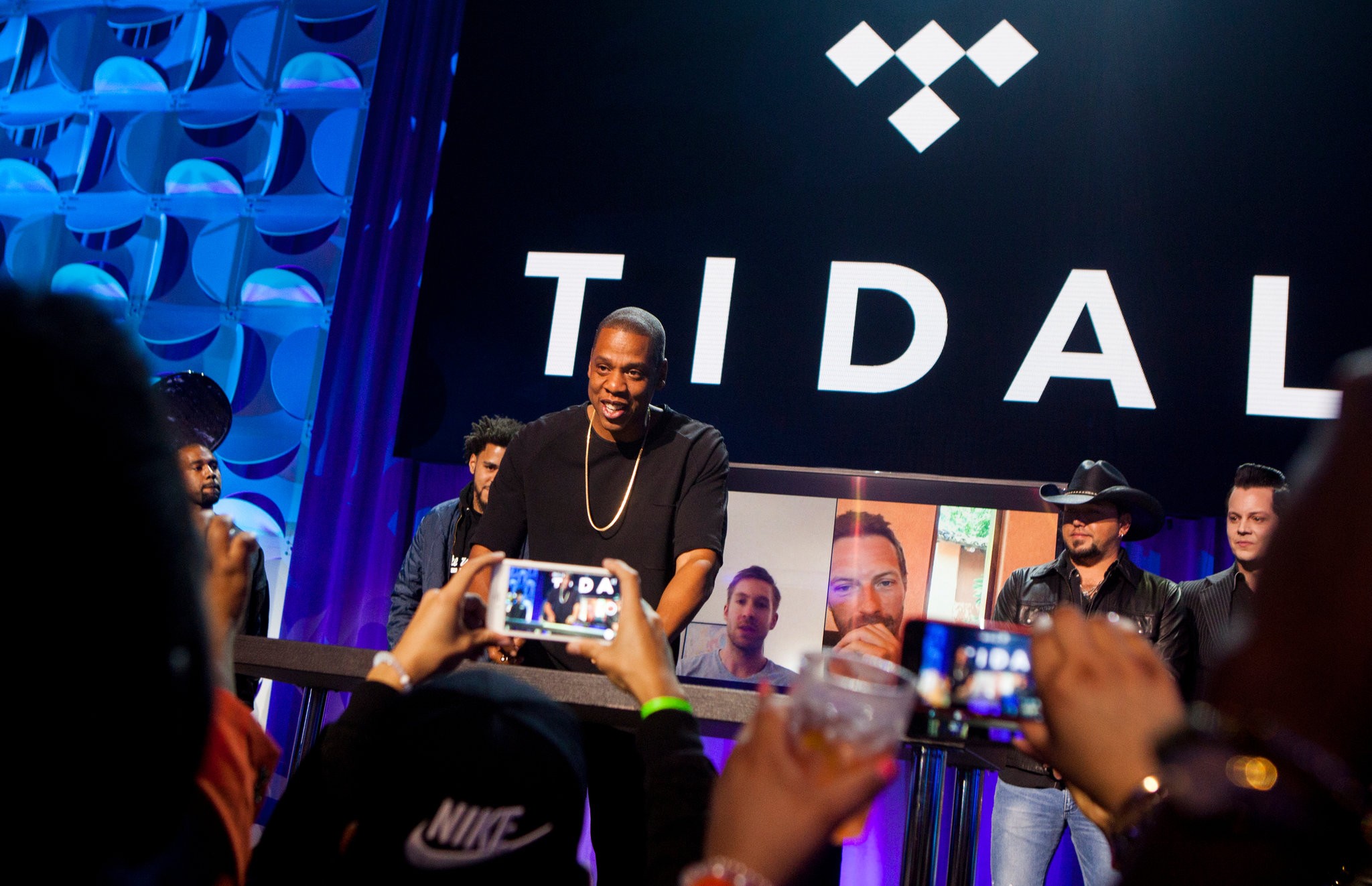
On March 30, 2015, sixteen of the most recognizable cultural forces on earth stood on a stage in New York City to sign a corporate manifesto. The event was a meticulously staged rebellion against the Silicon Valley platforms that had turned the music industry into a low-margin utility. Front and center was Sean Jay-Z Carter, flanked by icons like Beyoncé, Rihanna, Kanye West, J. Cole, and Nicki Minaj. They were introduced not merely as talent, but as founding co-owners of Tidal, a new model built to ensure creators retained the value of their labor.
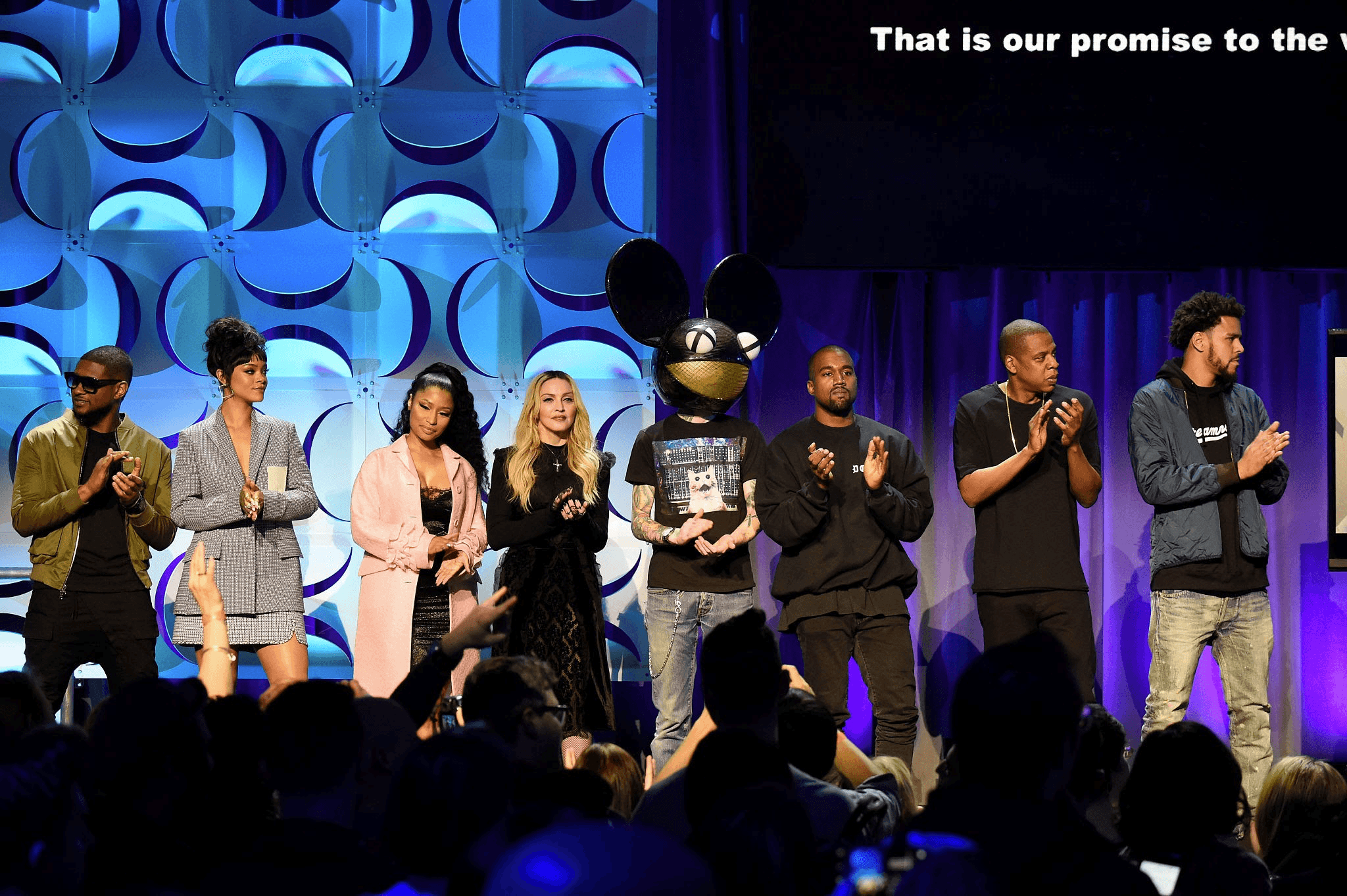
Fast forward a decade. In July 2025, the cultural alliance fractured publicly. Nicki Minaj took to X to air a multi-million dollar grievance, directly calling out Jay-Z to settle this karmic debt. Minaj revealed that when Jack Dorsey's financial technology firm, Block, formerly Square, bought a majority stake in Tidal in 2021, she was allegedly offered a mere $1 million cash-out for her slice of the pie. According to her own team’s forensic math, she calculated that she was shortchanged between $100 million and $200 million based on the platform's initial promises and cultural scale.
To the casual observer, the math looks like an irreconcilable mystery. How does an artist go from a celebrated 3 percent baseline owner in an artist-first ecosystem to claiming a $200 million debt over a company that ultimately sold for around $300 million?
The answer doesn't lie in backroom thefts or villainous corporate corruption. It lies in the vast, unglamorous gulf between cultural capital and corporate financial engineering. What transpired between 2015 and 2021 was a masterclass in elite asset positioning. When Jay-Z jumped on Kanye West’s Diamonds from Sierra Leone (Remix) in 2005 to declare that he is not a businessman, but a business, man, he wasn't dropping a clever bar. He was stating an operational thesis that Tidal would eventually prove to the letter.
The Pitch That Built the Ghost Option
To understand why Nicki Minaj feels entirely justified in her frustration, you have to reconstruct the specific, high-octane venture capital narrative the artists were given in 2015. Jay-Z didn’t pitch Tidal as a boutique streaming application for audiophiles. He pitched it as an impending tech monopoly. Less than a year prior, in May 2014, Apple had acquired Beats Electronics and Beats Music from Jimmy Iovine and Dr. Dre for a staggering $3 billion. That sale altered the psychological architecture of hip-hop finance. It proved that tech behemoths were willing to pay billions not just for code, but for the intangible cultural curation that only music icons could inject into a brand.
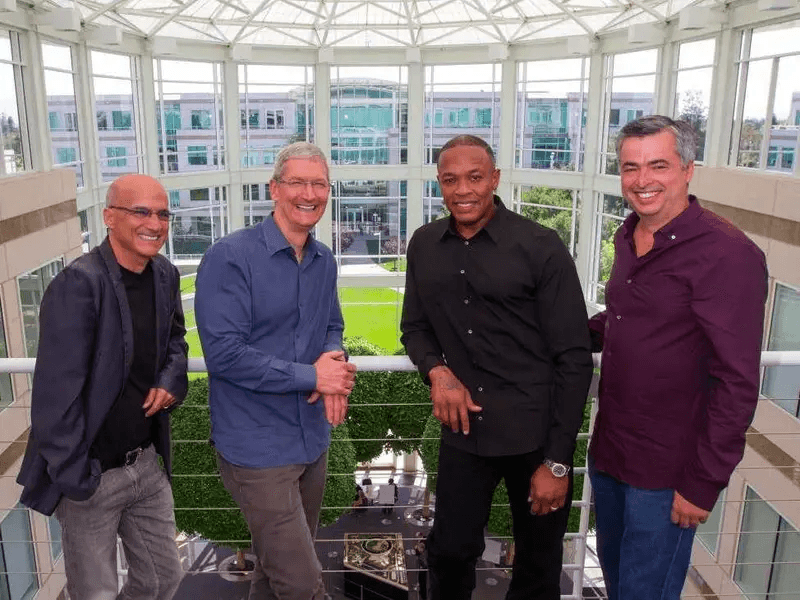
Jay-Z’s pitch deck to the artists took that premise and scaled it exponentially: If Dre and Jimmy can command $3 billion with a hardware brand, what happens if the 15 most dominant artists in modern music combine their likenesses, their exclusive rollouts, and their catalogs into a single distribution channel?
By promising to bypass the traditional distribution middleman, the long-term target dangled before the roster wasn't a standard music company evaluation. It was likely a Silicon Valley multi-variant software multiple, a path toward a $10 billion platform valuation. To lock them in, Jay-Z utilized a classic startup strategy: he gifted 15 core artists an identical, unencumbered 3 percent common equity pool in the parent holding company, Project Panther Bidco Ltd., which he had personally acquired for roughly $56.2 million in liquid cash. Combined, the artist pool represented 45 percent of the company, while Jay-Z’s principal investment vehicle retained the controlling 55 percent.
The financial upside of that $100 billion moonshot was staggering. A theoretical value of a 3 percent stake against a $10 billion valuation equals exactly $300 million. Even if the platform only captured a conservative fraction of that global tech dream (say, a $7 billion exit), each artist’s 3 percent would have yielded over $200 million. This is the exact number etched into Nicki Minaj’s financial memory. She wasn't calculating her payout based on what Tidal was; she was calculating it based on the enterprise value her global brand was leveraged to construct.
The Startup Crucible: Sprint and the Reality of Dilution
The first major structural shift occurred in January 2017. Tidal was burning through cash to compete with the infrastructure of Spotify and Apple Music. To backstop the burn rate, telecom giant Sprint stepped in, acquiring a 33 percent stake in Tidal for $200 million. On paper, this was spun as a major milestone, giving the company an implied valuation of roughly $600 million. But in corporate finance, a rising valuation comes with a steep price for common equity holders: dilution.
When an outside entity purchases 33 percent of an entire corporate pie, the existing equity holders must shrink proportionally to carve out room for the new player. Unless an investor holds specialized anti-dilution protection, which is typically reserved for principal capital providers, not promotional equity partners, their slice of the cake gets cut down by exactly one-third.
The post-Sprint cap table realities left Sprint with a 33 percent corporate position. The individual artist position was diluted from 3 percent down to 2.01 percent each. The total artist pool of 15 artists was diluted from 45 percent down to 30.15 percent, while Jay-Z and his controlling entity were diluted from 55 percent down to 36.85 percent.
When the company's valuation contracted during the 2021 sale to Block, those diluted percentages collided with the cold reality of a venture capital down round.
The Anatomy of a Flawless Down Round Flip
When Jack Dorsey’s Block stepped up to purchase a massive 86.8 percent majority stake in Tidal in March 2021, the headline figure was $297 million. To map out exactly why the payout pool contracted so dramatically for the artists, we have to isolate the total implied enterprise value established by the Block deal. Dividing the $297 million purchase price by the 86.8 percent acquired stake yields a total implied enterprise value of approximately $342.16 million.
Comparing this directly to the 2017 Sprint valuation shows a massive drop. The 2017 implied valuation was around $600 million, while the 2021 actual sale valuation was around $342 million. This represents a massive 43 percent drop in corporate value.
In private equity, a down round triggers severe structural mechanisms. Institutional investors and primary operators protect their downside through liquidation preferences and preferred share classes. Common equity holders, the category the artists occupied, are legally positioned at the absolute back of the line. They only collect what remains after preferred debts, recapitalization costs, and principal payouts are satisfied.
If an individual artist's unencumbered, diluted 2.01 percent position was calculated strictly against the raw $342 million purchase price, the maximum theoretical value of their shares sat at roughly $6.87 million. However, once administrative fees, corporate debt liquidation, and minority retention pools were factored into the closing table, that theoretical ceiling collapsed. This directly explains the highly deflated $1 million cash-out offers that eventually sparked Minaj's public condemnation.
Jay-Z's Financial Masterclass: The Multi-Layered Convergence
While the common equity holders were navigating the squeeze of a venture down round, Jay-Z executed one of the most brilliant, multi-layered financial maneuvers in modern entertainment history. He didn't just sell an asset; he orchestrated a perfectly synchronized convergence of independent corporate transactions that insulated his capital and maximized his personal liquidity.
First, he managed the T-Mobile bridge and the guaranteed close. When Sprint merged into T-Mobile, the telecom giant wanted to clear Tidal off its balance sheet. They viewed it as a non-core legacy asset from a past corporate regime. Jay-Z capitalized on this eagerness, negotiating a deal to buy back Sprint’s entire 33 percent stake. Crucially, Jay-Z didn't need to tie up personal capital or secure high-interest bank debt to fund this buyback. The buyback from T-Mobile and the sale to Block were negotiated as simultaneous, structurally linked transactions. The impending, guaranteed cash injection from Jack Dorsey's Block served as the ultimate financial security. Jay-Z effectively leveraged the incoming capital from the Block acquisition to execute the buyback of the T-Mobile shares, bundling them instantly into the 86.8 percent majority block handed over to Dorsey.
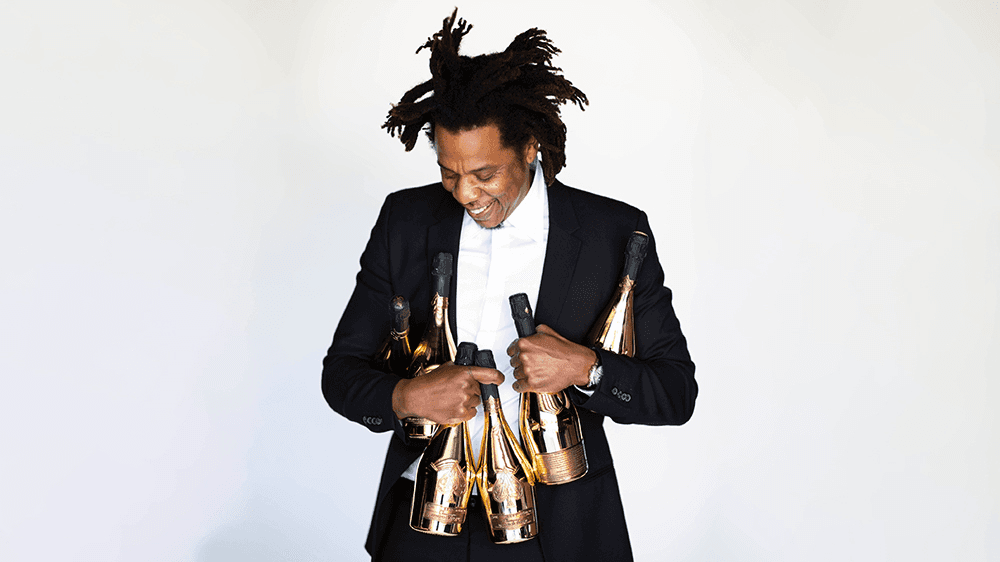
Second, he used the LVMH liquidity cushion. To provide absolute financial leverage during this high-stakes negotiation, Jay-Z pulled off another historic deal just weeks prior. In February 2021, he finalized the sale of a 50 percent stake in his luxury champagne brand, Armand de Brignac, also known as Ace of Spades, to Moët Hennessy Louis Vuitton. The LVMH deal provided an immediate, massive cash windfall. While the Block transaction was structurally self-funding, the massive influx of cash from Bernard Arnault’s luxury empire gave Jay-Z unparalleled personal liquidity. It meant he could comfortably backstop any transitional cash requirements or operational gaps at Tidal without flinching, giving him total leverage at the negotiating table with both T-Mobile and Jack Dorsey.
Third, he absorbed the buyback upside. The most profound corporate maneuver was how the repurchased 33 percent Sprint stake was handled on the internal ledger. Instead of re-inflating the artist pool or restoring the founders back to their original 3 percent undiluted positions, Jay-Z absorbed the entire 33 percent chunk directly into his personal holding vehicle. This effectively consolidated his personal ownership to nearly 70 percent of the entire enterprise right before the acquisition closed. When Block’s $297 million purchase went through, the overwhelming majority of that nine-figure windfall was legally routed directly to his position, maximizing his private payday while the remaining artists stayed structurally anchored to their diluted common equity fractions.
Why Nicki Minaj is Right (and Why It Doesn't Matter to the Ledger)
When Nicki Minaj publicly proclaims that she is owed $200 million, she is speaking a raw truth about the extraction of cultural equity.
In the attention economy, celebrity validation is a high-value currency. In 2015, Tidal required the immediate, bulletproof credibility of Nicki Minaj, Rihanna, and Kanye West to convince millions of consumers that the platform was a legitimate competitor to tech infrastructure giants. The artists lent their names, their brands, and their global visibility to give a $56 million Scandinavian application the cultural weight of a multi-billion dollar enterprise.
To be handed a $1 million check at the finish line feels like a profound systemic slight when your likeness was used to construct the launchpad. From a creative and cultural standpoint, Minaj’s calculation of what her promotional labor was worth across a six-year lifecycle makes complete sense.
But the corporate ledger operates with complete indifference to cultural leverage. Music industry executives have observed that many of the artists on that stage never finalized formal, ironclad shareholder paperwork. In the world of corporate governance, if an agreement isn't formal, documented, and signed, it leaves millions of dollars on the table and exists merely as promotional sentiment.
Jay-Z did not violate the law; he executed standard corporate private equity strategies. He risked his own capital to purchase the asset, navigated a painful down round, leveraged an incoming acquisition to clear out a major corporate partner, backstopped his personal ecosystem with an LVMH windfall, and consolidated his positions to maximize his financial exit.
It is a striking modern case study in how business operates at the highest echelons of corporate finance. For Nicki Minaj, the Tidal story remains a frustrating reminder of how cultural influence can be leveraged by corporate platforms. For Sean Carter, it was the ultimate real-world execution of his foundational bar: he proved, once and for all, that he isn't merely a businessman. He is the business, man.
Featured Posts