>
>
The Rooms We Weren’t Allowed In: Cultural Mobility, Black Identity, and Why Drake Triggers America’s Old Wounds
The Rooms We Weren’t Allowed In: Cultural Mobility, Black Identity, and Why Drake Triggers America’s Old Wounds
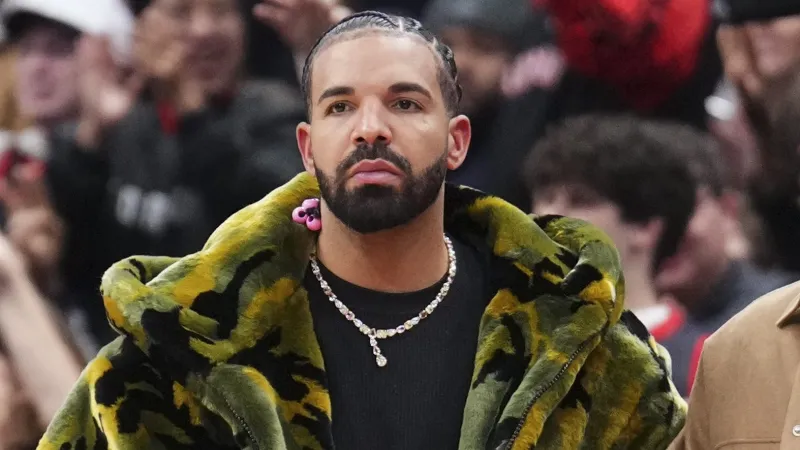
Drake isn’t a threat. He’s a preview. A possibility. A demonstration of how far we’ve come, and how far we still need to go to heal from the past.
Django Degree
America has always had a complicated relationship with race. Complicated in the sense that a wound can be complicated. It doesn’t heal in a straight line. It grows scar tissue, memories, fears, patterns we inherit without choosing them. And within that wound, the Black experience has always been defined by learning to live in two worlds at once.
Not because we wanted to.
Because we had to survive, stay safe, find opportunity, and make it home alive at night.
So when people today look at someone like Drake. Someone who moves between cultures, languages, identities, rooms, and accuse him of being fake, a chameleon, a cultural tourist, I think there’s something deeper happening. Something historical. Something unresolved.
We are not just talking about one artist. We are talking about what it has meant to move between worlds when you’re Black in America.
And what it has cost.
And why, in a strange way, it's the very thing Drake represents. It's a kind of cultural mobility that touches a trauma we haven’t fully named.
The Original Two Worlds: Passing, Survival, and Imposed Masks
There’s a long history in the Black experience of navigating dual identities. Some of it was chosen, but most of it was imposed.
Think about Imitation of Life.
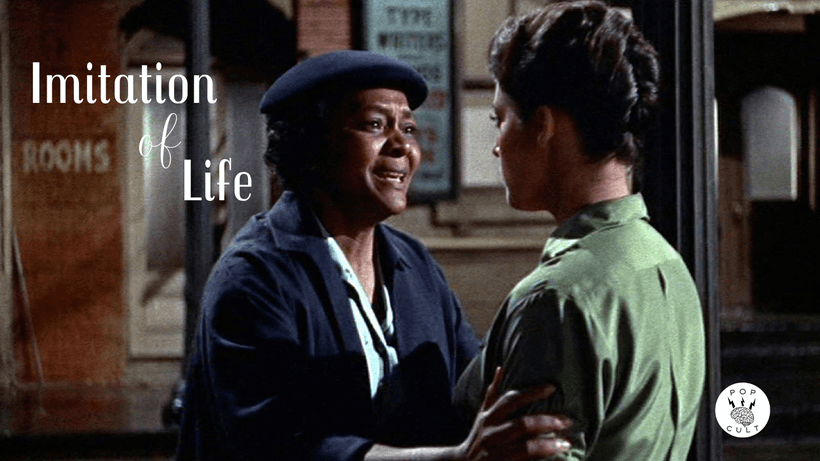
The pain of that film isn’t just a story about race; it’s a story about an impossible choice. A daughter so ashamed of the world she belongs to that she chooses invisibility over acceptance. Passing as white wasn’t just about “wanting access.” It was often about rejecting the pain that came with being Black in a country that punished you for it.
And the mother’s heartbreak wasn’t just maternal, it was cultural. It spoke to the wound of a people who internalized the idea that “our world is something to flee, not something to love.”
That is a generational trauma.
A trauma about the inability to exist fully in both worlds without losing part of yourself.
A trauma about the shame that came with being Black in America. A shame that was taught, not inherent. And that trauma still echoes. Not in the exact same way, it rarely shows up as passing today. But it shows up as judgment, projection, fear, suspicion, and a rigid policing of identity.
The Modern Version: “Sinners” and Choosing Love Over Assimilation
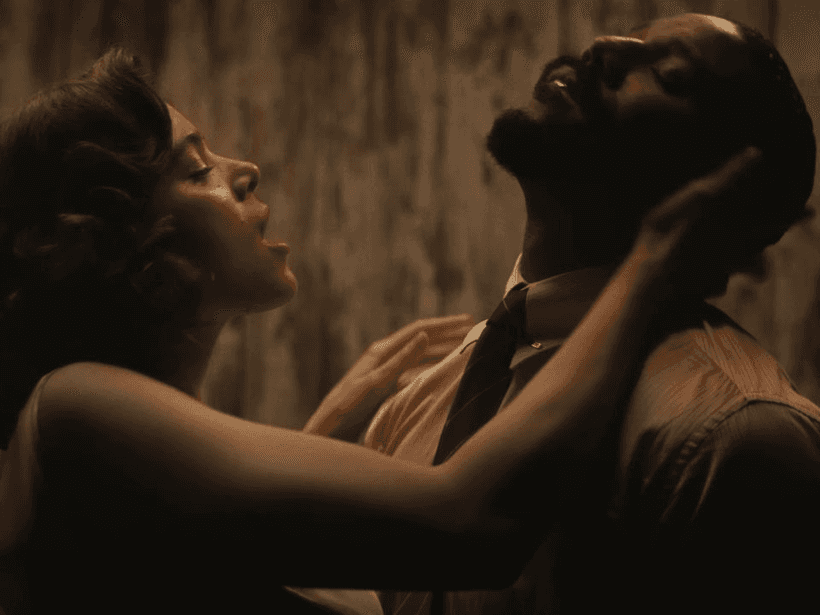
If Imitation of Life gave us the archetype of a Black woman choosing whiteness to escape suffering, Sinners gives us a modern echo of the same wound.
Stack is a Black man deeply in love with Mary, a woman who is Black but white-passing. In the film, the entire community conspires to help Mary marry a white man so she can escape the racial terror of the South. It’s not about romance or preference. It’s about survival. It’s about getting out.
Stack doesn’t lose Mary because he isn’t worthy. He loses her because the world they lived in made it clear. A white future was safer than a Black present.
And that is an unbearable truth.
In Sinners, choosing whiteness isn’t framed as ambition. It’s framed as safety, escape, a strategy for survival in a hostile world. Everyone understood it, even if it broke their hearts. Even Stack accepts it, not because he wants to, but because he knows the rules of the world they are trapped in.
Mary wasn’t choosing a “better” life. She was choosing a possible life. A life where she wasn’t hunted, restricted, or punished for being who she was. This is the generational trauma we rarely stare at directly.
In America, mobility wasn’t a dream. It was an escape plan.
And for those who couldn’t pass, the message was brutal and clear:
You stay where you are.
You survive however you can.
You support the ones who get out and pray that they make it.
That is the same cultural pain that pulses beneath our critiques of identity today.
From Sinners to Today: The Wound That Shows Up as Policing
The pain in Sinners is not just the loss of love.
It’s the loss of possibility.
It is the internalization of a rule America wrote without our consent:
To succeed, you must leave something Black behind.
That rule stayed with us, even as circumstances changed.
It stayed in our bones. In our suspicion. In our defensiveness. In how we police each other. In how we interpret movement between cultures.
It turns into questions like:
“Why you talking like that?”
“Why you dressing like that now?”
“Why you hanging with those people?”
“Why you switching your voice?”
“Why you acting brand new?”
Because historically, when a Black person changed in order to survive... A family was left behind. A community was left behind. A culture was left behind. A version of themselves was left behind.
So when we see someone like Drake shift between worlds, the reaction isn’t objective. It’s ancestral. It's trauma-informed.
We aren’t responding to Drake. We’re responding to Mary. We’re responding to Peola from Imitation of Life. We’re responding to every Black loved one who left for safety, success, survival, and couldn’t come back whole. We inherited the suspicion that movement equals loss.
Drake as a Mirror for Unresolved Cultural Trauma
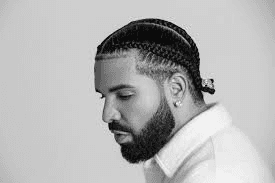
So when Drake moves between identities. Black, Jewish, American South, Toronto Caribbean diaspora, rap, pop, singing, acting, UK drill one year, Afrobeats the next, people feel a discomfort they can’t always articulate.
To some, he triggers the old wound, “Are you leaving us? Are you passing?”
To others, he triggers the modern fear, "Are you appropriating us? Are you taking without giving?”
Both fears come from the same place. A deep cultural anxiety about the consequences of crossing the line between worlds.
Because historically, crossing that line meant you had to abandon something.
Your community.
Your identity.
Your heritage.
Your safety.
Your truth.
So we police each other, because our grandparents were policed by the world. And we inherited that policing, even when we don’t consciously want it.
The Pain Beneath the Critique: Crabs in a Barrel, But Not By Choice
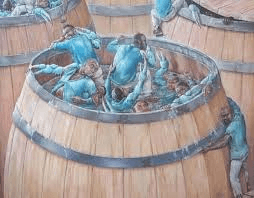
A lot of people call it “crabs in a barrel,” the idea that we pull each other down. But that metaphor misses the most important detail:
Crabs weren’t born in a barrel. They were put there.
Black people didn’t create the systems that forced scarcity. We didn’t create the structures that made access feel like betrayal. We didn’t build the world that made surviving feel like competition. The trauma of that world didn’t disappear. It became subconscious. It became cultural. It became the lens we use to judge each other today.
So when Drake slips into a British flow or an Afro-Caribbean cadence or a Memphis bounce, the outrage isn’t really about music. It’s about the inherited fear that moving into another world always comes with a cost, a cost we’ve seen too many times.
But Drake offers something different, something rare. He moves without leaving. He shifts without passing. He adds without subtracting. He represents a version of mobility that wasn’t possible for generations. A version of identity that doesn’t require abandoning everything that made you.
That is new. And newness always makes people uncomfortable.
The Rooms We Couldn’t Enter—And the Ones We Built Ourselves
Think about Jay-Z, LeBron, Oprah, Issa Rae, Beyoncé, and Rihanna. In their own ways, they have all done the same thing: They entered rooms where we used to only exist as entertainment, not leadership. They took seats at tables where we historically never had a voice. They shifted culture by shifting geographies of power.
And they didn’t do it by shrinking themselves into something acceptable. They did it by being themselves so loudly that the rooms had no choice but to expand. Drake, in a different way, does the same thing. He enters rooms not just as a representative of one culture, but as a blend of many.
He is a cultural bridge. A translator. A carrier of multiple identities at once. A reminder that diaspora isn’t just a history, it’s a skillset. And that skillset is something America still hasn’t fully reconciled with.
Why Drake Feels Like a Threat: The Fear of the Unboxed Black Man
Historically, America has felt safer when Black identity is fixed.
Predictable.
Containable.
Categorized.
Easily stereotyped.
The Black man who can only exist in one space is easier to manage than the one who can exist everywhere. A Black athlete? We get it. A Black rapper? Familiar. A Black CEO? Less familiar. More threatening. A Black intellectual? Depends on how “respectable” he performs. A Black chameleon? Now that’s a problem.
Because the moment you can’t put someone in a single category, you lose the illusion of control.
Drake breaks that control. He breaks the narrative of “pick one.” He breaks the generational trauma of “you’re safest if you stay in your place.” And he does it publicly. Globally. Effortlessly. To some people, that’s inspiring. To others, that’s terrifying, because it means the old rules might never matter again.
Multiplicity as Freedom: The Identity We Were Never Allowed to Have
The real conversation isn’t about Drake at all.
It’s about us.
Our people.
Our trauma.
Our inherited fear.
Our suspicion of freedom.
It’s about how, for generations, being Black meant learning to survive in two worlds without belonging fully to either.
Du Bois wrote about this as “double consciousness”, “two souls, two thoughts,” always looking at oneself through the eye of a world that judged you.
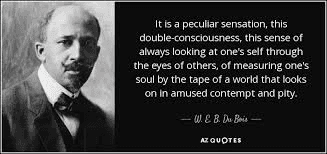
But what if the next generation doesn’t have to split itself in two? What if cultural fluidity, the very thing Drake embodies, isn’t betrayal but evolution? What if we are witnessing the moment where Blackness stops being a limitation and becomes a passport?
Changing the Rooms Instead of Leaving Them
When Jay-Z sits down with billionaires, he doesn’t stop being from Marcy Projects. When LeBron builds schools, he doesn’t stop being a kid from Akron. When Beyoncé brings Black Southern culture to the global stage, she doesn’t become less Texan, less Creole, less Black. They are changing the rooms, not abandoning the world they came from.
That’s the difference. That’s the shift. And Drake, in his own way, does the same thing. He doesn’t represent the old wound of passing. He represents the new possibility of expansion. Black identity doesn’t have to be singular. It doesn’t have to be confined to one lane. It doesn’t have to come with a sacrifice.
We can be in every room. We can shape every room. We can bring our culture into places that once shut us out. And maybe, if we allow ourselves to heal, we can stop punishing each other for stepping into those rooms.
Closing: Beyond the Barrel, Beyond the Binary
The frustration with Drake isn’t about artistry. It isn’t about accents. It isn’t about flows. It isn’t about “authenticity.” It’s about the wound we inherited from a country that never wanted us to believe we could exist freely in multiple spaces.
It’s about the fear that crossing boundaries always requires losing a piece of yourself, a fear our ancestors lived through, a fear our parents watched, a fear embedded in our cultural DNA.
But the truth?
We are not living in Imitation of Life anymore. We are not forced to choose love or identity. We are not required to abandon one world for another. We are not trapped in the barrel we were thrown into. We can be both. We can be many. We can be more.
Drake isn’t a threat. He’s a preview. A possibility. A demonstration of how far we’ve come, and how far we still need to go to heal from the past. If we let go of the policing, the projections, the trauma, the inherited suspicion, we might realize something: The rooms we once feared entering are now rooms we have the power to change.
And maybe that’s the point.
Featured Posts